
Highway crashes do not always happen during predictable rush hour congestion or in the middle of heavy commuter traffic. In North Carolina, a collision may occur late at night, during an off-peak afternoon, or on a relatively open stretch of interstate where traffic conditions initially appear straightforward. Claims arising from these crashes can still become […]
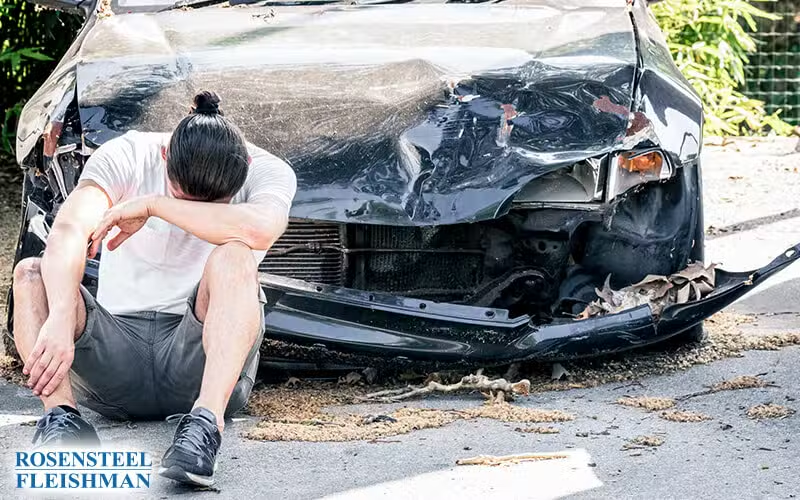

Possible fatigue is a reason to pause a driving plan, not a diagnosis or proof that a person can safely continue after a brief intervention. If alertness is in doubt, the conservative choice is to delay the trip, use another driver or transportation option, or reach a safe lawful place to stop.
Notice fatigue risks before departure
NHTSA’s drowsy-driving guidance identifies insufficient sleep, long or monotonous trips, and time of day among factors that can affect alertness. The CDC/NIOSH driver-fatigue page discusses the same issue in a workplace-driving context, including work and shift schedules. A practical pre-trip check can ask whether the planned drive follows poor sleep, a demanding shift, a long period awake, or another condition likely to reduce alertness.
Treat warning signs as a prompt to change the plan
CDC/NIOSH’s shift-work training warning-sign page lists warning signs including heavy eyelids, repeated yawning, missing signs or exits, memory gaps, lane drift, and rumble-strip contact. Its training context is shift work, but the listed signs are useful prompts to stop or delay rather than to diagnose a condition.
- Difficulty recalling the last few miles or missing expected signs or exits
- Repeated yawning, heavy eyelids, or nodding off
- Lane drift, rumble-strip contact, or a delayed response to routine traffic changes
- A growing need to correct the vehicle or an inability to stay focused on the road
- A passenger noticing behavior that the driver does not recognize
These signs do not establish a medical condition or explain every driving event. They do signal that continuing to drive can be unsafe. Do not treat a cup of coffee, a window adjustment, or a brief rest as proof that alertness has been fully restored.
Make a stop-or-delay plan before the next mile
If fatigue is possible before a trip, delay departure, arrange another driver, or choose another transportation option. If warning signs arise while driving, work toward a safe lawful place to stop rather than trying to finish the route. The right location depends on the road, traffic, and conditions; this guide does not tell a driver to stop on a shoulder or other location that may be unsafe.
Check medication information without changing treatment
The FDA’s medicine-and-driving guidance explains that some medicines can affect driving and advises consumers to read labels and ask a health care professional or pharmacist about driving-related questions. Do not change, skip, or combine medicine based on this page. Individual medication and health questions require an appropriate clinician or pharmacist.
Keep prevention separate from crash analysis
This page does not determine whether fatigue caused a crash, whether a traffic rule was violated, or who is legally responsible. The related guide to investigating possible driver fatigue after a crash covers a separate record and evidence question. After a collision, questions about a Charlotte car-accident matter are fact-specific; this guide does not give legal advice or predict an outcome.
Sources
Additional Car Accidents Articles
Left Turn Gap Judgment Errors When Visibility or Road Design Plays a Role
What happens when a driver begins a left turn and another vehicle suddenly changes lanes? The available opening can disappear almost instantly. In Charlotte traffic, this type of conflict may occur near multilane intersections where drivers must monitor oncoming vehicles, traffic signals, pedestrians, and vehicles moving between lanes at the same time. These crashes can […]
Multi Policy Insurance Considerations When One Policy Does Not Cover Every Loss
Insurance coverage after a serious car accident is not always limited to one policy. A collision may involve liability coverage, underinsured motorist coverage, medical payments coverage, an employer’s commercial policy, or another source of compensation. Identifying each applicable policy can affect how losses are documented, how negotiations develop, and whether a proposed resolution fairly reflects […]
What Happens When Vehicle Damage Appears Later Despite an Initial Inspection
Damage found days or weeks after a collision can complicate an insurance claim, especially when the cause of the crash or responsibility for the repairs remains disputed. A vehicle may look drivable during an initial roadside review in Charlotte, yet later show suspension problems, electrical faults, alignment issues, or damage hidden beneath exterior panels. When […]



