
Highway crashes do not always happen during predictable rush hour congestion or in the middle of heavy commuter traffic. In North Carolina, a collision may occur late at night, during an off-peak afternoon, or on a relatively open stretch of interstate where traffic conditions initially appear straightforward. Claims arising from these crashes can still become […]
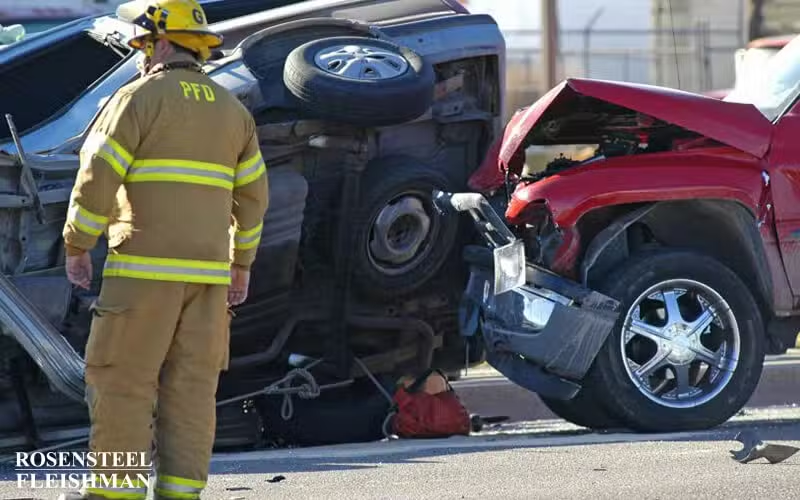

A tired driver may have slower perception, impaired judgment, lane-control difficulty, or a brief loss of alertness. Those effects are not always visible after a collision, and many other events can produce a similar crash pattern.
Fatigue is a causal hypothesis to test against behavior, opportunity for sleep, health factors, timing, roadway evidence, and alternatives—not a conclusion drawn from the hour of the crash alone.
Define the event window
- Crash time, time zone, lighting, weather, location, road type, speed environment, and traffic
- Driver origin, destination, route, stops, delays, and planned arrival
- Activities during the hours and days before the event
- Work schedule, commute, travel, caregiving, recreation, and sleep opportunity
- The last period of confirmed alert behavior and the first possible sign of degraded performance
Preserve evidence of activity and rest
- Work, timekeeping, scheduling, access, travel, lodging, fuel, toll, parking, and transaction records
- Phone, navigation, vehicle, wearable, alarm, application, message, and call records obtained lawfully
- Witness accounts of alertness, speech, behavior, complaints, yawning, breaks, or planned rest
- Medical conditions, prescribed or nonprescribed substances, and relevant instructions when properly obtained
- Video showing lane position, response, speed, braking, steering, or behavior before and after impact
Examine driving performance
Look for lane departures, rumble-strip contact, drifting, inconsistent speed, missed controls, delayed braking, lack of avoidance, route errors, or other time-linked behavior. Preserve the complete event rather than selecting only the moment that fits one theory.
Use roadway and vehicle evidence
- Tire, scrape, debris, fluid, resting position, road geometry, sight distance, and obstructions
- Brakes, tires, steering, lighting, windshield, driver-assistance systems, and warnings
- Event data, telematics, dash camera, navigation, infotainment, and clock offsets
- Damage sequence and whether another impact or mechanical event preceded loss of control
The related photo and video evidence guide explains original-file preservation, camera timing, context, metadata, and visual limits.
Use public research without treating it as event proof
NHTSA’s drowsy-driving resource explains that clues are not always identifiable or conclusive and describes patterns associated with reported drowsy-driving crashes. General patterns can frame questions, but they do not establish that a particular Charlotte driver was fatigued.
Test alternative explanations
- Distraction, impairment, medical event, visual limitation, or inattention unrelated to sleep
- Another vehicle, pedestrian, animal, object, sudden emergency, or evasive maneuver
- Roadway, weather, construction, surface, signal, lighting, or visibility condition
- Vehicle or component failure
- Post-impact movement that makes the pre-impact path appear different
Connect any fatigue finding to the collision
Even when evidence supports reduced alertness, the analysis must explain which perception, decision, or control failure followed and how it contributed to the impact. State supporting evidence, contrary evidence, missing data, and the degree of uncertainty.
Compare the official report with primary evidence
The NCDMV crash-report page explains access options and privacy restrictions. A fatigue notation or omission in a report is one investigative data point, not a substitute for the underlying records.
Rosensteel Fleishman Car Accident & Injury Lawyers provides information about fatigue-related car accident evidence in Charlotte.
Sources
Additional Car Accidents Articles
Left Turn Gap Judgment Errors When Visibility or Road Design Plays a Role
What happens when a driver begins a left turn and another vehicle suddenly changes lanes? The available opening can disappear almost instantly. In Charlotte traffic, this type of conflict may occur near multilane intersections where drivers must monitor oncoming vehicles, traffic signals, pedestrians, and vehicles moving between lanes at the same time. These crashes can […]
Multi Policy Insurance Considerations When One Policy Does Not Cover Every Loss
Insurance coverage after a serious car accident is not always limited to one policy. A collision may involve liability coverage, underinsured motorist coverage, medical payments coverage, an employer’s commercial policy, or another source of compensation. Identifying each applicable policy can affect how losses are documented, how negotiations develop, and whether a proposed resolution fairly reflects […]
What Happens When Vehicle Damage Appears Later Despite an Initial Inspection
Damage found days or weeks after a collision can complicate an insurance claim, especially when the cause of the crash or responsibility for the repairs remains disputed. A vehicle may look drivable during an initial roadside review in Charlotte, yet later show suspension problems, electrical faults, alignment issues, or damage hidden beneath exterior panels. When […]



