Highway crashes do not always happen during predictable rush hour congestion or in the middle of heavy commuter traffic. In North Carolina, a collision may occur late at night, during an off-peak afternoon, or on a relatively open stretch of interstate where traffic conditions initially appear straightforward. Claims arising from these crashes can still become […]
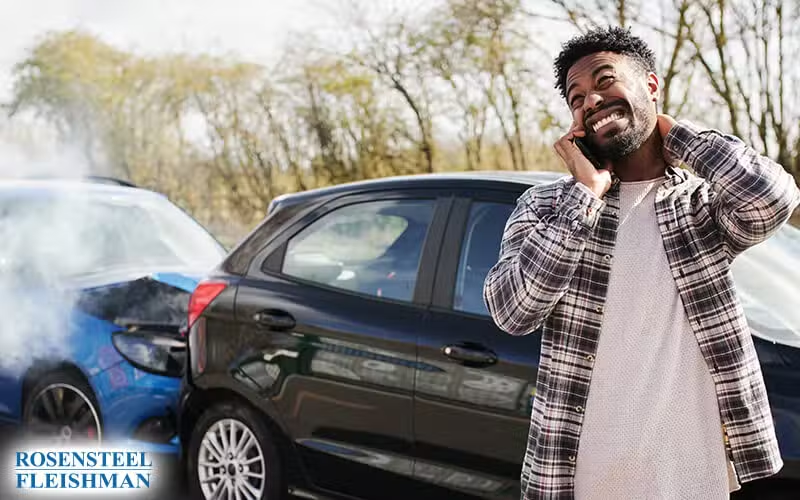

Drivers may describe the same rear-end collision as an abrupt stop, ordinary traffic, a brake check, a distraction, poor visibility, a mechanical issue, or a chain reaction. The rear contact identifies a physical event, but responsibility still depends on what each driver did and could reasonably perceive under the conditions.
A sudden-stop rear-end claim should compare the following distance, speeds, reason for stopping, visibility, warning, perception, response, and impact sequence instead of treating the contact location as the entire fault analysis.
Build the approach chronology
- Road, lane, direction, grade, curve, surface, weather, lighting, posted speed, traffic volume, construction, and sight obstruction
- Lead and following vehicle position, speed if supported, following interval, acceleration, braking, steering, signal, and lane movement
- Hazard or traffic condition that preceded the stop and when each driver could first perceive it
- Brake-lamp, hazard-lamp, turn-signal, headlamp, vehicle-condition, and visibility evidence
- First avoidance action, first contact, secondary contact, resulting movement, and final positions
Apply the following-distance statute to the actual conditions
G.S. 20-152 states that a driver must not follow another vehicle more closely than is reasonable and prudent, considering vehicle speed, traffic, and highway condition. The statute does not create one universal time or distance for every rear-end event. Record the variables rather than inserting a generic spacing rule.
- Vehicle speed and change in speed
- Traffic density, stop-and-go movement, signals, intersections, merging, and queues
- Rain, glare, darkness, road surface, hill, curve, obstruction, and available escape path
- Vehicle size, load, brakes, tires, and other condition supported by inspection or records
- Driver attention, phone or app activity, fatigue, impairment, and witness observations
Examine why and how the lead vehicle stopped
G.S. 20-141 includes a reasonable-and-prudent speed requirement under existing conditions and a duty to decrease speed as necessary to avoid a collision. A claim that the lead vehicle stopped suddenly should identify the reason, timing, manner, warning, and evidence. A lawful or necessary stop, an unexplained stop, and an intentional maneuver require different factual analysis; a label alone resolves none of them.
Preserve the physical and electronic record
- Overall scene, lane, controls, sight distance, debris, marks, fluid, resting positions, and camera locations
- Front and rear damage, contact height, overlap, crush, prior damage, lamps, tires, brakes, restraint condition, and repair or salvage custody
- Dash, traffic, business, residence, vehicle, phone, event-data, telematics, and infotainment records with clock and collection notes
- Witness viewpoint, distance, obstruction, event heard or seen, statement date, and later correction
- Tow, estimate, inspection, scan, repair, photograph, measurement, and source-file history
Read the crash report in context
The NCDMV DMV-349 instructional manual defines report fields for sequence of events, contributing circumstances, vehicle condition, diagram, narrative, and injury information. Compare each code with the officer’s observations and source material. Do not convert one code or the rear-contact diagram into an automatic legal conclusion.
Separate collision sequence from medical causation
- Occupant seat, restraint, head restraint, body movement, contact, symptom onset, and immediate evaluation
- Pre-event medical and functional baseline, objective findings, diagnoses, treatment, restrictions, and response
- Multiple impacts, later events, alternative causes, gaps, and qualified medical explanation
- No inference that minor-looking damage proves no injury or that extensive damage proves a particular diagnosis
The related impact-sequence guide provides a structured way to separate first contact, secondary contact, vehicle movement, time sources, and competing accounts when the rear-end event involves more than two vehicles.
Rosensteel Fleishman Car Accident & Injury Lawyers provides information about Charlotte rear-end car-accident claims involving disputed stop and following-distance evidence. The conclusion should follow the evidence rather than the collision label.
Sources
Additional Car Accidents Articles
Left Turn Gap Judgment Errors When Visibility or Road Design Plays a Role
What happens when a driver begins a left turn and another vehicle suddenly changes lanes? The available opening can disappear almost instantly. In Charlotte traffic, this type of conflict may occur near multilane intersections where drivers must monitor oncoming vehicles, traffic signals, pedestrians, and vehicles moving between lanes at the same time. These crashes can […]
Multi Policy Insurance Considerations When One Policy Does Not Cover Every Loss
Insurance coverage after a serious car accident is not always limited to one policy. A collision may involve liability coverage, underinsured motorist coverage, medical payments coverage, an employer’s commercial policy, or another source of compensation. Identifying each applicable policy can affect how losses are documented, how negotiations develop, and whether a proposed resolution fairly reflects […]
What Happens When Vehicle Damage Appears Later Despite an Initial Inspection
Damage found days or weeks after a collision can complicate an insurance claim, especially when the cause of the crash or responsibility for the repairs remains disputed. A vehicle may look drivable during an initial roadside review in Charlotte, yet later show suspension problems, electrical faults, alignment issues, or damage hidden beneath exterior panels. When […]