
When providers disagree about a medication plan, a clear record helps distinguish what was communicated, what changed, and what remains uncertain in a potential claim.
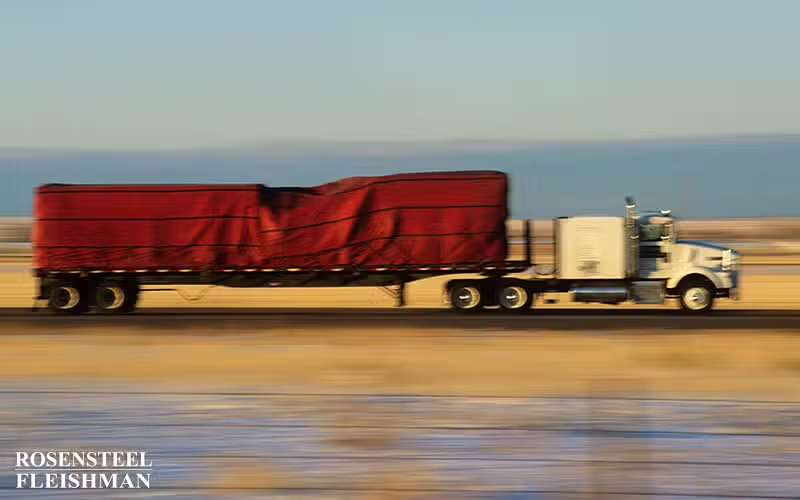

A collision involving a commercial truck can raise questions about the driver and about businesses that selected the driver, dispatched the trip, controlled the equipment, loaded the cargo, or maintained the vehicle. Those questions require records tied to the actual carrier, vehicle, driver, and trip.
A company-name logo on a trailer is an identity clue, not a complete answer about control, duty, breach, or causation.
Identify every operational participant
- Tractor and trailer owners, registered motor carrier, operating authority, and displayed identifiers
- Driver employer, contractor, staffing company, dispatcher, broker, shipper, loader, and maintenance provider
- Lease, interchange, dispatch, trip, fuel, toll, cargo, and payment records
- Who selected the route, set the schedule, assigned equipment, supervised work, and could stop the trip
- Which entity possessed each relevant record or electronic system
Review driver qualification as a dated process
49 C.F.R. § 391.23 describes specified background investigations and inquiries for covered drivers. Applicability, timing, responses, exceptions, and the records actually obtained must be evaluated rather than assuming that any missing paper proves unsafe hiring.
49 C.F.R. § 391.51 addresses the driver qualification file and listed materials. A useful review inventories the file as it existed before the collision, later additions, retention periods, and information held outside the formal file.
Build a company-conduct timeline
- Application, screening, licensing, medical qualification, road testing, orientation, and training
- Prior incidents, violations, complaints, coaching, discipline, and safety communications
- Dispatch sequence, appointment pressure, route changes, weather notices, delay messages, and stop-work authority
- Vehicle complaints, inspections, repairs, deferred items, out-of-service events, and return-to-service decisions
- What each decision-maker knew, when the information arrived, and what options were available
Use safety history with the correct scope
49 C.F.R. § 390.15 requires covered motor carriers to maintain an accident register containing specified information and to make identified records available as stated in the rule. The regulatory definition, time period, carrier identity, and event comparability matter.
A prior event can have different equipment, conduct, road conditions, or cause. It should not substitute for proof of the current collision. The question is whether a dated record supplied relevant notice and whether a reasonable response could have affected the event.
Separate a rule issue from collision causation
A file omission or disputed company practice does not independently establish how a crash occurred. Link each proposed company failure to physical evidence, electronic data, witness accounts, the driver’s performance, and the collision sequence. Test mechanical, roadway, weather, third-party, and sudden-event alternatives.
The related truck-collision cause guide explains how competing explanations can be organized before assigning responsibility.
Preserve native records and their context
Request preservation early for dispatch platforms, driver and equipment files, messages, telematics, electronic logs, onboard video, inspection and repair systems, cargo documents, and claim communications. Preserve metadata, time zones, exports, field definitions, audit history, and the relationship between tractor, trailer, driver, and trip.
A defensible carrier-negligence analysis
- Names the participant and the claimed duty instead of referring vaguely to the trucking company
- Cites the controlling source and explains why it applies
- Identifies a specific act or omission supported by dated evidence
- Connects that conduct to the crash or injury through a tested causal sequence
- Addresses contrary evidence and reasonable alternative explanations
Rosensteel Fleishman Car Accident & Injury Lawyers provides information about investigating carrier conduct after a Charlotte truck collision. The analysis should remain participant-specific and evidence-led.
Sources
Additional Car Accidents Personal Injury Articles
Planning for Help at Home in Charlotte After a Bicycle Injury
A practical household plan separates immediate needs from uncertain claim payments. Clear records can explain what changed, who helped, and which expenses remain unresolved.
Reassessing Crush Injuries After a Dog Bite in Charlotte
When a dog bite record mentions a crush injury, reassessment means clarifying what the documents establish and tracking practical consequences without guessing about recovery.
Brake and Steering Failures That Can Cause a Car Accident
A suspected mechanical problem is not the same as an established crash cause. Learn how vehicle records, sight lines, and a clear timeline help separate observations from conclusions.



