
Highway crashes do not always happen during predictable rush hour congestion or in the middle of heavy commuter traffic. In North Carolina, a collision may occur late at night, during an off-peak afternoon, or on a relatively open stretch of interstate where traffic conditions initially appear straightforward. Claims arising from these crashes can still become […]
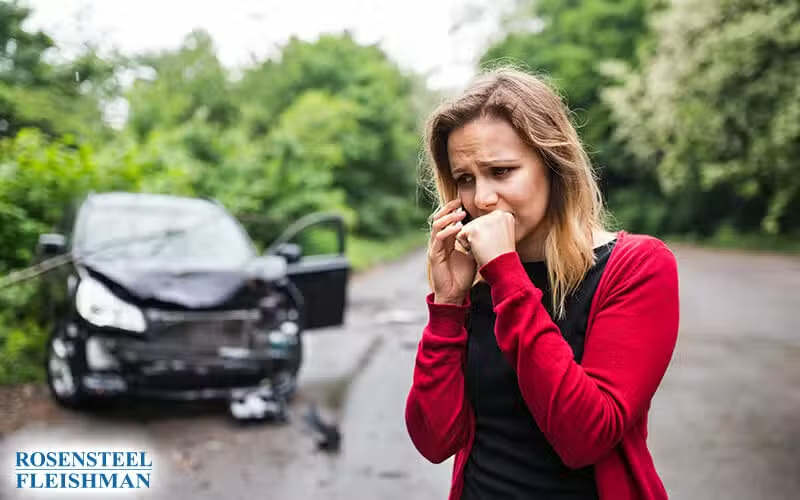

The fall time change can turn a familiar late-afternoon commute into a nighttime drive before routines have adjusted. This is general driving-safety information, not a conclusion about the cause of any crash or a guarantee that a checklist will prevent one.
Expect the commute to look different
The CDC/NIOSH explains, in a workplace context, that it can take about a week for sleep, eating, and activity routines to adjust after a time change. It also notes that the fall change can suddenly shift the late-afternoon commute from daylight to darkness. Treat the first week as a cue to allow extra time and to avoid assuming that a familiar route will look or feel the same.
Make a short visibility check before driving
North Carolina’s night-driving and time-change guidance recommends confirming that headlights, brake lights, turn signals, and emergency flashers are working. It also recommends keeping the windshield clean and allowing time to defrost or defog it when necessary. Use the vehicle controls as the manufacturer directs.
- Start earlier when a route that was previously daylight driving will now occur after dark.
- Use headlights appropriately and change from high beams to low beams for approaching vehicles.
- Reduce speed when visibility, glare, or roadway conditions call for more time to see and respond.
- Scan deliberately near crosswalks, turns, bus stops, road edges, and other places where pedestrians or cyclists may be harder to notice after dark.
- Avoid looking directly into approaching headlights; use the road edge as a reference when glare makes that helpful.
Keep fatigue separate from visibility
Earlier darkness and a schedule change do not by themselves show that a driver is drowsy. If sleepiness, lane drift, difficulty recalling recent miles, or another fatigue concern arises, the separate guide to drowsy-driving warning signs and a stop-or-delay plan explains that decision without treating caffeine, a short rest, or this checklist as proof of alertness.
Keep a safety checklist separate from a crash review
Nighttime conditions alone do not decide responsibility for a collision. Questions about a Charlotte car-accident claim require a fact-specific review; this seasonal safety guide does not determine fault, injury cause, insurance coverage, or damages.
Sources
Additional Car Accidents Articles
Left Turn Gap Judgment Errors When Visibility or Road Design Plays a Role
What happens when a driver begins a left turn and another vehicle suddenly changes lanes? The available opening can disappear almost instantly. In Charlotte traffic, this type of conflict may occur near multilane intersections where drivers must monitor oncoming vehicles, traffic signals, pedestrians, and vehicles moving between lanes at the same time. These crashes can […]
Multi Policy Insurance Considerations When One Policy Does Not Cover Every Loss
Insurance coverage after a serious car accident is not always limited to one policy. A collision may involve liability coverage, underinsured motorist coverage, medical payments coverage, an employer’s commercial policy, or another source of compensation. Identifying each applicable policy can affect how losses are documented, how negotiations develop, and whether a proposed resolution fairly reflects […]
What Happens When Vehicle Damage Appears Later Despite an Initial Inspection
Damage found days or weeks after a collision can complicate an insurance claim, especially when the cause of the crash or responsibility for the repairs remains disputed. A vehicle may look drivable during an initial roadside review in Charlotte, yet later show suspension problems, electrical faults, alignment issues, or damage hidden beneath exterior panels. When […]



