
A Charlotte family may feel hopeful when an injured parent returns home after a serious crash, only to discover that recovery changes from week to week. One day, the person may handle household tasks and answer work emails. The next day, pain, fatigue, headaches, or medical appointments may make even a shortened workday difficult. These […]
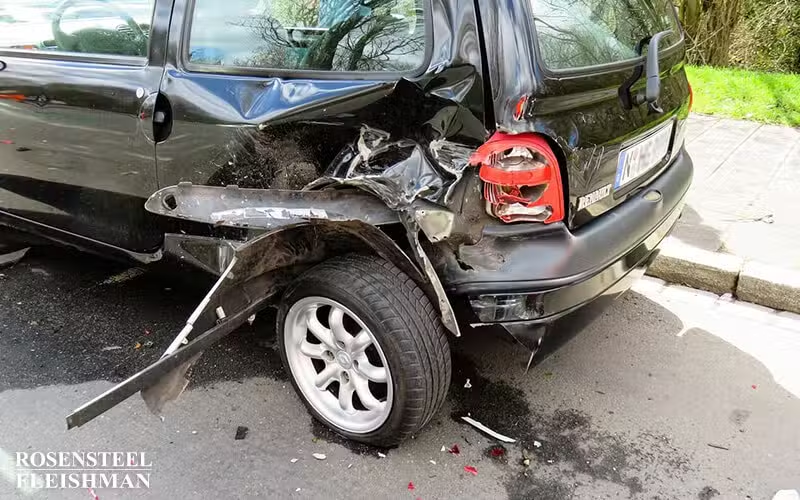

After a crash, immediate safety and accurate records matter more than assumptions about fault or claim value.
At the scene
North Carolina G.S. 20-166 sets duties following certain crashes, including stopping and furnishing information in circumstances described by the statute. If anyone needs emergency help or the scene is unsafe, prioritize emergency instructions and safety.
- Record location, vehicles, contacts, witnesses, photos, video, and visible conditions when it is safe to do so
- Keep communications and documents in their original form
- Avoid guessing about responsibility, injuries, coverage, or the eventual value of any claim
- Request and retain the report number and follow-up records
G.S. 20-166.1 addresses notice for reportable crashes. The related police-report guide explains why report fields should be read carefully.
Next steps depend on facts
Medical, insurance, vehicle, employment, and legal questions can develop after the scene. A Charlotte car-accident claim requires the actual records and applicable law.
Sources
Additional Car Accidents Articles
Claim Dispute Basics After Accident Cases with Conflicting Evidence
What happens when a repair estimate takes longer than expected after a crash? For a Charlotte family relying on one vehicle for work, school, medical appointments, and daily errands, even a short delay can create practical and financial pressure. The insurance company may be waiting for photographs, a shop inspection, supplemental damage findings, or confirmation […]
Mechanical Failure Crash Factors Beyond Routine Driver Error
Mechanical problems can affect how a collision happens, but proving their role usually requires more than an early photograph or a brief statement at the scene. Documentation often becomes more important as the investigation develops, especially when questions arise about maintenance, repairs, worn parts, warning lights, or a vehicle’s condition after impact. Treating evidence collection […]
Merging Accident Overview When the Entering Driver Is Not Solely at Fault
When a driver enters a travel lane and a collision follows, the first step is to examine how every vehicle was moving before impact. The entering driver may have had a duty to yield, but that fact alone does not resolve fault. Speed, signaling, lane changes, following distance, visibility, and the actions of the other […]



