
Roadway congestion can make bicycle crashes more complicated because several things may happen at once, including sudden lane changes, limited visibility, close passing, and multiple vehicles reacting within seconds. When a cyclist is injured and the responsible driver does not have enough insurance to cover the resulting losses, underinsured coverage bicycle cases may involve a […]
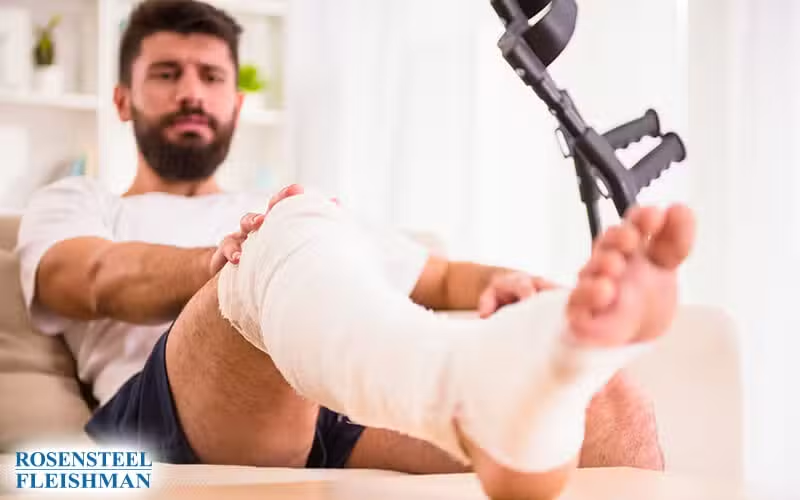

Medical care after an injury serves two separate purposes. It evaluates and treats the patient, and it creates contemporaneous evidence about symptoms, findings, diagnoses, restrictions, response, and prognosis. Those purposes should not be confused.
Treatment decisions belong to the patient and medical provider; claim documentation should follow the care, not direct it. Unnecessary treatment does not become appropriate because a claim exists, while delayed care can make both health and causation questions harder to resolve.
Start with appropriate evaluation
- Use emergency services for severe or worsening symptoms, altered awareness, weakness, breathing difficulty, uncontrolled bleeding, or other urgent warning signs.
- Describe the event and symptoms accurately without adopting a diagnosis that has not been made.
- Tell the provider about relevant prior conditions, medications, earlier injuries, and changes from baseline.
- Ask what symptoms require urgent return, what activity limits apply, and what follow-up is recommended.
Build a date-by-date care chronology
- Event date and immediate symptoms, including symptoms that developed later
- Every facility, provider, imaging study, test, diagnosis, treatment, referral, restriction, and missed appointment
- Response to treatment, adverse effects, unresolved symptoms, and reasons for any interruption in care
- Objective changes in work, sleep, mobility, self-care, concentration, household activity, and recreation
Obtain complete records, not a portal snapshot
A useful request may include emergency records, triage, histories, examinations, orders, imaging reports and images, laboratory data, medication administration, procedure records, therapy notes, work notes, referrals, discharge instructions, and amendments. The U.S. Department of Health and Human Services explains an individual’s right to inspect, review, and receive copies of medical and billing records, subject to the Privacy Rule’s scope and limited exceptions.
Reconcile bills with the treatment record
- Itemized charges from each facility and professional provider
- Amounts paid, contractual adjustments, patient balances, denials, and explanations of benefits
- Health, medical-payments, liability, workers’ compensation, Medicare, Medicaid, or other payer involvement
- Collection notices, payment plans, reimbursement claims, and disputed or unrelated charges
North Carolina Rule of Evidence 414 limits evidence offered to prove past medical expenses to amounts actually paid for satisfied bills and amounts actually necessary to satisfy incurred but unpaid bills. A gross-charge total alone may therefore be an incomplete measure.
Explain gaps instead of hiding them
A delay may reflect symptom progression, access, transportation, scheduling, cost, work, caregiving, illness, or a medical recommendation. Preserve the actual reason and supporting records. An inaccurate attempt to make the chronology appear continuous can damage the reliability of the entire account.
Separate diagnosis, causation, and prognosis
A diagnosis identifies a condition. Causation asks whether and how the event produced or aggravated it. Prognosis asks about the expected course and future needs. The opinions should be connected to history, examination, imaging or testing where appropriate, treatment response, prior records, and alternative explanations.
Document function in concrete terms
- Task affected and the movement or cognitive demand involved
- How often the task occurs and how long it now takes
- Assistance, adaptation, rest, medication, or equipment required
- Comparison with documented baseline function and consistency with medical restrictions
Identify conditional payments and reimbursement early
For a Medicare beneficiary, CMS explains that Medicare may make conditional payments when liability or no-fault coverage does not pay promptly and may later seek recovery after a settlement, judgment, award, or other payment. The CMS attorney-services guidance calls this an MSP recovery claim. Other plans and programs may have different rights and procedures.
The related injury-evidence organization guide shows how chronology, source, medical, photographic, insurance, and deadline records fit together.
Rosensteel Fleishman Car Accident & Injury Lawyers provides information about medical evidence in North Carolina personal-injury matters. A complete, accurate chronology is more useful than repeated descriptions of pain without source records.
Sources
Additional Personal Injury Articles
How CT Scans Are Used in Injury Claims to Document Physical Harm
When an injury claim is being reviewed, medical records often provide the clearest timeline of what happened to a person after an accident. CT imaging can become an important part of that record because it allows medical providers to examine internal structures that may not be fully evaluated through a physical examination alone. When a […]
How Medical Treatment Affects a Car Accident Claim When Care Is Delayed
Medical care can become one of the most important sources of information in a car accident claim because treatment records help show what injuries were identified, when symptoms appeared, and how those injuries affected everyday life. When someone in Charlotte, NC delays treatment after a collision, the delay does not automatically determine the outcome of […]
Understanding Nerve Damage Motorcycle Injuries and the Importance of Continued Medical Support
A motorcycle crash should be reported promptly to law enforcement and the appropriate insurance companies, even when pain or numbness seems minor at first. Nerve symptoms may develop gradually, and a timely report creates an official record connecting the incident to the circumstances in which the injury occurred. Missing a reporting deadline or giving incomplete […]



