
Highway crashes do not always happen during predictable rush hour congestion or in the middle of heavy commuter traffic. In North Carolina, a collision may occur late at night, during an off-peak afternoon, or on a relatively open stretch of interstate where traffic conditions initially appear straightforward. Claims arising from these crashes can still become […]
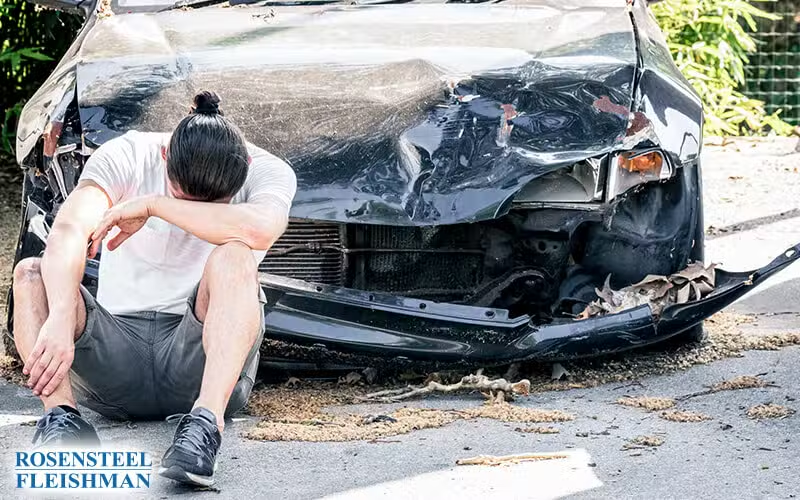

A crash involving a blown tire can feel confusing from the start because the cause is not always obvious at the scene. A driver on a wet Charlotte road after a summer storm may hear a loud pop, feel the vehicle pull hard to one side, and lose control before there is time to react. Even when everyone agrees that a tire failed, the claim may slow down while insurance companies, repair shops, or investigators try to understand whether the tire condition, vehicle maintenance, road debris, speed, or another driver played a role.
These delays do not always mean the claim has stalled forever. Mechanical evidence can take time to review, especially when the tire, wheel, vehicle damage, and crash location all need to be considered together. As Attorney Matthew Fleishman has explained, “A slow start does not always mean a claim cannot move forward. It often means the facts need more careful sorting.” That can be especially true in tire-related crashes, where early assumptions may change once more information becomes available.
Article Brief
Tire blowout accident basics often come down to timing, evidence, and patience. A claim may remain quiet for weeks while insurers gather records, inspect the vehicle, or wait for repair documentation, but that period of inactivity does not necessarily prevent resolution.
The important point is that mechanical issues need context. A blown tire may look like a simple equipment failure at first, but the final outcome can depend on maintenance history, roadway conditions, witness statements, crash reports, and how the vehicle responded after the tire failed.
Why Tire Failure Claims Can Sit Quietly Before Progress Happens
Tire-related crash claims often move more slowly than other car accident claims because the main question is not only what happened, but why it happened. In a rear-end crash, for example, the point of impact and traffic pattern may give insurers a clearer starting place. In a tire failure crash, the physical evidence may be harder to interpret because the damaged tire may have been shredded, removed during towing, or stored without much attention to preservation.
This is where the settlement and resolution process can feel frustrating. A person may report the crash, seek medical care, and contact the insurance company, only to hear little for a while. That silence may happen because the insurer is waiting for photographs, vehicle inspection notes, repair estimates, maintenance records, or a clearer explanation of whether the tire failed before or because of the collision. The delay can feel personal, but often it is procedural.
A practical example helps explain the issue. Imagine a driver traveling on I-77 during heavy rain when a front tire fails. The vehicle drifts into another lane, hits a guardrail, and is later struck by another car. At first, each insurer may focus on a different part of the event. One may question whether the tire was worn. Another may look at whether the second driver had time to stop. A third may wait to see whether the vehicle damage supports the driver’s account. The claim may seem inactive while those pieces are being reviewed, but each piece can affect how fault and compensation are evaluated.
What Evidence May Matter After a Blowout
The evidence in these cases usually matters because a tire blowout is not always treated as an unavoidable event. Sometimes a tire fails because of a puncture from road debris. Other times, the issue may involve low tread, underinflation, overloading, poor maintenance, a prior repair, or a possible product concern. The facts can also show that a driver responded reasonably under sudden conditions, which may be important when another party tries to oversimplify what happened.
Helpful evidence may include:
- Photos of the tire, wheel, vehicle damage, and crash scene
- Repair shop records or towing documentation
- Maintenance records showing tire age, rotations, replacements, or inspections
- Crash report details and witness observations
- Medical records showing when symptoms began and how they developed
This evidence does not always appear at once. A repair shop may not complete its estimate immediately. A crash report may take time to become available. Medical symptoms may change over several days. Because of that, a claim may pause while the record becomes clearer. That pause can be uncomfortable, especially when bills, missed work, and transportation problems are already creating pressure.
How Claims Can Still Resolve After a Period of Inactivity
A quiet period in a claim does not always mean the insurer has rejected the case or that settlement is no longer possible. Many claims regain momentum once missing documentation is gathered or once the parties have a clearer understanding of the crash sequence. In tire failure cases, resolution often depends on whether the available evidence supports a reasonable explanation of how the crash occurred and how the injuries or losses followed from it.
The process can move in stages. First, the insurer may confirm coverage and basic facts. Next, it may review liability, which means looking at who may be legally responsible. Then it may evaluate damages, including medical treatment, lost income, vehicle damage, and other losses. If the claim has been quiet, progress may resume when a demand package is submitted, when medical treatment stabilizes, or when a key document finally answers a question that had been holding things up.
This is also why early decisions can affect later outcomes. If the damaged tire is discarded before anyone photographs it, the claim may become harder to explain. If the person waits too long to seek medical care, the insurer may question whether the injury came from the crash. If vehicle repairs begin before evidence is documented, important details may be lost. None of these issues automatically ends a claim, but they can make the resolution process more complicated.
Why Settlement Discussions May Restart
Settlement discussions often restart once uncertainty is reduced. An insurer may be more willing to evaluate a claim after it receives repair records, medical records, photographs, or a clear account of the crash. The same is true when the injured person reaches a point where doctors can better explain the injury, treatment needs, and recovery outlook.
There can also be financial pressure during the waiting period. A person may be dealing with rental car costs, missed shifts, medical appointments, and calls from insurance adjusters. That stress can make an early offer tempting, even when the full picture is not yet clear. A more careful approach may help prevent a claim from resolving before important facts are understood.
For many people, the practical goal is not to turn every tire failure claim into a dispute. It is to make sure the claim is evaluated with enough information to be fair. That means looking beyond the simple statement that a tire blew out and asking what the evidence actually shows about the vehicle, the road, the driver’s response, and the losses that followed.
Finding a Clear Path When the Claim Feels Stuck
When a tire failure crash claim feels inactive, the next step is usually to organize the facts rather than assume nothing can be done. Photos, medical records, repair paperwork, towing records, and communication with insurers can help show where the claim stands and what information may still be missing. A calm review of those details can often reveal whether the delay is temporary, whether more documentation is needed, or whether the insurer is avoiding a fair evaluation.
Rosensteel Fleishman Car Accident & Injury Lawyers works with people in Charlotte who are trying to understand what comes next after a vehicle crash, including situations where mechanical evidence complicates the claim. Speaking with a Charlotte car accident lawyer can help clarify how the facts may fit together and what steps may protect the claim while evidence is still being reviewed.
The steady takeaway is this: a slow claim is not always a lost claim. If a tire blowout caused a crash and the evidence is taking time to develop, careful documentation and informed guidance can make a meaningful difference in how the matter is evaluated. For a free case consultation, Rosensteel Fleishman can be reached at 1-704-714-1450.
Additional Car Accidents Articles
Left Turn Gap Judgment Errors When Visibility or Road Design Plays a Role
What happens when a driver begins a left turn and another vehicle suddenly changes lanes? The available opening can disappear almost instantly. In Charlotte traffic, this type of conflict may occur near multilane intersections where drivers must monitor oncoming vehicles, traffic signals, pedestrians, and vehicles moving between lanes at the same time. These crashes can […]
Multi Policy Insurance Considerations When One Policy Does Not Cover Every Loss
Insurance coverage after a serious car accident is not always limited to one policy. A collision may involve liability coverage, underinsured motorist coverage, medical payments coverage, an employer’s commercial policy, or another source of compensation. Identifying each applicable policy can affect how losses are documented, how negotiations develop, and whether a proposed resolution fairly reflects […]
What Happens When Vehicle Damage Appears Later Despite an Initial Inspection
Damage found days or weeks after a collision can complicate an insurance claim, especially when the cause of the crash or responsibility for the repairs remains disputed. A vehicle may look drivable during an initial roadside review in Charlotte, yet later show suspension problems, electrical faults, alignment issues, or damage hidden beneath exterior panels. When […]



