
Highway crashes do not always happen during predictable rush hour congestion or in the middle of heavy commuter traffic. In North Carolina, a collision may occur late at night, during an off-peak afternoon, or on a relatively open stretch of interstate where traffic conditions initially appear straightforward. Claims arising from these crashes can still become […]
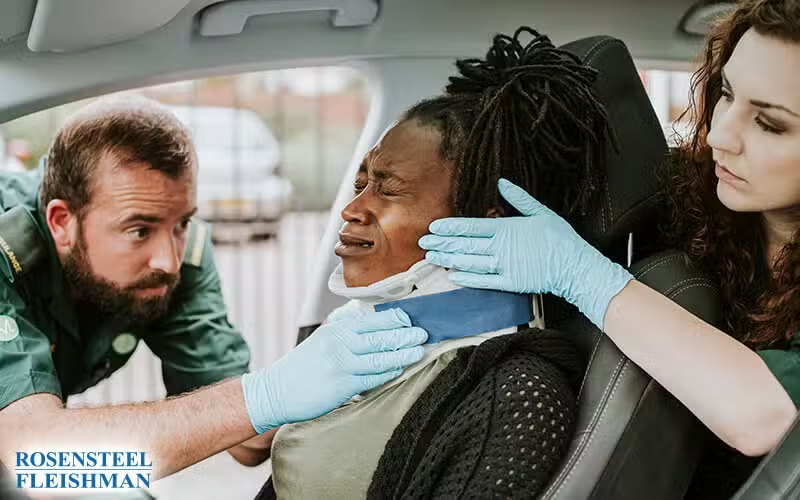

Could an early assumption after a crash make the next few days harder than they need to be? It can, especially when a driver decides too quickly that the collision was minor, that soreness will fade, or that the insurance process will be simple. Rear end crashes often seem straightforward at first, but the details behind stopping distance, reaction time, vehicle damage, and delayed pain can change how the situation is understood later.
In Charlotte, everyday driving conditions can make these decisions more complicated. A rear end crash on a busy road near an intersection, in stop and go traffic, or during a sudden slowdown on I-77 may leave people trying to make fast choices while still processing what happened. That is when assumptions can take hold, even when more information is needed.
Understanding stopping time and impact can help people slow down their decision-making after a collision. It gives context to questions about speed, following distance, driver attention, and why a crash that looked minor at the scene may still lead to pain, repair issues, or claim disputes. People who are unsure about the next steps may also benefit from speaking with auto accident lawyers who understand how these details are reviewed in real-world claims.
The goal is not to overreact after every crash. The more useful approach is to avoid deciding too soon that everything is fine before the facts, symptoms, and records have had time to develop.
Article Brief
Early assumptions after a rear end crash can affect medical care, insurance communication, and how the crash is later evaluated. Looking carefully at stopping distance, driver reaction, vehicle movement, and delayed symptoms can help people make steadier choices.
- A rear end crash may involve more than visible bumper damage.
- Stopping time can help explain whether a driver had enough time to react.
- Delayed pain should be taken seriously and documented.
- Clear records can reduce confusion during an insurance review.
- Calm, informed decisions often protect recovery and stability.
Why Early Crash Assumptions Can Affect Later Decisions
A rear end collision often creates a simple first impression, but that first impression may not tell the full story. One driver may believe the crash happened because someone “just stopped too fast,” while another may assume the following driver was clearly at fault. In reality, the review may involve traffic flow, road conditions, visibility, brake timing, vehicle speed, and whether either driver had a reasonable chance to avoid the impact.
This is where injury compensation information can become useful for people trying to understand how a claim may be evaluated. The issue is not only who hit whom. It is also how the crash happened, what evidence supports each account, and whether the injuries and vehicle damage match the force of the collision.
Stopping time includes more than the moment a driver presses the brake pedal. It can involve perception time, reaction time, road surface, tire condition, following distance, and the speed of both vehicles. A person may think they had enough room to stop, but a sudden slowdown in heavy Charlotte traffic can reduce that space quickly. When investigators, insurers, or attorneys review a crash, they may look at whether the following driver had enough time and distance to recognize the hazard and respond safely.
Impact is also more complicated than it may appear. A bumper may not show dramatic damage, but the body can still absorb force in a way that affects the neck, back, shoulders, or head. Soft tissue injuries may not feel severe right away because adrenaline and stress can mask symptoms. By the next morning, stiffness, headaches, or radiating pain may become harder to ignore.
How Does Stopping Time Matter After a Rear End Crash
Stopping time matters because it helps explain whether a crash was truly unavoidable or whether a driver had enough opportunity to slow down. A driver traveling too closely may not have enough distance to react when traffic changes. Even a brief distraction, such as looking at a phone, checking a navigation screen, or glancing at another lane, can reduce the time available to brake.
This does not mean every rear end collision has the same explanation. For example, imagine a driver on Independence Boulevard approaching slowing traffic near a busy intersection. The first vehicle brakes because traffic ahead has stopped. The second driver looks down for a moment, then brakes hard but still strikes the rear of the first car. At the scene, the damage may look manageable, but the timeline may still show that a short delay in reaction changed the outcome.
Why Impact Can Be Misjudged at the Scene
Impact can be difficult to judge immediately after a collision because people are often focused on practical concerns. They may need to move out of traffic, check on passengers, call family, or figure out whether the car can still be driven. In that moment, it is easy to say, “I think I am okay,” even when the body has not had time to respond.
Vehicle damage can also be misleading. Modern bumpers may flex or hide internal damage, while the force of the crash may still affect the people inside. A person who declines medical care at the scene may later discover that pain has increased, sleep has become difficult, or normal work tasks are harder than expected. Those later symptoms can become important, especially when insurance companies question whether the injuries are connected to the crash.
What Should Someone Avoid Assuming Too Soon
One of the most important things to avoid is deciding too early that the crash will not matter. A minor-looking collision can still create financial stress through medical bills, missed work, vehicle repairs, rental car issues, and repeated insurance calls. When a person assumes the process will resolve itself, they may delay gathering records or getting medical attention.
It is also risky to assume that memory alone will be enough. Crash details fade quickly. Photos, medical notes, repair estimates, witness information, and written timelines can help preserve what happened. A steady record can make the difference between a confusing claim and a clearer review of stopping time, impact, and injury progression.
Moving Forward With More Stability After a Crash
A rear end crash can interrupt ordinary life in ways that are not obvious at first. One person may be worried about getting their car repaired, while another is trying to work through neck pain, missed appointments, or uncertainty about whether insurance will treat the claim fairly. These concerns can build slowly, which is why measured decisions early on can support a steadier recovery.
It helps to think in terms of documentation, care, and communication. Medical evaluation can create a record of symptoms. Photos and repair paperwork can show the physical results of the impact. Clear communication with insurers can reduce misunderstandings, especially when statements about fault, speed, or injury are later reviewed.
When Is It Worth Speaking With a Lawyer
It may be worth speaking with a lawyer when symptoms continue, fault is disputed, insurance communication becomes difficult, or the crash has created financial pressure. The conversation does not have to be dramatic. Sometimes it is simply about understanding what records matter, what deadlines may apply, and how to avoid choices that could weaken a claim later.
Rosensteel Fleishman Law Firm works with people in Charlotte who are trying to make sense of car accident issues after the initial shock has passed. Corey Rosensteel and Matthew Fleishman bring experience with injury claims, insurance questions, and the practical concerns that often follow a collision. Their role can be especially helpful when stopping time and impact details need to be placed in the larger context of medical treatment, vehicle damage, and daily disruption.
How a Calm Review Can Help Protect Recovery
A calm review gives people room to understand what happened before making decisions that may affect their health or claim. That may include looking at the crash location, the sequence of events, the timing of symptoms, and whether the insurance company is considering the full picture. This kind of review can also help people avoid feeling rushed into statements or settlement decisions before they know the extent of their losses.
Attorney Corey Rosensteel often reminds clients, “The first story told after a crash is not always the complete story.” That idea matters because recovery and claim decisions both depend on details that may take time to become clear.
For someone dealing with pain, car repairs, missed work, or uncertainty after a rear end crash, speaking with someone knowledgeable can provide direction without adding pressure. Rosensteel Fleishman can be reached at 1-704-714-1450 for a free consultation. A thoughtful next step can help protect stability, preserve important information, and give the person affected by the crash a clearer path forward.
Additional Car Accidents Articles
Left Turn Gap Judgment Errors When Visibility or Road Design Plays a Role
What happens when a driver begins a left turn and another vehicle suddenly changes lanes? The available opening can disappear almost instantly. In Charlotte traffic, this type of conflict may occur near multilane intersections where drivers must monitor oncoming vehicles, traffic signals, pedestrians, and vehicles moving between lanes at the same time. These crashes can […]
Multi Policy Insurance Considerations When One Policy Does Not Cover Every Loss
Insurance coverage after a serious car accident is not always limited to one policy. A collision may involve liability coverage, underinsured motorist coverage, medical payments coverage, an employer’s commercial policy, or another source of compensation. Identifying each applicable policy can affect how losses are documented, how negotiations develop, and whether a proposed resolution fairly reflects […]
What Happens When Vehicle Damage Appears Later Despite an Initial Inspection
Damage found days or weeks after a collision can complicate an insurance claim, especially when the cause of the crash or responsibility for the repairs remains disputed. A vehicle may look drivable during an initial roadside review in Charlotte, yet later show suspension problems, electrical faults, alignment issues, or damage hidden beneath exterior panels. When […]




