
Highway crashes do not always happen during predictable rush hour congestion or in the middle of heavy commuter traffic. In North Carolina, a collision may occur late at night, during an off-peak afternoon, or on a relatively open stretch of interstate where traffic conditions initially appear straightforward. Claims arising from these crashes can still become […]
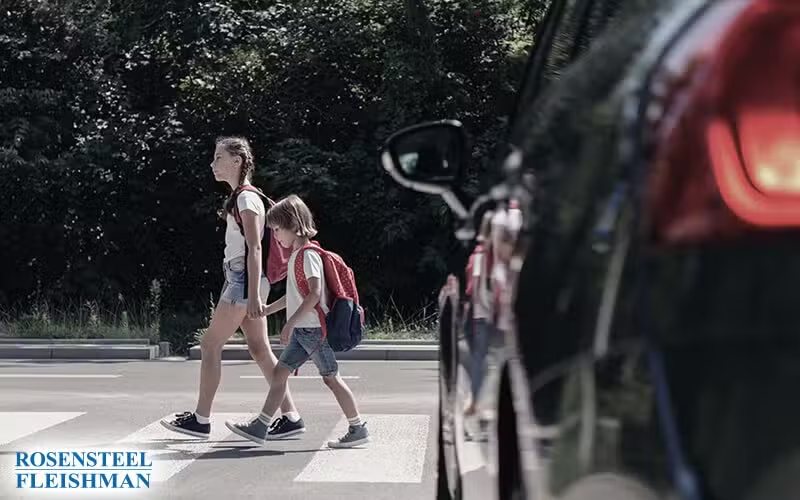

Pedestrian safety discussions often begin with annual deaths or injuries. Those totals can identify a public problem, but a useful analysis also asks who was counted, how exposure changed, where events occurred, which conditions were recorded, and whether the data support the claim being made.
Crash totals describe a population; they do not assign fault in an individual pedestrian collision. Site-specific evidence and the law governing the particular movement remain necessary.
Separate a count from a rate and a trend
- Number of crashes, injuries, serious injuries, and deaths in the same geography and time period
- Population, walking trips, distance walked, road mileage, traffic volume, or another exposure measure
- Year-to-year volatility versus a multi-year pattern and any change in reporting or classification
- Urban, suburban, rural, nighttime, speed, roadway type, intersection, age, impairment, and vehicle categories
A larger population or more walking can increase counts without increasing risk per trip. Conversely, a stable count can conceal higher risk when exposure falls. Statewide numbers should not be presented as Charlotte-specific evidence.
Use the current public data and preserve definitions
NCDOT’s crash-data page explains that crash data cover collisions among motor vehicles, pedestrians, bicyclists, and other road users and provides routes to request a specific report or data for a road segment or intersection. Record the extraction date, years, geography, fields, filters, and definitions.
- Distinguish preliminary from finalized data and reported crashes from all events
- Keep unknown and missing values instead of assigning them to the most convenient category
- Avoid treating an officer’s coded contributing circumstance as a final civil-fault determination
- Document denominator sources and uncertainty when comparing places or demographic groups
Right-of-way depends on the crossing context
G.S. 20-173 addresses driver yielding at marked and unmarked intersection crosswalks where signals are not operating and includes sidewalk or walkway approaches across driveways and building entrances.
G.S. 20-174 addresses crossings outside crosswalks and walking along highways while also requiring drivers to use due care to avoid pedestrians and particular precaution for a child or confused or incapacitated person. The complete location and movement determine which provisions apply.
Turn a pattern into a testable engineering question
- Operating speeds, crossing distance, signal timing, visibility, lighting, lane count, refuge, curb geometry, and turning conflicts
- Sidewalk continuity, transit access, land use, destinations, driveway density, construction, and accessibility
- Crash diagrams, near-crash observations, traffic volume, pedestrian exposure, complaints, maintenance, and planned projects
- Whether a proposed countermeasure addresses the observed conflict and how its result will be measured
A location with several crashes deserves examination, but prior events may differ in direction, time, behavior, and mechanism. Use individual reports and site observations before calling them the same pattern.
For one collision, build the evidence from the ground up
Document signal phase, crossing path, vehicle movement, speeds, visibility, lighting, weather, distractions, impact, final positions, video, electronic data, witnesses, roadway condition, and medical causation. Then identify the driver, owner, employer, roadway authority, contractor, property controller, and insurance without assuming every participant is responsible.
Avoid fear-based conclusions from incomplete data
A responsible safety article states what the dataset shows, what it cannot show, and what additional information would resolve the question. It should not use a rising total to promise a legal outcome or characterize every road user.
The collision-response guide explains how to preserve individual pedestrian-crash evidence in Charlotte.
Rosensteel Fleishman Car Accident & Injury Lawyers provides information about North Carolina pedestrian-accident claims. Population data can guide questions, while a claim requires its own movement, rule, causation, participant, loss, and deadline analysis.
Sources
Additional Car Accidents Articles
Left Turn Gap Judgment Errors When Visibility or Road Design Plays a Role
What happens when a driver begins a left turn and another vehicle suddenly changes lanes? The available opening can disappear almost instantly. In Charlotte traffic, this type of conflict may occur near multilane intersections where drivers must monitor oncoming vehicles, traffic signals, pedestrians, and vehicles moving between lanes at the same time. These crashes can […]
Multi Policy Insurance Considerations When One Policy Does Not Cover Every Loss
Insurance coverage after a serious car accident is not always limited to one policy. A collision may involve liability coverage, underinsured motorist coverage, medical payments coverage, an employer’s commercial policy, or another source of compensation. Identifying each applicable policy can affect how losses are documented, how negotiations develop, and whether a proposed resolution fairly reflects […]
What Happens When Vehicle Damage Appears Later Despite an Initial Inspection
Damage found days or weeks after a collision can complicate an insurance claim, especially when the cause of the crash or responsibility for the repairs remains disputed. A vehicle may look drivable during an initial roadside review in Charlotte, yet later show suspension problems, electrical faults, alignment issues, or damage hidden beneath exterior panels. When […]



