What happens when a driver begins a left turn and another vehicle suddenly changes lanes? The available opening can disappear almost instantly. In Charlotte traffic, this type of conflict may occur near multilane intersections where drivers must monitor oncoming vehicles, traffic signals, pedestrians, and vehicles moving between lanes at the same time. These crashes can […]
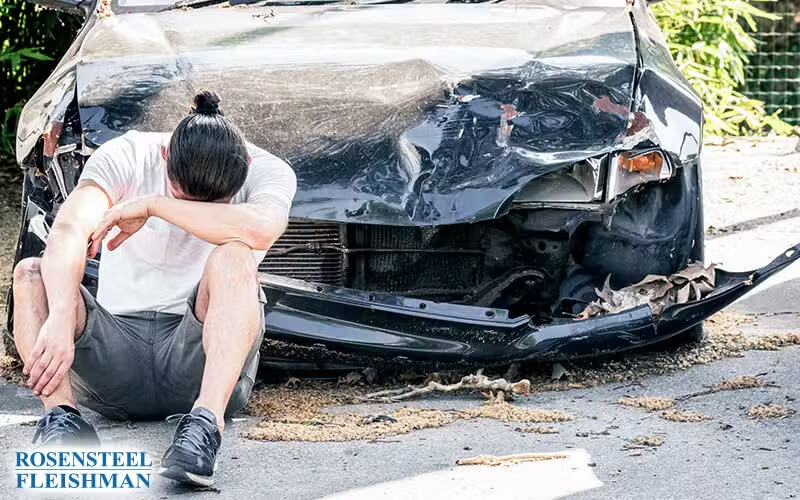

Rear-end crashes are often described with a single label, but the event may include changing traffic, a lead-vehicle stop, a following driver’s perception and braking, lane movement, visibility, road conditions, and more than one impact. A useful review reconstructs those events from sources rather than treating the impact location as the whole analysis.
A rear impact identifies where the vehicles contacted; it does not by itself establish following distance, speed, signaling, visibility, the reason for a stop, or every driver’s legal responsibility.
Build a second-by-second event table
- Road, lane, direction, grade, curve, lighting, weather, surface, traffic density, work zone, obstruction, and posted control
- Each vehicle’s position, speed range, following interval, lane movement, sight line, brake application, signal use, and point of contact
- Traffic light, queue, pedestrian, animal, debris, stalled vehicle, prior collision, emergency vehicle, or other reason for slowing or stopping
- Driver and witness account with interview date, vantage point, uncertainty, changed recollection, and supporting or conflicting source
- Photographs, video, audio, report, diagram, measurements, vehicle data, phone or app record, repair evidence, and preservation status
Review the following-distance question
North Carolina G.S. 20-152 states that a driver shall not follow another vehicle more closely than is reasonable and prudent, with regard to speed, traffic, and highway conditions. That standard calls for context. Record the available distance and time, whether the gap changed, surrounding traffic, visibility, surface, grade, speed, and the evidence supporting each estimate.
Review slowing, stopping, and signal evidence
G.S. 20-154 addresses movements, turning, stopping, decreasing speed, and signaling. Its application depends on the movement and circumstances described in the statute. Identify brake-lamp operation, other signals, the opportunity to signal, the lead vehicle’s reason for slowing, the duration of the event, and what the following driver could see. Do not infer a failed signal solely from a driver’s lack of recollection.
Check the report without treating it as a final decision
The North Carolina DMV-349 Instructional Manual defines fields used for vehicle movement, contributing circumstances, sequence of events, roadway conditions, diagram, and narrative. Compare the coded entry with the narrative, diagram, source notes, photographs, and other records. A report documents an investigation; a code or opinion is not a substitute for reviewing the underlying evidence and applicable law.
Separate impact evidence from injury causation
Vehicle damage, occupant movement, symptoms, diagnosis, and medical causation involve different records and qualified analysis. Avoid assuming that a low repair figure proves no injury or that visible damage establishes the nature of an injury. Preserve vehicle photographs and estimates while maintaining the clinical record in its source form.
Account for multiple impacts and vehicles
In a chain collision, identify each contact separately: sequence, location, direction of force, occupants, damage, witness account, and claimed effect. Determine whether a vehicle was pushed into another vehicle, whether an earlier impact changed its position, and whether one account combines several contacts into one event.
The related sudden-stop rear-end crash guide provides a practical source checklist for photographs, video, signals, witnesses, and vehicle condition.
Rosensteel Fleishman Car Accident & Injury Lawyers provides information about Charlotte car-accident claims involving rear-impact evidence. The statute, physical record, medical evidence, and disputed accounts should be reviewed separately before drawing conclusions.
Sources
Additional Car Accidents Articles
Multi Policy Insurance Considerations When One Policy Does Not Cover Every Loss
Insurance coverage after a serious car accident is not always limited to one policy. A collision may involve liability coverage, underinsured motorist coverage, medical payments coverage, an employer’s commercial policy, or another source of compensation. Identifying each applicable policy can affect how losses are documented, how negotiations develop, and whether a proposed resolution fairly reflects […]
What Happens When Vehicle Damage Appears Later Despite an Initial Inspection
Damage found days or weeks after a collision can complicate an insurance claim, especially when the cause of the crash or responsibility for the repairs remains disputed. A vehicle may look drivable during an initial roadside review in Charlotte, yet later show suspension problems, electrical faults, alignment issues, or damage hidden beneath exterior panels. When […]
How Claim Documentation Supports a Car Accident Case Without Perfect Records
After a car accident in Charlotte, recovery often develops one day at a time, and the records connected to that process may be less complete than expected. A person might visit an emergency room, schedule follow-up care with a family doctor, miss a physical therapy appointment because of pain, or forget to save a receipt […]