
Highway crashes do not always happen during predictable rush hour congestion or in the middle of heavy commuter traffic. In North Carolina, a collision may occur late at night, during an off-peak afternoon, or on a relatively open stretch of interstate where traffic conditions initially appear straightforward. Claims arising from these crashes can still become […]
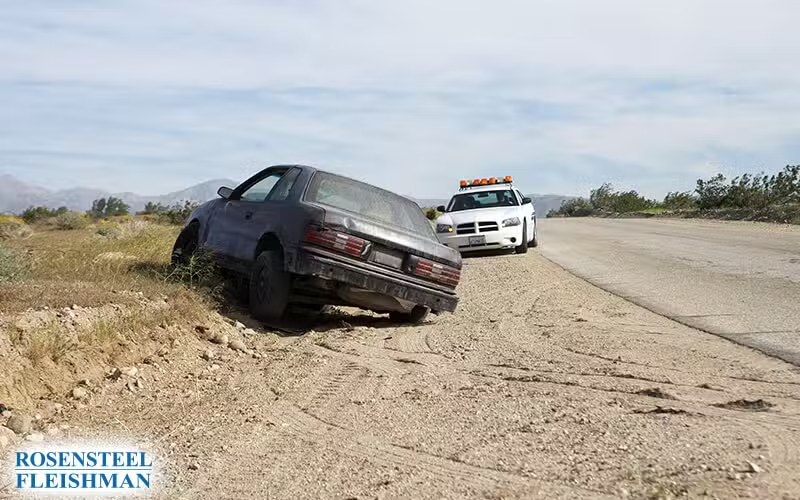

A tire blowout calls for steady vehicle control first; a driver should move off the roadway only when it is safe to do so. This is general driving-safety information, not a substitute for the conditions a driver can see at a particular roadside location.
Recognize the change and keep control of the vehicle
The National Highway Traffic Safety Administration’s TireWise guidance advises drivers to hold the steering wheel firmly with both hands, maintain speed if possible and safe, gradually release the accelerator, and correct steering as needed while looking where they want the vehicle to go. A sudden tire failure can pull or destabilize a vehicle, so smooth steering and gradual changes help a driver keep attention on the travel path.
Slow gradually before pulling over
Once the vehicle is stabilized, NHTSA advises continuing to slow and pulling off the road where and when it is safe. The safest stopping choice depends on traffic, shoulder width, visibility, and the vehicle’s position.
- Keep both hands on the wheel and look toward a safe path of travel.
- Maintain speed if possible and safe, then gradually release the accelerator.
- Correct steering as needed and continue slowing after the vehicle is stabilized.
- Pull off the road only where and when it is safe.
After the vehicle is stopped
After stopping, consider the traffic and roadside conditions before leaving the vehicle or attempting any roadside task. Do not stand in traffic or change a tire in a location that is not safe. A disabled vehicle, limited sight distance, a narrow shoulder, weather, and passing traffic can all change what is reasonably safe to do next.
Keep the immediate-safety question separate from the tire-record question
This guide addresses the first moments of controlling and stopping the vehicle. The separate guide to tire records, condition, and recall checks after a crash addresses what may be useful to identify after immediate safety is addressed. It does not decide why a tire failed or who may be responsible.
Information about a Charlotte car-accident matter involving a tire blowout is available when a collision needs a fact-specific review. General safety guidance does not determine fault, vehicle condition, coverage, injury cause, or damages in any individual event.
Sources
Additional Car Accidents Articles
Left Turn Gap Judgment Errors When Visibility or Road Design Plays a Role
What happens when a driver begins a left turn and another vehicle suddenly changes lanes? The available opening can disappear almost instantly. In Charlotte traffic, this type of conflict may occur near multilane intersections where drivers must monitor oncoming vehicles, traffic signals, pedestrians, and vehicles moving between lanes at the same time. These crashes can […]
Multi Policy Insurance Considerations When One Policy Does Not Cover Every Loss
Insurance coverage after a serious car accident is not always limited to one policy. A collision may involve liability coverage, underinsured motorist coverage, medical payments coverage, an employer’s commercial policy, or another source of compensation. Identifying each applicable policy can affect how losses are documented, how negotiations develop, and whether a proposed resolution fairly reflects […]
What Happens When Vehicle Damage Appears Later Despite an Initial Inspection
Damage found days or weeks after a collision can complicate an insurance claim, especially when the cause of the crash or responsibility for the repairs remains disputed. A vehicle may look drivable during an initial roadside review in Charlotte, yet later show suspension problems, electrical faults, alignment issues, or damage hidden beneath exterior panels. When […]




