
Highway crashes do not always happen during predictable rush hour congestion or in the middle of heavy commuter traffic. In North Carolina, a collision may occur late at night, during an off-peak afternoon, or on a relatively open stretch of interstate where traffic conditions initially appear straightforward. Claims arising from these crashes can still become […]
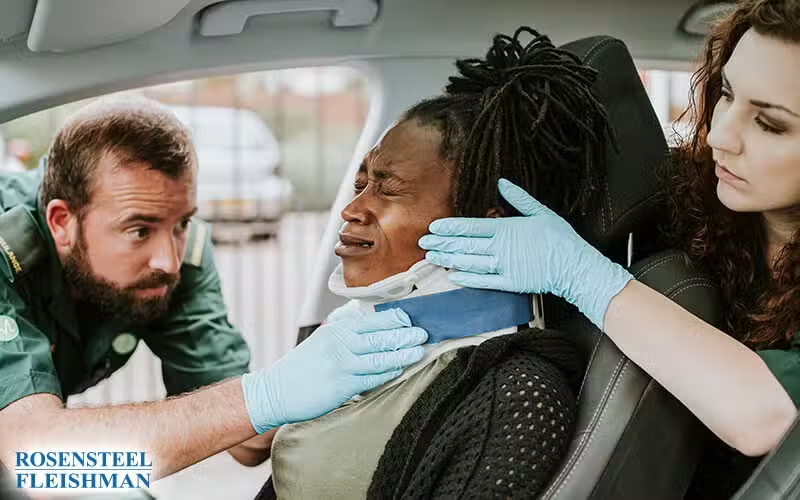

A rideshare collision can occur while a driver approaches a pickup, waits at a curb, loads a passenger, pulls into traffic, stops at a destination, opens a door, or ends the trip in the app. The rider, driver, cyclist, pedestrian, and nearby motorist may each have a different view of the transition.
A pickup or drop-off crash should be reconstructed from the curb and trip transition outward, with each person, movement, app event, vehicle, camera, and policy kept identifiable.
Fix the trip stage and location
- Requested pickup and destination, actual stopping point, curb side, travel direction, lane, parking space, loading area, crosswalk, bicycle lane, driveway, bus stop, and nearby address
- Request, acceptance, arrival, waiting, passenger entry or exit, trip start, route, stop, cancellation, completion, and driver log-on or log-off times
- Passenger receipt, driver and vehicle identity, plate, route map, fare, messages, calls, safety report, and any later correction
- Whether the passenger was seated, standing outside, entering, exiting, reaching for property, or moving away when the event occurred
- Lighting, weather, traffic, construction, obstructions, signs, markings, doors, hazard lamps, brake lamps, and vehicle resting positions
G.S. 20-280.2 requires an electronic receipt after TNC service with the origin and destination, total time and distance, and fare information. Preserve the original receipt and account export. A receipt can identify the service but may not show every movement or exact impact time.
Build a person-and-movement diagram
- Rideshare driver, passenger, vehicle owner, other drivers, cyclists, pedestrians, attendants, property personnel, witnesses, and responding officers
- Each person’s starting position, direction, path, obstruction, opportunity to see or hear, response, and position after the event
- Each vehicle’s approach, stop, door opening, pullout, turn, merge, lane change, contact point, and final position
- Passenger seating, restraint status when relevant, property being loaded, door used, and any secondary impact or fall
- Source for every entry and any conflict that remains unresolved
Preserve location and camera evidence
Photograph the overall roadway and curb before focusing on damage. Include signs, markings, sight lines, lighting, camera positions, loading areas, parked vehicles, and the route each person used. Request the complete approach and aftermath from traffic, transit, business, residence, parking, dash, doorbell, and vehicle cameras before routine overwrite.
Separate app status from collision responsibility
G.S. 20-280.4 assigns financial-responsibility requirements to identified stages of TNC activity and requires specified coverage and precise app-time exchanges in a claims coverage investigation or accident. Those records can affect the insurance map, but app status alone does not decide who caused the movement or injury.
- Request the driver’s log-on, log-off, and service times for the statutory window around the crash
- Identify personal, TNC, other-driver, commercial, household, medical-payments, and uninsured or underinsured coverage for review
- Preserve each written coverage position without treating a policy limit as proof of liability or damages
- Keep simultaneous rideshare or delivery-app activity as an open question until the records answer it
Use the report as a lead, not a completed reconstruction
G.S. 20-166.1 addresses notice, investigation, and reports for specified motor-vehicle crashes. Compare the report’s people, vehicles, diagram, narrative, location, contributing circumstances, and injury entries with photographs, video, app data, witness accounts, and any supplement or correction.
Keep the injury record tied to the event
- Immediate complaints, responder observations, evaluation, diagnoses, treatment, restrictions, and follow-up
- The claimed movement or contact and the source supporting it
- Pre-event health and function, later events, treatment gaps, and competing explanations
- Work, transportation, household, and other functional changes supported by dated records
The related Uber trip-and-app record preservation guide explains how to request and organize receipts, status times, route data, communications, devices, and source metadata after the pickup or drop-off event is identified.
Rosensteel Fleishman Car Accident & Injury Lawyers provides information about North Carolina rideshare accident claims involving pickup or drop-off evidence. The analysis should preserve uncertainty rather than forcing disputed movements into one account.
Sources
Additional Car Accidents Articles
Left Turn Gap Judgment Errors When Visibility or Road Design Plays a Role
What happens when a driver begins a left turn and another vehicle suddenly changes lanes? The available opening can disappear almost instantly. In Charlotte traffic, this type of conflict may occur near multilane intersections where drivers must monitor oncoming vehicles, traffic signals, pedestrians, and vehicles moving between lanes at the same time. These crashes can […]
Multi Policy Insurance Considerations When One Policy Does Not Cover Every Loss
Insurance coverage after a serious car accident is not always limited to one policy. A collision may involve liability coverage, underinsured motorist coverage, medical payments coverage, an employer’s commercial policy, or another source of compensation. Identifying each applicable policy can affect how losses are documented, how negotiations develop, and whether a proposed resolution fairly reflects […]
What Happens When Vehicle Damage Appears Later Despite an Initial Inspection
Damage found days or weeks after a collision can complicate an insurance claim, especially when the cause of the crash or responsibility for the repairs remains disputed. A vehicle may look drivable during an initial roadside review in Charlotte, yet later show suspension problems, electrical faults, alignment issues, or damage hidden beneath exterior panels. When […]


