Highway crashes do not always happen during predictable rush hour congestion or in the middle of heavy commuter traffic. In North Carolina, a collision may occur late at night, during an off-peak afternoon, or on a relatively open stretch of interstate where traffic conditions initially appear straightforward. Claims arising from these crashes can still become […]
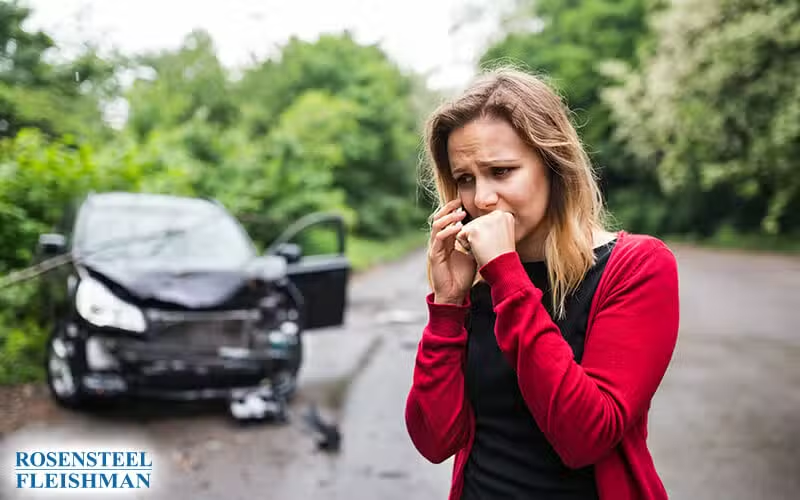

Interstate 85 carries local trips, commuting traffic, commercial vehicles, and long-distance travel through the Charlotte area. That mix can produce serious crashes, but a road name alone does not explain why a particular collision happened. A defensible analysis needs a defined road segment, time period, crash severity, traffic exposure, and evidence from the event.
A useful corridor analysis separates what an official data set records from the conclusion a reader wants to draw.
Define the corridor before comparing crash records
- Exact I-85 segment, interchange limits, direction, mile marker, ramps, frontage roads, and whether the location falls inside Charlotte or another jurisdiction
- Start and end dates, reporting-agency coverage, and whether the data include reportable crashes, all calls for service, or only fatal and serious-injury events
- Crash count, injury severity, vehicle types, roadway and weather conditions, work zones, time of day, and recorded contributing circumstances
- Traffic volume or vehicle miles traveled when making a rate comparison instead of a raw-count comparison
The NCDOT Traffic Safety Unit explains that crash data are used to identify patterns and that the public may request records for a particular road segment or intersection. A count without the underlying definitions should not be presented as proof that I-85 is North Carolina's “deadliest” road or that one condition caused every serious crash.
Use Charlotte safety data for patterns, not individual fault
Charlotte's Vision Zero program uses fatal and serious-injury crash data, a High Injury Network, and related tools to study system-level safety patterns. Those resources can help frame corridor conditions and priorities. They do not decide which driver, company, vehicle owner, roadway entity, or other party is responsible for an individual collision.
Investigate the event at the correct scale
- Traffic-camera, business, dash-camera, vehicle, and phone evidence that may be overwritten or lost
- Police report, dispatch record, photographs, measurements, debris, tire marks, damage, tow and inspection records
- Lane closures, construction plans, traffic-control changes, maintenance history, weather, lighting, sight distance, and roadway geometry
- Driver, passenger, witness, responder, employer, carrier, owner, and maintenance records that bear on the event
Do not convert a corridor pattern into a cause
Congestion, speed changes, lane merging, commercial traffic, construction, weather, and limited visibility may all require investigation. Their presence does not establish that one of them caused the crash. Record the source, timestamp, geographic coverage, and limitation for every fact before connecting it to an event.
Preserve time-sensitive visual evidence
The related Charlotte traffic-camera evidence guide explains how to identify camera owners, request preservation, and document gaps before routine overwriting removes potentially useful footage.
Rosensteel Fleishman Car Accident & Injury Lawyers provides information about consulting a Charlotte car accident lawyer when an I-85 collision involves disputed responsibility, serious injuries, commercial vehicles, missing evidence, or insurance questions.
Sources
Additional Car Accidents Articles
Left Turn Gap Judgment Errors When Visibility or Road Design Plays a Role
What happens when a driver begins a left turn and another vehicle suddenly changes lanes? The available opening can disappear almost instantly. In Charlotte traffic, this type of conflict may occur near multilane intersections where drivers must monitor oncoming vehicles, traffic signals, pedestrians, and vehicles moving between lanes at the same time. These crashes can […]
Multi Policy Insurance Considerations When One Policy Does Not Cover Every Loss
Insurance coverage after a serious car accident is not always limited to one policy. A collision may involve liability coverage, underinsured motorist coverage, medical payments coverage, an employer’s commercial policy, or another source of compensation. Identifying each applicable policy can affect how losses are documented, how negotiations develop, and whether a proposed resolution fairly reflects […]
What Happens When Vehicle Damage Appears Later Despite an Initial Inspection
Damage found days or weeks after a collision can complicate an insurance claim, especially when the cause of the crash or responsibility for the repairs remains disputed. A vehicle may look drivable during an initial roadside review in Charlotte, yet later show suspension problems, electrical faults, alignment issues, or damage hidden beneath exterior panels. When […]