Highway crashes do not always happen during predictable rush hour congestion or in the middle of heavy commuter traffic. In North Carolina, a collision may occur late at night, during an off-peak afternoon, or on a relatively open stretch of interstate where traffic conditions initially appear straightforward. Claims arising from these crashes can still become […]
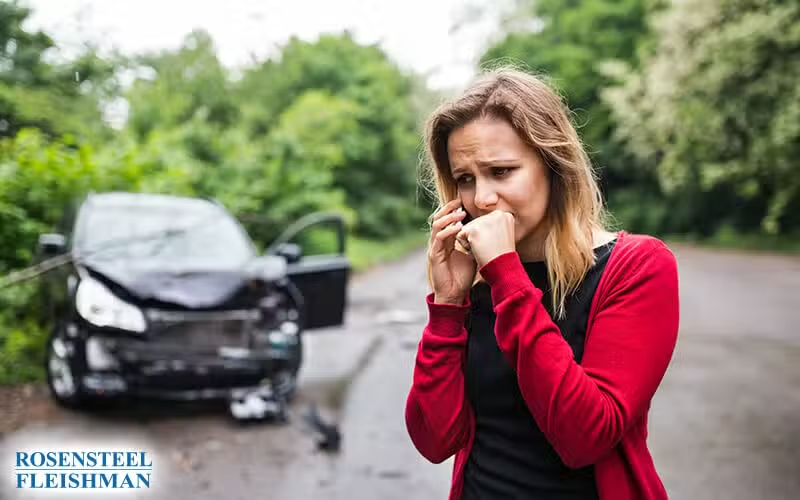

A collision in a parking garage or while a vehicle is with a valet can involve the vehicle owner, operator, valet employee, valet company, property owner or manager, another driver, contractors, and multiple insurers. Record each role and relationship instead of assuming that the person holding the keys has every legal or insurance responsibility.
A valet ticket, police report, employee statement, or insurance decision may document part of the event, but none alone decides every issue of control, responsibility, coverage, or loss.
Freeze the handoff and custody record
- Date, time, facility, garage level, lane, space, entrance, exit, traffic direction, lighting, weather, surface, signs, gates, mirrors, markings, and obstructions
- Valet ticket, receipt, reservation, terms, vehicle inspection, key tag, check-in and retrieval times, attendant identity, uniform, employer, and shift
- Vehicle year, make, model, trim, plate, vehicle identification number, owner, driver, permission, mileage, pre-event condition, and existing damage
- Who possessed the keys and vehicle at each stage, who moved it, where it was stored, and when custody returned
- Photos and video before drop-off, at the scene, after retrieval, during towing, inspection, repair, or later condition changes
Identify every source of scene evidence
- Witnesses, passengers, attendants, supervisors, security staff, responding officers, tow operator, repairer, and other drivers
- Garage, lobby, entrance, elevator, payment, access-control, license-plate, dash-camera, body-camera, vehicle, and nearby-business video
- Incident reports, dispatch, radio, texts, schedules, training, policies, maintenance, complaints, prior incidents, and repair records
- Vehicle event data, scans, estimates, measurements, photographs, parts, paint transfer, and physical condition
- Preservation request, custodian, retention period, response, export format, metadata, and chain of custody
Use the crash report as a structured lead
G.S. 20-166.1 addresses reports and investigations for specified motor-vehicle crashes. Whether a particular private-property event produces a report depends on the facts and statutory requirements. Preserve the report number, agency, reporting officer, supplements, and any request to correct factual information.
The current NCDMV DMV-349 instructional manual explains the fields and codes used in North Carolina crash reports. Compare its definitions with the actual report rather than inferring fault, coverage, injury severity, or admissibility from one code.
Map people, businesses, and contracts
- Vehicle owner and driver; valet employee and employer; valet contractor; property owner, tenant, manager, security, maintenance, and garage operator
- Contracts, service agreements, indemnity provisions, insurance requirements, operating rules, access rights, and control over the location or worker
- Each entity’s exact legal name, address, registered agent, insurer, claim number, and stated role
- The act or omission alleged, evidence supporting it, contrary evidence, and unresolved control or agency questions
Keep claim paths separate
Potential paths may include another driver’s liability coverage, the valet or business policy, the vehicle owner’s collision or other first-party coverage, and a separate injury claim. The Department of Insurance after-an-accident guidance addresses repair, fault, total-loss, injury, and disagreement issues. Read the actual policies and written positions before deciding which path applies.
- Repair estimate, supplements, towing, storage, rental or loss of use, diminished-value question, and total-loss documents
- Medical and functional chronology if anyone was injured, kept separate from the property file
- Every claim number, adjuster, requested document, statement, coverage position, payment, offer, and release
- Filing, notice, preservation, and response dates recorded with their authority and reviewer
The related North Carolina responsible-party mapping guide shows how to connect ownership, employment, contracts, control, insurance, evidence, and legal theories without treating every listed entity as liable.
Rosensteel Fleishman Car Accident & Injury Lawyers provides information about Charlotte car-accident claims involving parking facilities or valet custody. The responsible parties and coverage depend on the evidence and governing agreements.
Sources
Additional Car Accidents Articles
Left Turn Gap Judgment Errors When Visibility or Road Design Plays a Role
What happens when a driver begins a left turn and another vehicle suddenly changes lanes? The available opening can disappear almost instantly. In Charlotte traffic, this type of conflict may occur near multilane intersections where drivers must monitor oncoming vehicles, traffic signals, pedestrians, and vehicles moving between lanes at the same time. These crashes can […]
Multi Policy Insurance Considerations When One Policy Does Not Cover Every Loss
Insurance coverage after a serious car accident is not always limited to one policy. A collision may involve liability coverage, underinsured motorist coverage, medical payments coverage, an employer’s commercial policy, or another source of compensation. Identifying each applicable policy can affect how losses are documented, how negotiations develop, and whether a proposed resolution fairly reflects […]
What Happens When Vehicle Damage Appears Later Despite an Initial Inspection
Damage found days or weeks after a collision can complicate an insurance claim, especially when the cause of the crash or responsibility for the repairs remains disputed. A vehicle may look drivable during an initial roadside review in Charlotte, yet later show suspension problems, electrical faults, alignment issues, or damage hidden beneath exterior panels. When […]