Mechanical problems can affect how a collision happens, but proving their role usually requires more than an early photograph or a brief statement at the scene. Documentation often becomes more important as the investigation develops, especially when questions arise about maintenance, repairs, worn parts, warning lights, or a vehicle’s condition after impact. Treating evidence collection […]
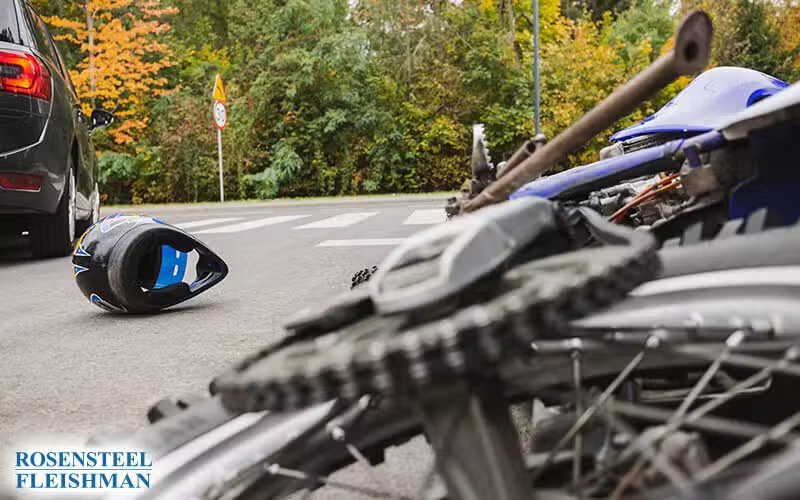

A motorcycle may be moved, stored, inspected, disassembled, repaired, or declared a total loss soon after a crash. Each step can change where the motorcycle is located, who controls it, which components remain attached, and what an observer can see. A condition-and-custody record preserves those facts in sequence without asking one photograph or one inspection to answer every question.
A condition-and-custody record documents what was observed, when it was observed, and who controlled the motorcycle or item; it does not establish pre-crash condition, crash mechanics, fault, or admissibility by itself.
Start with identity and observation details
- Year, make, model, vehicle identification number, registration plate, mileage display, color, accessories, and distinguishing features recorded from the item or a named source
- Observation date and time, location, person making the observation, reason for access, and whether the motorcycle had already been moved or handled
- Overall and close photographs showing all sides, instrument display, controls, wheels, tires, forks, frame areas, lights, mirrors, exhaust, luggage, and visible loose or detached parts
- Original file names, capture device, timestamps, metadata, export method, and any missing view or inaccessible area kept in the log
Describe condition without reconstructing the crash
Use neutral observations such as bent, cracked, detached, scraped, wet, missing, displaced, illuminated, or not visible. Do not convert an observation into an unsupported statement about when damage occurred or what caused it. Record dirt, fluids, temporary markings, weather exposure, packaging, or later handling that may affect what is visible.
The North Carolina Motorcyclist Handbook identifies controls, tires, wheels, fluids, lights, mirrors, signals, brakes, horn, and related checks riders should understand. Those categories can make an inventory more complete, but the handbook does not determine a motorcycle’s condition at the crash time or the legal significance of an observed condition.
Track every separate item
- Helmet, visor, eyewear, jacket, gloves, footwear, luggage, cargo, keys, manuals, registration materials, toll device, camera, navigation unit, phone mount, or communication equipment
- Detached component, fastener, fragment, fluid container, removed part, replacement part, diagnostic printout, scan result, measurement, estimate, or technician note
- Item identifier, description, initial location, packaging, label, photographs, person receiving it, transfer date, destination, and reason for transfer
- Uncertainty about ownership, prior condition, completeness, storage, testing, alteration, or disposal recorded rather than resolved by assumption
Create a custody and work-authorization timeline
- Scene removal, tow operator, tow destination, intake time, storage space, insurer inspection, repair-facility intake, appraiser visit, owner access, and later transfer
- Name and organization of the releasing and receiving person, date and time, item condition, documents exchanged, and confirmation or receipt
- Authorization for inspection, teardown, diagnostic work, movement, repair, salvage, release, or disposal kept as separate decisions
- Request to retain removed parts or delay alteration recorded with the response; do not interfere with lawful custody or undertake unsafe inspection
The North Carolina Department of Insurance discusses estimates, repair-shop selection, appraisal, repairable vehicles, and total-loss treatment in After an Accident. The policy, ownership documents, authorizations, and communications for the particular claim remain the source for who may inspect, move, repair, or release the motorcycle.
Preserve originals and derived materials separately
Keep original photographs, videos, electronic files, labels, receipts, and written records unchanged. Crops, annotations, image adjustments, spreadsheets, transcriptions, and comparison files should be labeled as working copies. North Carolina Rule of Evidence 901 addresses authentication or identification. A careful source and custody record does not assure admissibility, but it prevents the working file from losing basic information about what an item is claimed to be.
The related guide to reading a motorcycle repair estimate after a crash explains how to compare proposed operations, parts, labor, supplements, and completed work. This page addresses the physical condition and custody record that should remain separate from the estimate.
Rosensteel Fleishman Car Accident & Injury Lawyers provides general evidence-organization information for people who may later speak with a Charlotte motorcycle accident lawyer. Inspection methods, evidence duties, fault, insurance, and legal consequences depend on the complete facts and qualified review.
Sources
Additional Car Accidents Articles
Merging Accident Overview When the Entering Driver Is Not Solely at Fault
When a driver enters a travel lane and a collision follows, the first step is to examine how every vehicle was moving before impact. The entering driver may have had a duty to yield, but that fact alone does not resolve fault. Speed, signaling, lane changes, following distance, visibility, and the actions of the other […]
Hazard Lights and Visibility After Crash Events in Poor Weather
After a collision, the process of protecting people and preserving a potential claim begins with immediate decisions at the scene. Poor weather can reduce sight distance, hide vehicle damage, and make it difficult for approaching drivers to recognize that traffic has stopped. Turning on emergency flashers may help alert others, but those lights are only […]
Single Vehicle Crash Overview When Another Party May Share Responsibility
A crash involving only one vehicle does not always mean the driver bears all responsibility. A family dealing with injuries, medical bills, vehicle damage, and missed work may discover that a careless driver, a defective vehicle component, unsafe road conditions, or another outside factor contributed to what happened. Understanding these possibilities can help someone in […]