Street layout can help explain how a neighborhood collision unfolded, but it does not establish fault by itself. Clear records of visibility, lane markings, and vehicle movements help separate observations from assumptions.
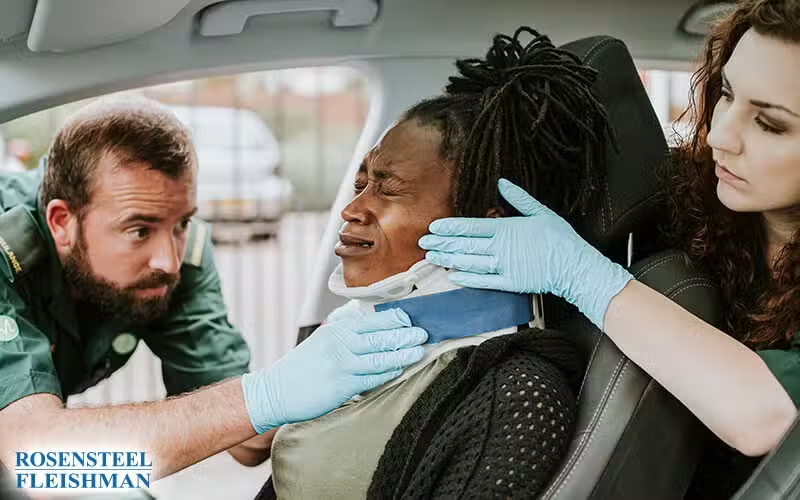

Memory after a collision can be incomplete, especially when events involve pain, treatment, several calls, vehicle problems, and insurance correspondence. A chronology can organize what happened without pretending that every time is exact. Each entry should identify its source and distinguish fact, estimate, later recollection, and unresolved conflict.
A useful chronology separates the time an event occurred, the time someone recorded it, and the source that supports it.
Create a source-linked event table
- Date, clock time, time zone, location, event, people or organizations involved, and a short neutral description
- Source type, source name, file name or record page, author or custodian, creation time, received time, and link or storage location
- Whether the time is exact, system-generated, estimated, rounded, copied from another source, or later corrected
- Conflicting account, missing record, follow-up request, response deadline, and the person responsible for the next step
- Private notes kept separate from a clean factual chronology so a personal impression is not mistaken for a record entry
Anchor the collision sequence to public records
G.S. 20-166.1 addresses reportable crashes and the reports prepared by drivers and law-enforcement officers. The statute and the actual report should be read together; a report is one source in the chronology, not a complete reconstruction.
The current NCDMV DMV-349 Instructional Manual explains the report’s fields, diagram, narrative, codes, units, persons, road conditions, sequence of events, and contributing circumstances. Use those definitions to decode the document, then compare it with photographs, video, 911 or dispatch records, witness accounts, vehicle data, and the scene.
Build parallel medical and loss tracks
- Symptom onset and changes, emergency care, appointments, testing, diagnoses, referrals, treatment, restrictions, missed care, and clinician revisions
- Pre-crash baseline, prior conditions, later events, medication effects, and competing explanations identified in the actual records
- Work absence, reduced hours, duties, accommodations, attempted return, earnings, household tasks, transportation, and other functional changes
- Medical bills, insurer explanations of benefits, payments, adjustments, balances, vehicle costs, wage documents, and reimbursement interests
- Offers, releases, authorizations, denials, reservations, requests, responses, deadlines, signatures, payments, and unresolved conditions
Preserve original files and record provenance
North Carolina Rule of Evidence 901 describes authentication or identification as evidence sufficient to support a finding that a matter is what its proponent claims. Its illustrations include testimony from a person with knowledge, distinctive characteristics, public records, and a process or system that produces a result.
- Keep the original email, message export, photograph, video, PDF, audio, portal download, envelope, and accompanying metadata when available
- Record who created, sent, received, downloaded, copied, renamed, converted, redacted, annotated, or transferred each file
- Do not overwrite an original with a cropped image, screenshot, marked exhibit, compressed copy, or revised spreadsheet
- Retain the native file and create working copies; document corrections by adding a dated entry rather than silently replacing the earlier one
- Use consistent file names and an index that another person can follow without relying on undocumented memory
Reconcile conflicts instead of hiding them
Different records may use approximate dispatch times, device clocks, service dates, billing dates, or later recollections. List both entries, identify the source of each, check clock settings or document conventions, and state what remains uncertain. A transparent range is more useful than false precision.
The related North Carolina police-report guide explains how to read and verify the DMV-349. This page owns the broader task of connecting collision, medical, work, expense, and communication records in one auditable chronology.
Rosensteel Fleishman Car Accident & Injury Lawyers provides information about Charlotte car-accident claims with complex record histories. The chronology should help a reader locate evidence and questions; it should not replace the underlying records.
Sources
Additional Car Accidents Articles
Reassessing a Crash Claim After a Traffic Citation Is Dismissed in Charlotte
A dismissed traffic citation changes one part of the record, but it does not answer every question about a crash claim. The next step depends on whose citation was dismissed, the available evidence, and the insurer’s stated reasoning.
How Long Settlement Payments Can Take After an Accident with Outstanding Liens
A settlement agreement does not always mean that the injured person will immediately receive the full amount of the payment. Outstanding medical liens, reimbursement claims, unpaid treatment balances, and related financial obligations may need to be identified and resolved before the remaining funds can be distributed. In a Charlotte car accident claim, organized records can […]
How Car Accident Settlements Are Negotiated When Liability Is Shared
What happens when both drivers may have contributed to a crash and the insurance companies do not agree about who should pay? That question can quickly become complicated because settlement discussions often depend on much more than vehicle damage or a single statement about what happened. Adjusters may compare driver accounts, photographs, witness statements, medical […]