
People and organizations other than the two apparent drivers may observe the event, control the roadway, own a vehicle, employ a driver, maintain equipment, load cargo, hold video, provide emergency care, or create a later record. Their role should be verified rather than assumed from presence at the scene. The third-party matrix should identify the […]
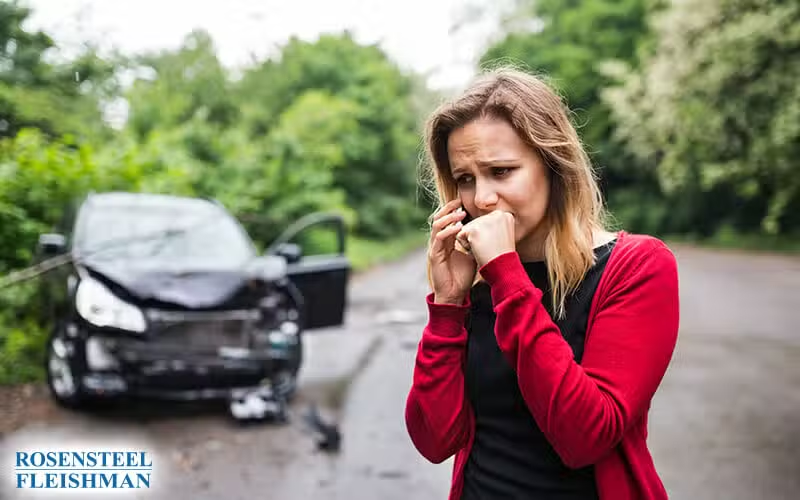

A damaged vehicle can be moved from the road to a tow yard, repair facility, insurer storage lot, auction, salvage buyer, or owner in a short period. Repairs, power cycles, weather, handling, disposal, and transfers can change or remove information before the parties understand what needs inspection.
The damaged vehicle is both property that must be managed and a changing collection of physical, electronic, and documentary evidence.
Identify the vehicle and every custodian
- Vehicle identification number, year, make, model, trim, powertrain, owner or lessee, custodian, insurer, repair facility, and storage location
- Tow operator, storage lot, appraiser, adjuster, repair facility, lender, rental company, auction, salvage buyer, and every transfer date
- Keys, key fobs, title, registration, owner’s manual, service records, repair records, recalls, prior damage, and prior photographs
- Tow, storage, estimate, repair, total-loss, auction, salvage, title, rental, and transfer records
- Current physical location, storage terms, accruing charges, access rules, planned work, scheduled sale, and disposal date
Send a specific preservation request
A useful request identifies the exact vehicle, crash, custodian, evidence categories, anticipated inspection, and proposed coordination. It should address the vehicle body, damaged components, tires, lights, restraints, modules, keys, batteries, infotainment, connected systems, diagnostic records, photographs, estimates, scans, and removed parts without demanding control the sender does not have.
Preservation does not require a vehicle to remain indefinitely in unsafe or expensive storage. The parties can address timing, reasonable access, inspection sequence, protective conditions, documentation, and what may occur after agreed work is complete. Urgency increases when sale, repair, transfer, or disposal is scheduled.
Document condition before anything changes
- Photograph all sides, roof, underbody when safe, interior, restraints, glass, lights, tires, wheels, controls, warning displays, and identification labels
- Use overview, midrange, and close images with an orientation record and a scale where appropriate
- Record odometer, ignition state, fluid leaks, deployed components, loose parts, stored cargo, deformation, and environmental exposure
- Identify each removed, replaced, tested, scanned, powered, repaired, released, or discarded component
- Keep the original media files, metadata, notes, diagrams, measurement data, and read-only working copies
Coordinate a fair inspection process
North Carolina Rule of Civil Procedure 34 addresses requests to produce and permit inspection, copying, testing, or sampling of designated items in a party’s possession, custody, or control. Its litigation procedure is not a substitute for voluntary pre-suit coordination, ownership consent, safety rules, or a court order where required.
North Carolina Rule of Civil Procedure 45 addresses subpoenas, including commands to produce and permit inspection of identified materials or premises. Scope, service, notice, objections, protection, custody, and the correct recipient require case-specific review.
- Define the inspection purpose, participants, credentials, equipment, testing limits, destructive steps, and safety plan
- Allow notice and a reasonable opportunity for other interested parties to attend when the circumstances require it
- Agree on power-up, movement, disassembly, scanning, sampling, part removal, restoration, and post-inspection storage before work begins
- Record each operator, tool, calibration or version information, start and end time, observation, result, limitation, and custody transfer
- Do not perform destructive testing or dispose of a component without appropriate authority and a documented protocol
Preserve electronic and diagnostic information
NHTSA explains that an event data recorder may retain technical vehicle and occupant information for a brief period around a crash. Whether a vehicle has retrievable information, which fields exist, how many events are retained, and what procedure applies depend on the vehicle and system. EDR data is one possible component of the vehicle evidence, not a complete record or an automatic statement of fault.
Other potential sources include diagnostic trouble codes, restraint-control information, infotainment or navigation records, connected-service data, camera systems, key data, and repair scans. Access, privacy, retention, ownership, and interpretation differ. Preserve the source and obtain lawful access before assuming a download is available.
Maintain authentication and chain of custody
North Carolina Evidence Rule 901 requires evidence sufficient to support a finding that an item is what its proponent claims. Record the vehicle identity, condition, custody, process, system, operator, source file, tool output, and every material change. A report without a reliable connection to the correct vehicle and process can leave avoidable questions.
Compare the vehicle with independent evidence
Vehicle damage should be compared with scene measurements, debris, marks, roadway conditions, photographs, video, witness accounts, DMV-349 information, repair history, event data when available, and the proposed collision sequence. A deformation pattern or damaged part may support several explanations until the complete record is analyzed.
The related car-accident photograph and video guide explains source files, metadata, vantage point, continuity, and preservation. This page owns damaged-vehicle custody and inspection.
Rosensteel Fleishman Car Accident & Injury Lawyers provides information about consulting a Charlotte car-accident lawyer when a damaged vehicle needs preservation. Early review can identify the vehicle, custodian, threatened change, inspection purpose, and reasonable next step.
Sources
Additional Car Accidents Articles
How to Audit the Evidence in a Charlotte Car Accident Claim
A car accident claim evaluation is only as reliable as its evidence map. A large file can still be weak if it lacks a source for a key issue, includes conflicting totals, or treats an insurer’s position as an established fact. An audit should test completeness before estimating outcome. The audit should assign every material […]
How to Build a Source-Linked Car Accident Timeline
An accident timeline can combine device timestamps, calls, photographs, report entries, medical visits, insurer communications, repair events, work records, and personal recollection. Those sources do not have equal precision. A useful timeline keeps the source and confidence attached to every time entry. Each timeline row should contain the date and time, event, source, source-created date, […]
North Carolina Car Accident Claim Checklist: From Report to Resolution
A car accident claim should move by completed evidence gates, not by a generic calendar. Reporting, vehicle inspection, treatment records, coverage investigation, wage documentation, lien review, evaluation, negotiation, and release review may overlap or require later correction. Each claim stage should identify required inputs, responsible person, completion evidence, unresolved issues, decision made, and the record […]



