
A pothole can turn an ordinary bicycle ride into a complicated dispute about what happened, who knew about the road or property condition, and whether reasonable steps could have prevented the crash. When a cyclist and a property owner remember the condition differently, photographs, maintenance records, witness accounts, medical documentation, and the timing of repairs […]
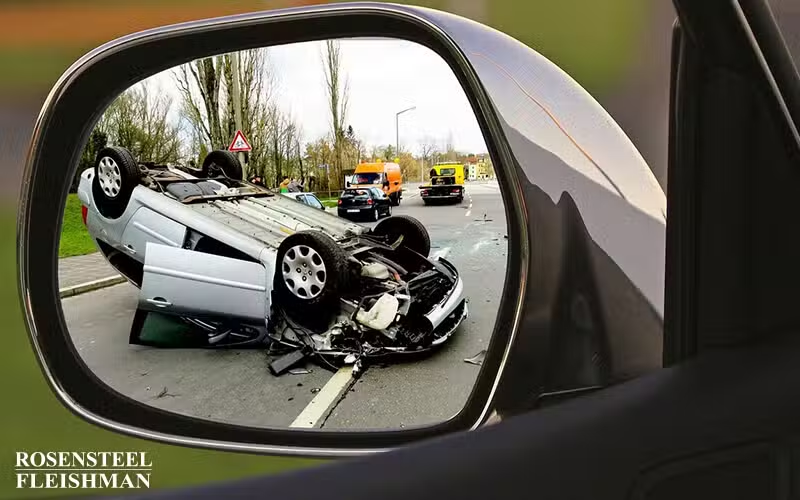

After a North Carolina car crash, a report, policy, estimate, clinical record, and deadline notice may all matter, but each document answers a different question and should be read for its limited purpose.
No single item usually decides the entire matter. A police report records information gathered for a traffic investigation; an insurance letter may address coverage or a requested item; a repair estimate describes an assessed vehicle loss; and a medical record describes care or observations. Preserve the originals before treating any one document as a complete answer.
Create a source index rather than one combined narrative
- Identify the date, time, location, vehicles, people, roadway, weather, witnesses, photographs, video, responding agency, report number, and later changes to any vehicle or scene evidence.
- Keep vehicle damage, repair, tow, storage, rental, medical, wage, policy, and insurance correspondence in separate dated folders.
- Distinguish a firsthand observation from an opinion, estimate, diagnosis, insurer decision, or later reconstruction.
Match the document to its limited purpose
The North Carolina Department of Insurance explains that an adjuster will investigate fault after a crash. That does not make a report, citation, vehicle position, or insurer statement a final legal determination. Compare each document with the original evidence and identify what it does not address.
G.S. 1-52 and G.S. 1-53 contain limitations provisions that may be relevant to different claim types. A statute, policy deadline, court notice, or agency letter should be retained with its source; a general webpage should not be used to calculate an individual deadline.
A declarations page, policy endorsement, release, reservation-of-rights letter, payment, or repair estimate should also be kept in full. It may address a limited coverage or property question without resolving medical causation, responsibility, or every claimed loss.
Use the police-report guide for the next step
The related guide to reading a North Carolina car-accident police report addresses the narrower task of comparing report fields with the original crash evidence.
Rosensteel Fleishman Car Accident & Injury Lawyers provides general information about discussing a North Carolina car-accident claim. The complete record and current law determine which documents and questions need review.
Sources
Additional Car Accidents Personal Injury Articles
How Braking Response Motorcycle Accidents Can Influence Crash Investigations in Charlotte NC
Recovery after a motorcycle crash often depends on more than waiting for injuries to heal. Ongoing pain can limit movement, interrupt sleep, reduce concentration, and make ordinary activities difficult, even when a rider is following medical advice and trying to move forward. For a rider injured near I-77 or another busy Charlotte roadway, questions about […]
How Back Injuries Affect an Injury Claim and Long Term Recovery Concerns
The decisions made after an accident can affect both physical recovery and the information available to explain an injury claim later. Back injuries are a good example because symptoms do not always reveal their full severity immediately. Someone may walk away from a collision believing they are only sore, then experience increasing stiffness, limited movement, […]
Injury Awareness Immediately After a Crash Without Obvious Symptoms
A crash can leave a family focused on the most immediate questions first: Is everyone safe, can the vehicles be moved, and what needs to happen next? When no one appears seriously hurt, it is easy to assume the physical effects of the collision are already understood. In reality, injury awareness immediately after a crash […]



