
When a crash disrupts more work and family responsibilities than expected, dated records can help explain what changed. Keep observations about distraction separate from records of daily consequences.
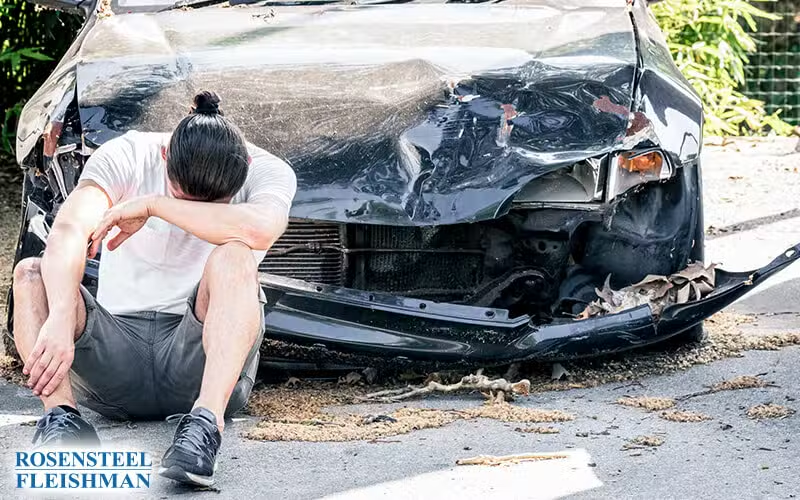

A crash involving one damaged vehicle can still raise questions about another driver, a road condition, or a vehicle component. The first task is to identify evidence of an outside cause and distinguish it from a possibility that has not yet been supported.
As Attorney Matthew Fleishman puts it, “The number of vehicles involved does not always tell the full story about responsibility.” A careful review still considers the driver’s own actions and does not assume that finding another contributing factor guarantees compensation.
Describe the event before naming a responsible party
Write down the sequence in ordinary terms: direction of travel, lane, an observed movement or condition, the driver’s response, and the collision or loss of control. Separate what you saw from what you learned later. If you do not know why the vehicle moved unexpectedly, leave that question open.
For each suspected cause, record the supporting source and what is missing. This keeps an investigation focused without turning a list of possibilities into accusations.
- Another vehicle: What did it do, where was it, and is there a description, plate, witness, or recording? Identify whether any contact occurred.
- A roadway condition: What was present at the time, where exactly was it, and what evidence connects it to the loss of control?
- A possible component failure: What was observed before impact, and has anyone qualified examined whether damage preceded or resulted from the crash?
- The driver’s response: What steering, braking, speed, or lane movement can the available records establish? Include evidence that complicates the account as well as evidence that supports it.
When another vehicle leaves without contact
An unidentified vehicle and an identified driver present different investigative and insurance questions. Preserve an original recording and witness details if available. Describe the other vehicle’s movement without filling in an unknown identity or assuming intent.
Do not assume uninsured-motorist coverage automatically applies to evasive action without contact. North Carolina’s uninsured-motorist statute uses collision-between-vehicles language for the unidentified-driver bodily-injury procedure and includes reporting and insurer-notice requirements. The facts, policy, and applicable legal interpretation need specific review. Proof of an outside cause and proof of available coverage are separate questions.
Promptly report the facts accurately and obtain advice about applicable notice requirements; do not wait to identify the other driver before checking them. Avoid treating a general article as a complete list of policy duties or deadlines.
When the road itself appears relevant
Record the location precisely enough that it can be distinguished from a similar curve, construction area, or intersection. Existing photographs, witness observations, and relevant maintenance or work records may help establish the condition at the time. Later photographs should be dated, because repairs, weather, and traffic can change what they show.
A dangerous-looking condition does not identify who controlled it, whether that party had an applicable duty, or whether the condition caused the crash. Public-road and private-property issues may follow different procedures. Avoid assuming that the nearest property owner or a government agency is responsible solely because of the location.
When a vehicle problem is suspected
Keep the vehicle’s location, tow information, maintenance records, and any existing inspection findings together. A warning light, damaged tire, or broken component after impact is a reason to investigate, not proof of a pre-impact defect.
Before repairs or disposal change the evidence, our guide to preserving a vehicle for a mechanical-failure investigation explains how to address custody, inspection access, and related costs. A qualified review should distinguish a suspected failure from collision damage and state any limits on its conclusions.
Use a short evidence summary to decide what needs review
For example, a driver may remember swerving while a witness recalls another car nearby. Those accounts do not yet establish that the other car caused the maneuver. A recording showing its movement, or a more precise witness account, could address that gap. Keep the original accounts intact instead of combining them into a stronger statement neither person actually made.
Emergency care and personal safety take priority over gathering records. You do not need to enter the roadway, inspect damaged equipment yourself, or recreate the event to make an initial inquiry. If an outside cause remains a concern, our car accident team can review what is available and explain the unanswered responsibility and coverage questions.
Additional Car Accidents Articles
Handling Aggressive Drivers in Charlotte, NC While Recovering From a Crash
After a crash, another driver’s pressure should not determine your account. Keep specific records of the encounter, later concerns, and practical disruptions while separating observations from conclusions.
Options for Recovering Losses After a Crash Caused by Sun Glare
Sun glare may explain reduced visibility without settling responsibility for a crash. Clear records can help connect driving decisions, documented losses, and available insurance options.
Why Charlotte Crash Settlements May Require a Health Insurance Repayment Review
Health insurance payments can raise repayment questions when a crash claim settles. Clear records help distinguish what was billed, what was paid, and what a health plan is asking to recover.




