A witness’s contact details and early photographs are only part of the record. Timely follow up can help clarify what someone actually saw before unanswered questions complicate a claim.
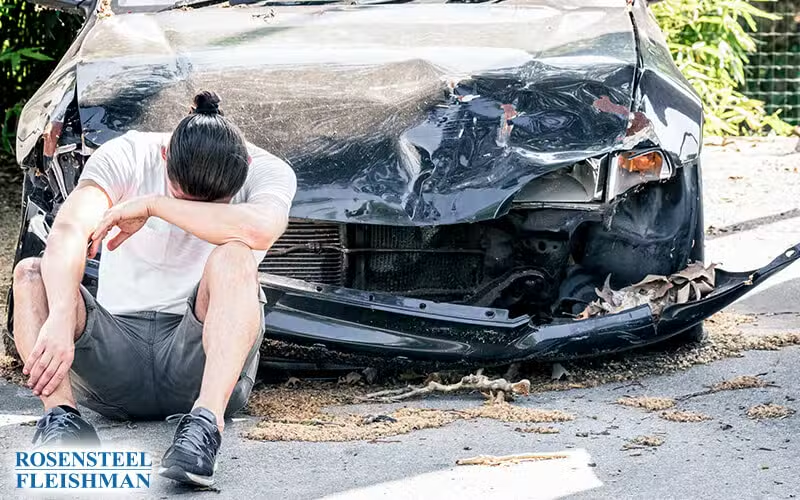

When a driver appears to have no liability insurance, the next task is not simply to label the crash “uninsured.” Build a record showing which vehicle, driver, policy period, coverage, and claim are involved and which points remain unconfirmed.
An uninsured-motorist claim still requires proof of the collision, the uninsured vehicle, applicable coverage, causation, and documented loss.
Collect the complete policy record
- Declarations pages, complete policy, endorsements, amendments, applications, renewal or replacement documents, and cancellation or reinstatement notices
- Named insureds, household members, listed and excluded drivers, covered vehicles, vehicle identification numbers, policy period, and date of loss
- Uninsured-motorist bodily-injury and property-damage entries, limits, deductibles, definitions, exclusions, duties, and other-insurance provisions
- Every potentially relevant personal, household, employer, commercial, rideshare, rental, umbrella, excess, or other policy
- A version log showing which document was in force on the crash date rather than relying on a current declarations page
The North Carolina Department of Insurance describes uninsured and underinsured motorist protection in its auto-coverage guidance. Coverage labels should still be matched to the complete contract and the facts of the particular event.
Document why the other vehicle is treated as uninsured
- Driver, owner, plate, vehicle identification number, address, employer, trip purpose, and permission or custody information
- Insurance card or policy information exchanged at the scene and the matching entry on a crash report
- Carrier claim number, coverage inquiry, written confirmation, denial, lapse position, unidentified-vehicle issue, or inability to verify a policy
- Dates and recipients for police, insurer, and other required reports or notices
- Any later correction, newly identified policy, owner, employer, or other source of coverage
G.S. 20-279.21 addresses required motor-vehicle liability policies and uninsured or underinsured motorist coverage. Its application can depend on policy dates, vehicle and insured status, the type of uninsured event, priority among policies, notice, consent, and other facts.
Build the collision and injury evidence
- Scene photographs, video, traffic controls, witnesses, vehicle damage, event data, measurements, report, and later corrections
- Pre-crash health baseline, symptom onset, examinations, diagnoses, treatment, restrictions, response, later events, and qualified causation evidence
- Medical charges, payments, adjustments, balances, work records, out-of-pocket costs, property loss, and concrete changes in daily function
- Contrary evidence and unresolved questions kept in the file instead of omitted from the chronology
Track each claim separately
Create a line for the claimant, insured, vehicle, insurer, policy, coverage, claim number, adjuster, notice date, requested records, response date, written position, payment, offer, and open issue. Do not assume one claim number covers every person, vehicle, coverage, or loss category.
The Department’s after-an-accident resource discusses reporting, adjuster contact, repair, total-loss, injury, disagreement, and consumer-assistance steps. Keep the source and date for each statement or request made during that process.
Review settlement and release terms by claim path
Before accepting payment, identify the people, entities, policies, coverages, injuries, property, dates, and rights included in the release. Record deductibles, liens or reimbursement interests, prior payments, expenses, and expected net amount. A property payment should not be assumed to resolve an injury claim, and an uninsured-motorist payment should not be assumed to resolve every other policy or responsible party.
The related North Carolina declarations-page guide explains how to identify policy periods, insureds, vehicles, coverages, limits, deductibles, and endorsements before the uninsured-motorist file is assembled.
Rosensteel Fleishman Car Accident & Injury Lawyers provides information about Charlotte car-accident claims involving uninsured-motorist coverage. The available paths depend on the actual policies and evidence.
Sources
Additional Car Accidents Articles
How Witness Accounts Support Crash Injury Documentation in Charlotte
Witness statements can add context to a crash injury claim without establishing a diagnosis. Learn which details to preserve, how to handle conflicting accounts, and why small omissions matter.
How Injury Severity Affects Charlotte Dooring Accident Claims
Injury severity can change the losses involved in a dooring claim, but it does not establish fault or determine a payment by itself. Clear records help connect the incident to its practical consequences.
Does Minor Vehicle Damage Always Mean Minor Injuries?
A small repair bill does not explain every consequence of a crash. Keep vehicle evidence separate from injury records, and document changes to work and daily responsibilities without guessing about their cause.