
When a crash disrupts more work and family responsibilities than expected, dated records can help explain what changed. Keep observations about distraction separate from records of daily consequences.
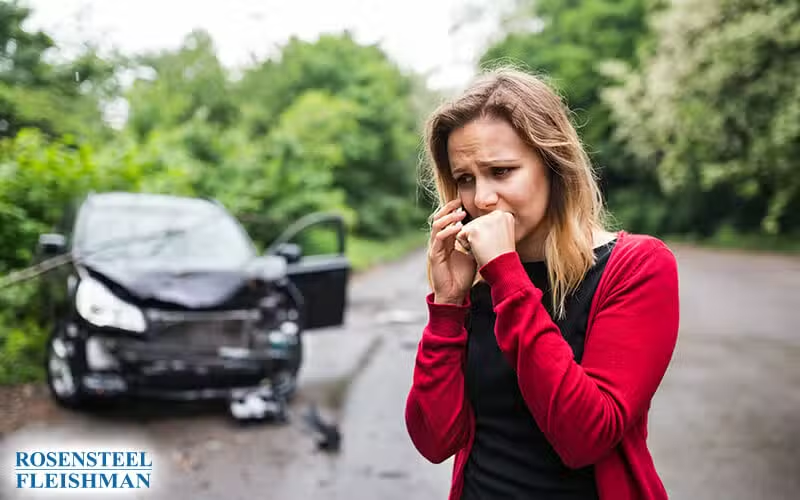

A driver who leaves may still be identified through witnesses, video, vehicle debris, plate fragments, paint transfer, repair activity, electronic records, or later police work. Even when the driver remains unknown, applicable insurance may provide a separate claim path.
A missing driver changes the investigation and coverage path, but it does not make the collision impossible to prove. Medical care, prompt reporting, scene documentation, identification work, and policy notice should proceed together.
Call for medical help and report the crash immediately
Call 911 when a person has been struck or urgent symptoms are possible. Give dispatch the location, travel direction, vehicle description, partial plate, damage, driver description, last known route, and whether the vehicle poses a continuing danger.
G.S. 20-166 addresses a motor-vehicle driver’s duty to stop and remain after reportable crashes, subject to stated safety and medical provisions. The criminal investigation and an injured person’s civil or insurance claims are related but separate.
Preserve every vehicle-identification detail
- Plate state, sequence, color, body type, make, model, approximate year, distinctive trim, stickers, lighting, cargo, and occupants
- Damage location, missing mirror or light, broken glass, plastic markings, paint transfer, tire or fluid marks, and debris
- Driver appearance, clothing, voice, actions, statements, and direction before and after impact
- Exact time, intersection or address, pedestrian path, impact point, vehicle path, final position, weather, lighting, and traffic
Do not handle sharp debris unnecessarily or discard it. Photograph items in place, note who collected them, and preserve identifiers and custody.
Work outward from the scene for video and witnesses
- Business, residential, parking, transit, traffic, doorbell, vehicle, and construction cameras on approach and escape routes
- People waiting at stops, walking, cycling, driving, working outside, delivering, or responding nearby
- 911 calls, dispatch, body camera, license-plate-reader data, tow records, repair shops, parts orders, and impound records when lawfully available
- Social posts, public tips, and messages preserved with source and timestamps rather than repeated as verified fact
Video can be overwritten quickly. A preservation request should identify the date, time window, camera, direction, and event while avoiding unrelated private footage.
Review every potentially applicable automobile policy
G.S. 20-279.21 addresses uninsured-motorist coverage, including hit-and-run motor vehicles, and contains reporting, notice, information, service, and litigation provisions. The correct policy and insured status must be established from household, resident-relative, vehicle, employer, and other policy facts.
The North Carolina Department of Insurance accident checklist recommends calling police for injuries or hit-and-run events and collecting witness and insurance information. Give applicable insurers prompt, accurate notice, but read requests for recorded statements, releases, examinations, and broad authorizations before responding.
Preserve medical causation and losses
- First history, emergency findings, imaging, diagnoses, referrals, treatment, restrictions, and evolving symptoms
- Clothing, footwear, carried property, photographs, impact marks, and the pedestrian’s electronic location data
- Medical statements, payments, explanations of benefits, mileage, equipment, transportation, and other expense
- Work, school, caregiving, household, mobility, sleep, cognitive, emotional, and recreational changes
Avoid public conclusions that can impair identification or privacy
Share factually useful information with law enforcement and appropriate investigators. Public posts can spread an incorrect plate, expose medical information, trigger harassment, or alert a suspect to evidence. Preserve tips and let them be verified.
The broader response guide explains scene, medical, witness, and insurance steps after a pedestrian collision.
Rosensteel Fleishman Car Accident & Injury Lawyers provides information about Charlotte pedestrian hit-and-run claims. A complete review connects identification evidence, police reporting, medical proof, every policy, notice, service, and deadlines.
Sources
Additional Car Accidents Articles
Handling Aggressive Drivers in Charlotte, NC While Recovering From a Crash
After a crash, another driver’s pressure should not determine your account. Keep specific records of the encounter, later concerns, and practical disruptions while separating observations from conclusions.
Options for Recovering Losses After a Crash Caused by Sun Glare
Sun glare may explain reduced visibility without settling responsibility for a crash. Clear records can help connect driving decisions, documented losses, and available insurance options.
Why Charlotte Crash Settlements May Require a Health Insurance Repayment Review
Health insurance payments can raise repayment questions when a crash claim settles. Clear records help distinguish what was billed, what was paid, and what a health plan is asking to recover.




