
Bicycle accident reports often become important when the people involved remember the same collision differently. A driver may say a cyclist entered the roadway unexpectedly, while the cyclist may remember having the right of way and being visible well before impact. In Charlotte, those differences can influence how insurers and others evaluate responsibility, particularly when […]
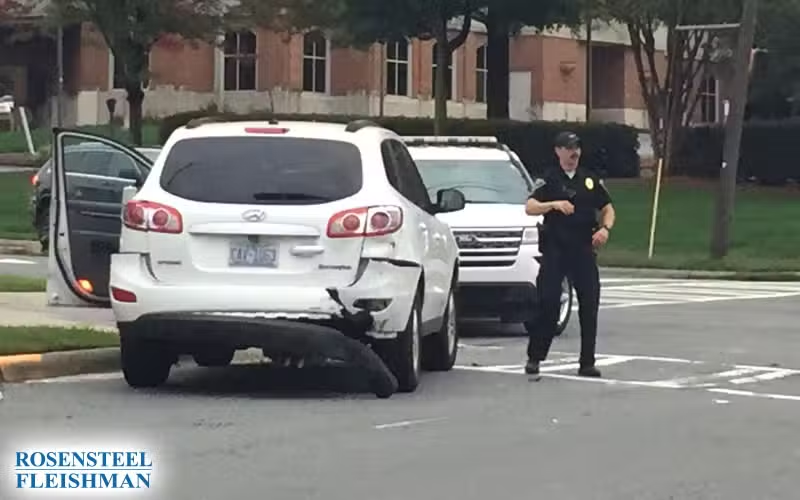

After a crash, address immediate safety and follow instructions from emergency personnel; North Carolina’s reporting law turns on whether the event is a reportable accident and the circumstances involved.
The reporting statute
North Carolina G.S. 20-166.1 requires a driver involved in a reportable accident to immediately notify the appropriate law-enforcement agency by the quickest means of communication. The statute identifies the relevant agency based on whether the crash occurred in a city or town and includes related duties and report provisions.
A report records information; it does not settle every issue
The NCDMV DMV-349 Instructional Manual describes the crash-report form and its data fields. The report may record people, vehicles, roadway, weather, diagram, narrative, and other information. Preserve the report number and the original document, but do not assume that a field, code, or narrative alone determines fault, injury, coverage, or admissibility.
Keep a practical record
- The location, date, time, vehicles, people, witnesses, photos, video, and communications
- The report number and any report, supplement, correction request, or response
- Medical, towing, repair, insurance, and vehicle records kept in their original form
- Any instructions from law enforcement, emergency responders, or a court
The related guide to reading a North Carolina car-accident police report addresses practical interpretation questions. A Charlotte car-accident claim should be evaluated from the complete record.
Sources
Additional Car Accidents Personal Injury Articles
What Causes a Claim to Move Forward or Stall When Answers Feel Uncertain
After an injury, families often expect an insurance claim to follow a fairly simple path. Information is submitted, the insurer reviews what happened, and eventually an answer arrives. In practice, claims can move in bursts. A person may hear regularly from an adjuster for several weeks and then encounter a period when very little seems […]
Police Report Accuracy After a Crash When Important Details Are Missing
In Charlotte areas where cyclists and pedestrians frequently share the road with drivers, such as Uptown, South End, and busy crossings near greenway access points, a collision can become complicated within seconds. The police report may later serve as an important record, but officers often arrive after the impact and must reconstruct events from statements, […]
Single Vehicle Motorcycle Crashes in Charlotte and the Support Riders May Need Afterward
A motorcycle can go down without ever touching another vehicle, but that does not automatically mean the rider caused the crash. Road defects, spilled cargo, loose gravel, mechanical failures, poor lighting, and another driver’s sudden movement can all contribute to single vehicle motorcycle crashes. In Charlotte, the first explanation recorded at the scene may change […]



