
After a serious truck crash, checking for joint injuries early can reduce the risk of untreated damage becoming harder to manage. The force of a collision may injure cartilage, ligaments, tendons, bones, or the joint capsule even when swelling and pain seem manageable at first. In Charlotte, anyone experiencing stiffness, weakness, instability, or reduced movement […]
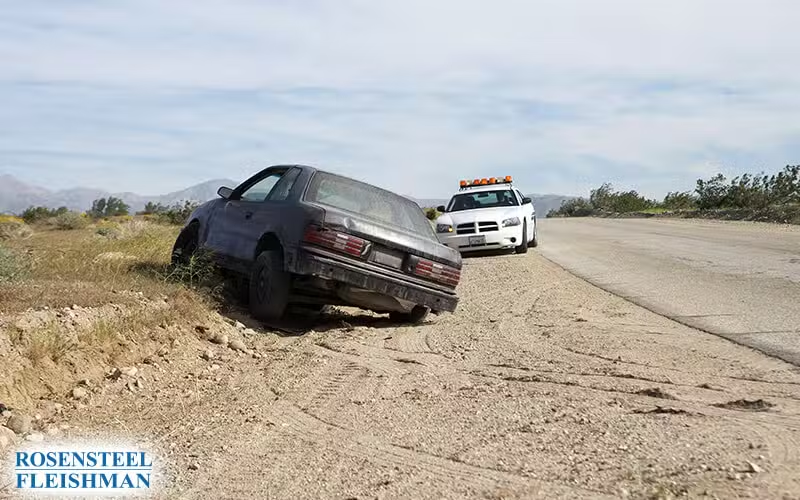

When a tire fails before or during a crash, the tire, wheel, vehicle, maintenance history, pressure information, repair records, photographs, and recall information can be important to preserve before the condition is changed.
If safe, photograph the vehicle and tire condition before towing, disposal, remounting, repair, or replacement. Keep the tire and wheel when possible, as well as tire identification information, purchase and installation records, rotation or alignment records, service invoices, vehicle data, crash report, tow documents, photographs, video, and witness details.
Check official safety information without assuming the cause
The National Highway Traffic Safety Administration provides tire-safety information and a recall lookup. A recall notice, a worn tire, a road hazard, a service record, or a crash report alone does not establish why a failure occurred or who is responsible. Preserve the original record and verify the vehicle identification number, tire model, date, and applicable recall details.
North Carolina’s Products Liability Act defines product-liability actions and states that strict liability in tort does not apply to them in North Carolina. The facts, product condition, maintenance, warnings, causation, and current law require record-specific review.
Rosensteel Fleishman Car Accident & Injury Lawyers provides general information about discussing a North Carolina injury matter involving a tire failure.
Sources
Additional Personal Injury Articles
Highway Accident Overview for Crashes Outside Typical Traffic Patterns
Highway crashes do not always happen during predictable rush hour congestion or in the middle of heavy commuter traffic. In North Carolina, a collision may occur late at night, during an off-peak afternoon, or on a relatively open stretch of interstate where traffic conditions initially appear straightforward. Claims arising from these crashes can still become […]
When Second Opinion Considerations Dog Bite Cases May Matter During Ongoing Recovery
In Charlotte, the financial effects of a dog bite may extend beyond the bills generated immediately after the incident. Early records might reflect an emergency room visit, prescriptions, and basic follow-up care, while later records may include additional appointments, testing, therapy, scar evaluations, or other services selected by the injured person and their medical providers. […]
Home Exercises Bicycle Recovery Records Can Help Explain Progress After Disputed Injuries
Home exercise records can provide useful context when several people or organizations disagree about how an injured cyclist is recovering. A bicycle accident may involve the rider, a driver, insurance companies, medical providers, employers, and sometimes witnesses or additional parties. When each person has different information, small gaps in communication can make it harder to […]




