Can a work injury feel worse at certain times of day, especially when travel, visibility, and fatigue are part of the routine? For many employees, recovery does not happen in a controlled setting. It happens around shift times, medical appointments, modified work duties, family responsibilities, and the simple challenge of getting safely from one place […]
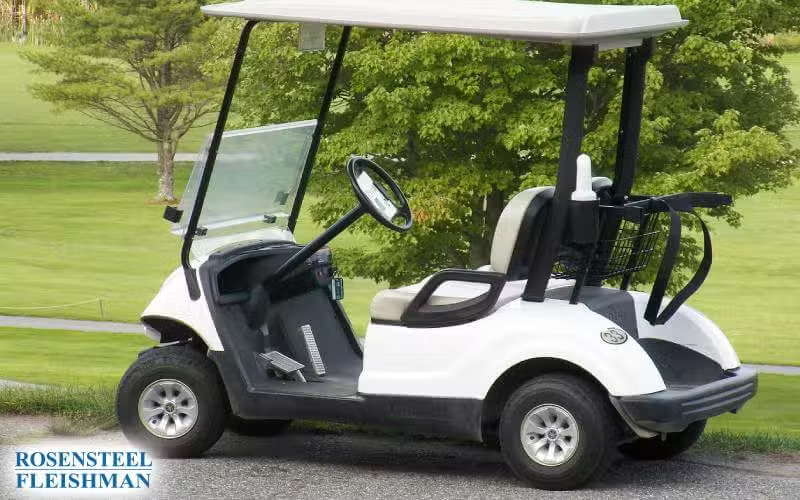

Many North Carolina residents take advantage of the summer weather by enjoying a few rounds of golf. In Charlotte, there are over 70 golf courses and even more courses being developed in the surrounding areas. As more visitors and residents try to showcase their skills on the green, there has been an increase in golf cart-related injuries, in both public and private settings. Golf cart-related injuries are an increasing problem for people of all ages.
Typically, golf carts usually involve people from affluent neighborhoods and well-intentioned parents who have no idea how dangerous they can be. These convenient and easy-to-operate vehicles are available to golfers and golf course staff members at nearly every facility. Unfortunately, given the growing capabilities and popularity of golf carts, this brings an increased risk of accidents to drivers, passengers, and other golfers. Nationwide, there are roughly 15,000 golf cart accidents reported annually, and of that, nearly 13,000 of those accidents require emergency room visits. These sorts of accidents can involve people of all ages, ranging from 2 months old to 96 years old.
Children involved in golf cart-related accidents are even more common. Quite often, golf carts are viewed as harmless or safe by parents and communities. However, a 2008 study in the American Journal of Preventive Medicine revealed that between 1990 and 2006, 150,000 golf cart injuries were reported, and about a third of them involved children under the age of 16. Another study determined that between 2008 and 2016, 85% of the 40 children treated were between the ages of 5 and 14. About a quarter of the children spent time in the intensive care unit, with hospital charges exceeding $20,000. The studies further showed that of the 500 injuries investigated, nearly 78% of the children went to the hospital with brain, neck and spinal injuries.
In May of this year, a toddler was fatally injured in a golf cart accident just north of the Trump National Golf Club on Lake Norman. Reports indicated that three adults and four children, including the 1-year old, was traveling on Pintail Run Lane when the golf cart struck a pothole causing the cart to malfunction in the steering. The golf cart then overturned, ejecting all but one passenger from the vehicle. The victims were all taken to a nearby hospital, where the 1-year old was pronounced dead.
Sadly, golf cart-related injuries are sometimes fatal. With the golf cart capable of reaching speeds of up to 25 mph, passengers and other golfers are at risk of serious injuries. Golf carts are like any other vehicle, however, they lack many of the safety standards because they do not have to comply to Federal Motor Vehicle Safety requirements. As such, golf carts are not equipped with doors, seat belts, airbags and antilock brakes. As a result, many accidents involving golf carts frequently result in serious injuries to people of all ages.
Some of the common injuries reported in golf cart accidents include:
- Lacerations and bruises
- Broken bones
- Traumatic brain injuries
- Spinal cord damage and paralysis
- Neck injuries
- Death
The causes of golf cart-related accidents can be attributed to a number of different factors. Oftentimes, these accidents are due to either inexperienced drivers, underage drivers, horseplay, late night driving and/or intoxicated drivers. Under these conditions, golf carts can collide with other automobiles, multiple golf carts, pedestrians, or they can flip or rollover, and simply malfunction. When operating golf carts, the same level of care and focus given to cars and trucks should be exercised.
When operating a golf cart, it is advised to always maintain control and be conscious of the weather and terrain. And more importantly, not to operate the golf cart while under the influence of alcohol or drugs. In addition, drivers should not operate the vehicle recklessly, as the speed and mechanics of golf carts can cause serious injury if not managed with care. Also keep in mind, drivers and passengers should keep all body parts inside of the golf cart and not attempt to carry more passengers than the vehicle is designed to hold, otherwise, the cart is likely to tip or rollover. Lastly, the driver should not attempt to take sharp turn while traveling a high rates of speed, the physics and design of golf carts will likely result in the vehicle overturning. Acknowledging these safety tips will not guarantee that the driver, passengers, or nearby pedestrians will be free of any risks, rather it will likely reduce the chance of golf cart-related accidents and injuries.
In golf cart cases many times the question is whether insurance will cover the accident. There are usually 3 different insurance types that might provide coverage. They are, in no particular order auto, homeowners, and business. Each insurance type mayor may not have exclusions regarding golf cart accidents. However, you’re are most likely to find coverage for golf cart accidents going through homeowners and/or business insurance. Clearly, if the driver was on the job when the incident occurred coverage should be afforded through the business’s liability coverage.
If in fact an accident does occur and the persons involved suffer injuries, it is recommended that you or your loved one contact an experienced personal injury attorney. A skilled attorney will be able to carefully review the circumstances surrounding the accident and evaluate whether there is a potential claim. Here at Rosensteel Fleishman Car Accident & Injury Lawyers, our attorneys will help you to identify the responsible parties, which can include the manufacturer, property owner and/or country club, driver, or related persons. With the complexities of these claims, consulting our attorneys will help you to focus on healing, while we will fight for full and fair compensation for all injuries through negotiated settlement or court litigation. You may be entitled to compensation for medical bills (past, present, and future), lost wages, pain and suffering, and more. If you or a loved one was injured in a golf cart accident please contact us. You will speak with a personal injury lawyer who can best answer your questions and go over your options. The initial consultation is free of charge.
Contact a Golf Cart Accident Lawyer in Charlotte
If you or your loved one find yourselves in the unfortunate event of a golf cart accident resulting in injuries, it is crucial to seek legal guidance from a golf cart accident lawyer in Charlotte. Contact Rosensteel Fleishman Car Accident & Injury Lawyers online or call (704) 714-1450 to schedule your free consultation.
Additional Car Accidents Personal Injury Articles
Red Flags Dog Bite Injuries That May Need Prompt Attention
What should families watch for after a dog bite when the injury seems manageable at first? Some wounds look small on the surface but can still create problems if cleaning, medical care, follow up appointments, or documentation are delayed. This is especially true for children, older adults, and anyone with health conditions that may affect […]
How Liability Is Determined in a Car Accident When Reports Are Delayed
Fault decisions often become harder when crash reports, medical records, repair estimates, or insurance updates are delayed. In a Charlotte car accident, even a few missing details can leave drivers unsure about what the insurance company is reviewing, why the claim is taking longer, and what happens when each side tells a different story. A […]
Instability After Truck Accident Injuries When Fault Is Not Immediately Clear
Could unsteady movement, dizziness, or trouble keeping balance after a truck crash be part of the recovery process even when fault is still being sorted out? Yes, and it can be important to take those symptoms seriously from the beginning. Instability after truck accident injuries may show up right away, or it may become more […]