
When a crash disrupts more work and family responsibilities than expected, dated records can help explain what changed. Keep observations about distraction separate from records of daily consequences.
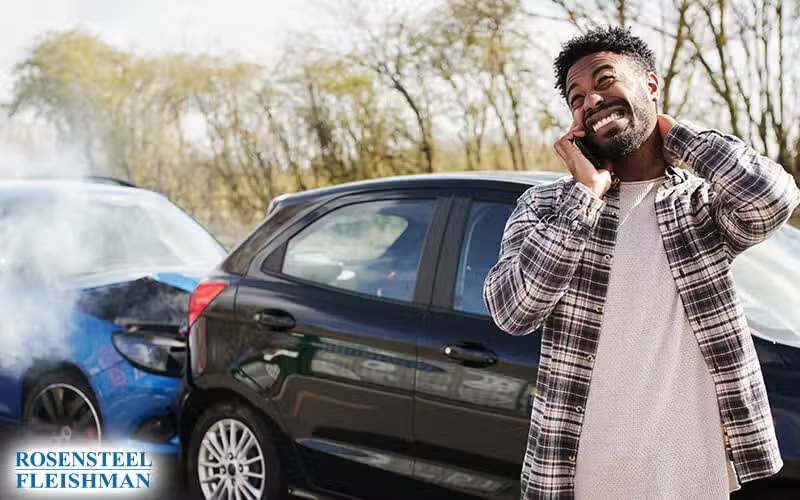

A merging collision is easier to assess when the account describes both vehicles before contact, rather than starting with a conclusion about the entering driver. The useful questions are which lane each vehicle occupied, what movement began first, what each driver could reasonably observe, and which records support that sequence.
A signal, a point of impact, or the phrase “already established in the lane” does not answer all of those questions on its own. This guide explains how to organize the available evidence without turning an uncertain recollection into a finding of fault.
Identify the type of merge before comparing the accounts
A highway entrance ramp, a lane that ends, a lane change into moving traffic, and an exit from a driveway can involve different roadway controls and duties. Record the exact location, direction of travel, lane markings, and signs. If the road has since changed, label later photographs with their date instead of presenting them as the crash scene.
North Carolina’s lane-use statute requires a driver to ascertain that a movement from a marked lane can be made safely. The rule for starting, stopping, or changing direction also addresses safe movement and signaling when another vehicle may be affected. A signal communicates an intended movement; it does not settle whether that movement was safe. The latter statute also says a violation is not negligence per se.
Build the sequence around observable events
Use a simple chronological account, with a source beside each important point. It can remain incomplete while additional records are requested.
- Approach: Where were the vehicles before either changed position? Identify the lane and a visible reference point, such as an overhead sign or pavement marking.
- Signal: Who observed a signal, from what position, and during which part of the approach? Not seeing a signal is different from a recording showing that it was off.
- Movement: When did a vehicle begin crossing a lane line? Did the other vehicle also change lanes, brake, or change speed?
- Contact: Which parts of the vehicles touched, and where were the vehicles relative to the lane markings?
- Afterward: Did braking, steering, another impact, or movement to safety change the final positions?
Describe an observed speed change without assigning a motive. “The gap became smaller” is an observation to investigate; “the driver deliberately blocked the merge” requires additional support. Similarly, presence in another driver’s blind spot does not by itself establish wrongdoing.
Compare what each source can actually show
Preserve an original video file and the period before and after contact when available. Note the camera’s location, field of view, and any uncertainty about its clock. A short cropped clip may omit the movement that created the conflict. A witness beside the roadway may have seen the lane crossing but not a rear turn signal.
Vehicle photographs can help locate contact and identify damage. They do not, by themselves, establish exact speed, the timing of a signal, or which driver had a safe opportunity to respond. When those technical questions matter, an appropriate reconstruction or inspection may be needed.
Record whether a statement came from direct observation, an occupant’s later account, or an inference. If two accounts conflict, preserve both and identify the precise disagreement. Do not revise a recollection to make it fit a diagram.
Keep evidence gathering safe and proportionate
Emergency needs come first. Do not enter traffic, stand on a narrow shoulder, or recreate a merge to obtain photographs. Existing recordings, responding officers’ materials, and a later safe review of the road layout may provide context without that exposure. Ask about available footage promptly and retain the request and response; requesting a recording does not guarantee that it exists or will be kept.
Separate the reconstruction from the legal conclusion
Evidence that another driver contributed to the sequence does not automatically establish a right to compensation or resolve the merging driver’s own conduct. The applicable duties, causation, and any defenses still require review. If the accounts remain disputed, our car accident team can review the records and explain which unanswered questions matter to a claim.
The practical goal is a clear account of what is known, what conflicts, and what remains unknown—not a more confident version of an unsupported assumption.
Additional Car Accidents Articles
Handling Aggressive Drivers in Charlotte, NC While Recovering From a Crash
After a crash, another driver’s pressure should not determine your account. Keep specific records of the encounter, later concerns, and practical disruptions while separating observations from conclusions.
Options for Recovering Losses After a Crash Caused by Sun Glare
Sun glare may explain reduced visibility without settling responsibility for a crash. Clear records can help connect driving decisions, documented losses, and available insurance options.
Why Charlotte Crash Settlements May Require a Health Insurance Repayment Review
Health insurance payments can raise repayment questions when a crash claim settles. Clear records help distinguish what was billed, what was paid, and what a health plan is asking to recover.



