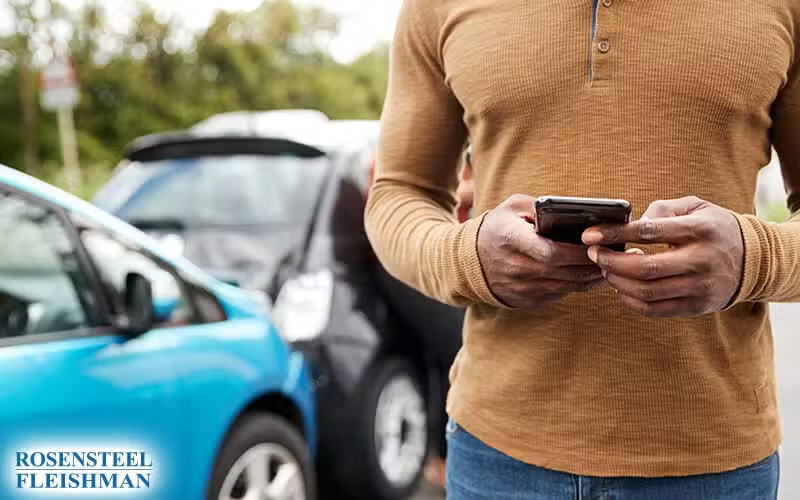
After a collision, the process of protecting people and preserving a potential claim begins with immediate decisions at the scene. Poor weather can reduce sight distance, hide vehicle damage, and make it difficult for approaching drivers to recognize that traffic has stopped. Turning on emergency flashers may help alert others, but those lights are only one part of creating a safer and better-documented response.

In North Carolina, questions about fault often depend on details that may seem minor at first. Investigators, insurance companies, and legal representatives may examine vehicle position, lighting, weather, road conditions, and the actions each driver took after impact. Because North Carolina follows a contributory negligence rule, a dispute over even a small degree of responsibility can affect whether an injured person recovers compensation. An early car accident case evaluation can help clarify how these facts may influence the available resolution paths.

Why Early Safety Choices Can Affect Accountability

Imagine a driver who loses control during heavy rain, comes to rest partly in a travel lane, and activates the vehicle’s hazard lights. A second driver then approaches too quickly for the conditions and strikes the disabled car. The insurance companies may disagree about whether the flashers were visible, whether the first driver could have moved farther from traffic, and whether the approaching motorist maintained a safe speed. Resolving those questions requires more than simply confirming that a collision occurred.

How Warning Lights Influence a Poor Weather Collision Claim

The central problem with hazard lights and visibility after crash events is that emergency flashers can provide a warning without making a dangerous location fully safe. Rain, fog, snow, spray from other vehicles, darkness, and glare can all limit how quickly an approaching motorist recognizes a stopped or damaged vehicle. A driver who sees blinking lights may also struggle to determine whether the vehicle is moving slowly, stopped completely, or positioned across part of the roadway.

Hazard lights generally show that a vehicle presents an unusual condition or potential obstruction. Activating them after a crash may demonstrate an effort to warn others, particularly when the vehicle cannot immediately be moved. However, the presence of flashing lights does not automatically establish that every reasonable safety step was taken. The surrounding facts still matter, including whether the vehicle’s electrical system worked, whether the driver was physically able to act, and whether moving the vehicle would have created another risk.

A different concern arises when a driver leaves the damaged vehicle in an active lane even though it can safely be moved. That decision may become part of an insurance investigation, especially if a secondary collision follows. At the same time, a driver should not attempt to move a severely damaged vehicle, cross active traffic, or stand near the roadway when doing so would create an immediate danger. Reasonable conduct is evaluated in context, not through a single rule applied to every crash.

Are Hazard Lights Enough After a Crash in Bad Weather?

No. Emergency flashers can improve recognition, but they do not replace other reasonable precautions. If the vehicle can be operated safely and local instructions permit it, moving to a shoulder, parking area, or another protected location may reduce the chance of a second impact. Occupants should remain alert to traffic and avoid standing between vehicles or beside an exposed traffic lane.

Drivers should call 911 when someone may be injured, a vehicle is blocking traffic, hazardous materials are present, or weather conditions make the scene especially dangerous. Dispatchers can send law enforcement, medical personnel, fire crews, or transportation workers as needed. Responders may use brighter warning equipment, block lanes, redirect traffic, and document the scene before vehicles are removed.

The condition of the vehicle can also limit what is realistically possible. A collision may damage the battery, electrical wiring, lamps, or control switch, leaving the flashers inoperable. An injured or disoriented occupant might not be able to activate them. These circumstances can be important when an insurer later argues that a driver failed to warn approaching traffic.

What Evidence Helps Explain Visibility Conditions?

Evidence gathered close to the time of the crash can show what drivers could reasonably see and how the scene appeared. Photographs and video may capture rainfall, fog, standing water, roadway lighting, vehicle placement, skid marks, debris, and whether exterior lights were operating. A police report may identify weather and surface conditions, although it may not describe every visibility issue in detail.

Useful documentation may include:

  • Wide photographs showing the roadway and position of each vehicle
  • Close images of damaged lights and electrical components
  • Dash camera or nearby security footage
  • Witness names and contact information
  • Weather information and emergency response records

Phone photographs taken from a safe location can provide valuable context, but personal safety comes first. A person should not step into traffic or remain exposed simply to collect evidence. Police measurements, traffic cameras, vehicle data, and witness accounts may help reconstruct details that occupants could not safely record.

Vehicle lighting evidence can be particularly important when the parties offer different accounts. A second driver might claim that no warning lights were visible, while a witness remembers seeing them from a significant distance. Investigators may examine damaged bulbs, recorded vehicle data, video footage, and electrical systems to assess those statements. Each source has limitations, so several pieces of evidence often provide a clearer picture than any single item.

Comparing Settlement and Other Resolution Paths

The challenge in many poor weather claims is that the parties may agree about the collision itself while disagreeing about responsibility. One insurer may argue that a stopped vehicle lacked adequate warning, while another may point to excessive speed, following too closely, or failure to maintain a proper lookout. These competing accounts can shape whether the matter ends through a negotiated settlement, mediation, or court proceedings.

A settlement is a voluntary agreement that resolves the claim without a trial. The injured person typically accepts an agreed amount in exchange for releasing the responsible party and insurer from further liability. Settlement discussions may occur after medical treatment is reasonably understood, evidence has been collected, and the financial effects of the injuries can be evaluated.

A negotiated resolution can offer greater control over timing and outcome. It may also avoid some of the expense and uncertainty associated with litigation. However, accepting an offer too soon can create problems if injuries require additional care or if the full effect on employment and daily activities has not yet become clear. Once a release is signed, reopening the same claim is generally difficult or impossible.

Court proceedings follow a different path. Filing a lawsuit allows the parties to request records, question witnesses under oath, obtain opinions from qualified professionals, and ask a judge or jury to decide disputed issues. Litigation may be appropriate when fault is sharply contested, an insurer denies the claim, or the parties cannot agree on the value of the losses. Filing a case does not necessarily mean it will reach trial because negotiations may continue throughout the process.

How Does Poor Visibility Affect Fault?

Poor visibility does not automatically excuse a collision. Drivers are generally expected to adjust their speed and following distance to match rain, fog, darkness, road spray, and other conditions. A posted speed limit describes the maximum lawful speed under favorable circumstances, not a promise that the same speed will always be safe during severe weather.

At the same time, the position and visibility of a disabled vehicle may affect the analysis. Relevant questions can include whether its lights were working, how long it remained in the lane, whether the driver had a safe opportunity to move it, and how far away an approaching motorist could have detected the hazard. These facts may require photographs, testimony, vehicle inspections, and reconstruction evidence.

North Carolina’s contributory negligence framework makes these disputes especially significant. A defendant or insurer may contend that the injured person’s own conduct contributed to the event, which can become a barrier to recovery. That argument may focus on actions before the initial collision or on decisions that allegedly contributed to a secondary impact. Legal doctrines can have exceptions and depend heavily on the facts, so broad assumptions about fault may be unreliable.

How Local Traffic Patterns Can Shape the Evidence

Time of day can materially change visibility and traffic behavior around Charlotte. During a rainy morning commute on I-77, dense traffic and tire spray may conceal a disabled vehicle until drivers are relatively close. In the evening, darkness, headlight glare, and wet pavement can make lane markings and vehicle outlines harder to distinguish. The same roadway may present a very different sight-distance question at midday in lighter traffic.

Traffic density can also affect whether a driver had a realistic opportunity to move a damaged vehicle. A car that can still roll may nevertheless be unsafe to drive across several crowded lanes. Conversely, a clear shoulder located only a short distance away may support an argument that the vehicle could have been removed from the travel lane. Video recordings and witness statements can help explain these practical conditions.

The timing of emergency calls, police arrival, and secondary impacts may reveal how long a hazard existed. Traffic camera recordings, toll data, dispatch logs, and nearby business surveillance can sometimes establish a useful timeline. This evidence can help distinguish a sudden emergency from a condition that allegedly remained unaddressed for an extended period.

What Losses May Be Addressed in a Resolution?

A claim may involve more than the visible damage to the vehicles. Depending on the circumstances, recoverable losses may include medical bills, future care needs, lost income, reduced earning ability, physical pain, and limitations on ordinary activities. Property damage, towing expenses, rental transportation, and damaged personal items may also require attention.

The value of a claim depends on supporting evidence rather than a standard formula. Medical records can connect injuries to the collision, employment documents can show missed work, and photographs may illustrate the force of impact. A detailed account of how the injuries affect sleep, mobility, household responsibilities, and family life can provide context that billing statements alone do not show.

Insurance policy limits can influence the available outcome as well. A seriously injured person may have losses that exceed the at-fault driver’s liability coverage. Uninsured or underinsured motorist coverage, multiple responsible parties, or other applicable policies may need to be examined before a resolution strategy is chosen.

Making Careful Decisions After the Scene Is Cleared

Once immediate danger has passed, preserving basic information can make later decisions easier. Keep photographs, repair estimates, medical paperwork, towing records, insurance correspondence, and notes about conversations in one place. It may also help to write down what happened while the sequence of events, lighting conditions, and weather remain fresh.

Use care when discussing the crash with insurance representatives. A request for information may seem routine, but an incomplete description can be interpreted in ways the speaker did not intend. It is reasonable to provide necessary identifying details while avoiding guesses about speed, distance, visibility, or injuries that have not yet been fully evaluated.

When a Settlement Offer Needs Closer Review

An early offer may bring welcome certainty, especially when medical bills and missed work are creating pressure. Still, the amount should be considered alongside the expected cost of treatment, possible future symptoms, income loss, available coverage, and the strength of the liability evidence. The release language also deserves careful attention because it usually ends the claim permanently.

Rosensteel Fleishman can review the circumstances of a North Carolina collision, explain how visibility evidence may affect accountability, and discuss the differences between settlement and litigation. Speaking with the firm does not require an injured person to accept a particular course. The purpose of a consultation is to understand the available options before signing documents or making decisions that cannot easily be reversed.

Keeping Safety and Documentation in Perspective

Emergency flashers are useful because they can make an unusual roadway condition easier to notice. Their effectiveness, however, depends on weather, distance, road design, surrounding traffic, and whether the lights remain operational after impact. Safe vehicle placement, prompt emergency reporting, and careful documentation may be equally important.

No one responding to a collision scene should take an unnecessary risk to create evidence or follow a general checklist. The safer course depends on injuries, traffic movement, vehicle condition, and instructions from emergency personnel. Afterward, a careful review of those real-world facts can help determine which resolution path offers a fair and practical way forward.