
Highway crashes do not always happen during predictable rush hour congestion or in the middle of heavy commuter traffic. In North Carolina, a collision may occur late at night, during an off-peak afternoon, or on a relatively open stretch of interstate where traffic conditions initially appear straightforward. Claims arising from these crashes can still become […]
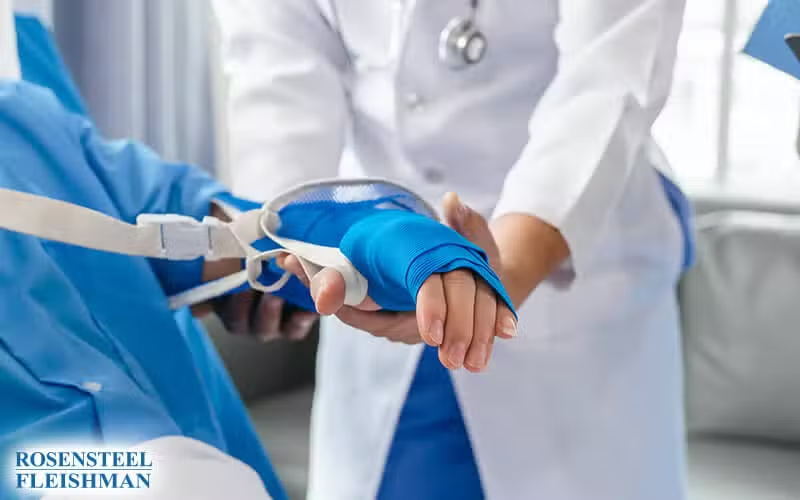

A leg-injury file may mention crutches in an emergency note, a brace in an orthopedic order, a walker in a therapy record, a wheelchair on a supplier invoice, and a cane in a family photograph. Those entries do not necessarily describe the same device, time period, instruction, or level of use.
An assistive-device record should connect the exact device, clinical order or recommendation, supplier, fitting or training, delivery, instructions, actual use, repair or replacement, return, expense, and later change without treating possession as proof of medical necessity or constant use.
Identify the body region and device precisely
The National Library of Medicine’s leg injuries and disorders overview explains that the leg includes bones, blood vessels, muscles, and connective tissues and that problems may involve the hip, knee, ankle, foot, or another region. Preserve the side, body part, diagnosis or question, and source rather than using “leg injury” as a substitute for the clinical record.
- Crutch, cane, walker, wheelchair, scooter, brace, boot, cast, splint, orthotic, compression item, transfer aid, or other device named accurately
- Manufacturer, model, size, serial or inventory number when present, supplier, rental or purchase, issue date, and return date
- Right, left, or bilateral body region, treating service, encounter, examination, procedure, and stage of recovery addressed
- Personally owned, borrowed, hospital-issued, supplier-provided, employer-provided, insurer-authorized, or replaced device separated by source
Separate an order, delivery, fitting, and actual use
- Provider order or recommendation, exact wording, date, stated reason, duration, precautions, follow-up, and later revision
- Supplier authorization, delivery ticket, setup, fitting, size adjustment, training, written instructions, and person receiving the device
- Therapy assessment, trial, observed technique, assistance, tolerance, modification, and instruction attributed to the record
- Patient or family report of use, firsthand observation, photograph, video, work record, or travel record labeled by source and date
A device appearing on an invoice does not establish that it was delivered, fitted, used, medically necessary, or related to a particular event. Likewise, a photograph showing a device at one time does not establish continuous use. Keep each source within the question it can answer.
Build a device-version and custody table
- Device ID, condition when received, packaging, accessories, instructions, configuration, fitting source, and baseline photograph
- Adjustment, repair, part, replacement, upgrade, substitute, lost item, returned item, disposal, and reason stated
- Person possessing the device, home, vehicle, workplace, facility, supplier, repairer, or other location and each transfer date
- Earlier device retained in the record after replacement so its use period and condition are not overwritten
Record actual task use without giving medical advice
- Walking surface, distance, duration, stairs, transfer, bathing, dressing, cooking, shopping, work, driving, appointment, and other task
- Device used, assistance, instruction then in effect, task completed or stopped, observed event, reported experience, and recovery time
- Home, workplace, school, public setting, transportation, weather, footwear, carrying task, and environmental context
- No recommendation to begin, stop, change, or use a device differently; those questions belong with the treating or evaluating professional
Request the complete clinical and supplier record
HHS explains that people generally may inspect or obtain copies of medical and billing records in a covered provider’s or plan’s designated record set, subject to stated exceptions. Its medical-record guidance also addresses amendment requests. Ask for orders, therapy notes, measurements, supplier records, delivery documents, instructions, authorizations, bills, and later changes rather than relying on a portal list.
- Request, date range, provider, therapist, supplier, plan, record category, delivery format, response, and missing component
- Order, certificate or supporting note, fitting sheet, training entry, delivery ticket, rental record, repair order, pickup, return, and credit
- Original note, later addendum, revised order, corrected invoice, replacement record, and earlier version retained together
- Clinical record separated from supplier sales language, insurer coding, and personal summary
Keep observation and medical opinion separate
North Carolina Rule of Evidence 602 addresses personal knowledge. Rule 701 limits lay-opinion testimony, while Rule 702 addresses qualified expert testimony. A person may describe seeing a device used for an identified task. That observation should not be rewritten as a diagnosis, medical-necessity opinion, prognosis, or causation conclusion.
Reconcile charges, payments, and the device actually received
Rule 414 addresses evidence offered to prove past medical expenses. Maintain the charge, contractual adjustment, payment, personal payment, refund, unpaid balance, rental period, deposit, and disputed amount separately. The expense record does not itself establish responsibility or medical causation.
- Supplier, account, service or delivery date, item code and description, quantity, rental month, purchase, repair, and replacement
- Amount charged, allowed, adjusted, paid by each source, personally paid, refunded, credited, denied, disputed, and remaining
- Invoice matched to the identified device and delivery record rather than assumed from a generic code
- Duplicate charge, overlapping rental, returned equipment, replacement warranty, or unrelated item carried as an exception until resolved
The related guide to reconciling weight-bearing instructions and work restrictions after a leg injury explains the broader provider-instruction record. This page owns the device-specific order, delivery, use, custody, and expense trail.
Rosensteel Fleishman Car Accident & Injury Lawyers provides general information about Charlotte car-accident claims involving leg injuries and assistive-device records. Medical care, device selection, causation, expenses, damages, and legal conclusions require the individual record and qualified review.
Sources
Additional Car Accidents Articles
Left Turn Gap Judgment Errors When Visibility or Road Design Plays a Role
What happens when a driver begins a left turn and another vehicle suddenly changes lanes? The available opening can disappear almost instantly. In Charlotte traffic, this type of conflict may occur near multilane intersections where drivers must monitor oncoming vehicles, traffic signals, pedestrians, and vehicles moving between lanes at the same time. These crashes can […]
Multi Policy Insurance Considerations When One Policy Does Not Cover Every Loss
Insurance coverage after a serious car accident is not always limited to one policy. A collision may involve liability coverage, underinsured motorist coverage, medical payments coverage, an employer’s commercial policy, or another source of compensation. Identifying each applicable policy can affect how losses are documented, how negotiations develop, and whether a proposed resolution fairly reflects […]
What Happens When Vehicle Damage Appears Later Despite an Initial Inspection
Damage found days or weeks after a collision can complicate an insurance claim, especially when the cause of the crash or responsibility for the repairs remains disputed. A vehicle may look drivable during an initial roadside review in Charlotte, yet later show suspension problems, electrical faults, alignment issues, or damage hidden beneath exterior panels. When […]



