
When a crash disrupts more work and family responsibilities than expected, dated records can help explain what changed. Keep observations about distraction separate from records of daily consequences.
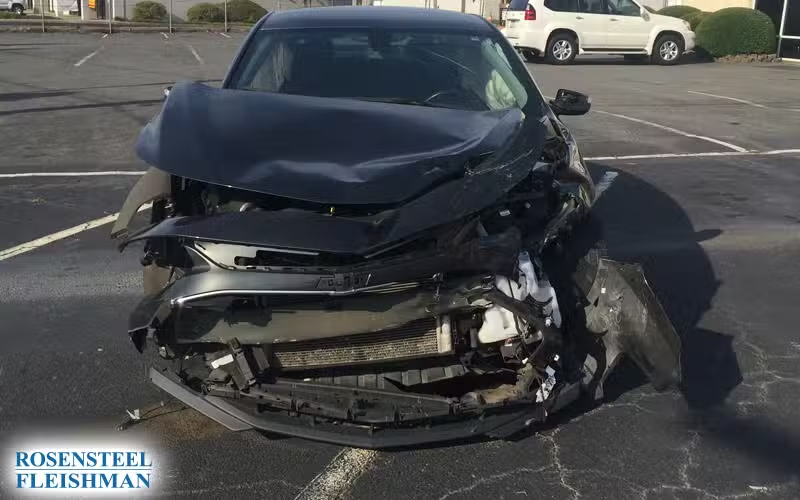

Left-turn collisions occur at signalized and unsignalized intersections, driveways, alleys, median openings, and other conflict points. A useful analysis identifies the exact movements and the information available to each road user before impact.
A left-turn collision should be reconstructed from geometry, traffic controls, approach timing, visibility, signaling, paths, and response—not assigned from the damage location alone.
Map the conflict area
- Intersection, driveway, alley, median, turn lane, channelization, crosswalk, bicycle lane, and shoulder geometry
- Lane widths, grades, curves, sight lines, obstructions, lighting, surface, and construction
- Stop, yield, signal, arrow, sign, marking, and posted speed controls
- Each participant’s origin, intended destination, lane, path, and conflict point
Establish the traffic-control state
Identify whether a protected arrow, permissive indication, steady signal, stop control, yield condition, or uncontrolled movement applied. Preserve controller data, timing plans, maintenance and complaint records, video, witness observations, and the exact event time when available.
Apply the current turning rules to the facts
G.S. 20-154 addresses safety and signals before starting, stopping, or turning and specifies signal distances in identified circumstances. The statute also states that a violation of that section is not negligence per se.
G.S. 20-155 includes the duty of a left-turning driver to yield to an oncoming vehicle within the intersection or so close as to constitute an immediate hazard. G.S. 20-153 addresses specified turning paths.
Reconstruct approach timing
- Distance and time from each approach to the conflict point
- Speed before braking or steering and any change over the event window
- Signal phase and when each vehicle entered the intersection
- Perception, decision, response, braking, steering, and available avoidance space
- Whether view obstruction or another vehicle screened either participant
Preserve independent evidence
- Traffic, business, residential, transit, dash-camera, and vehicle video
- Event data, telematics, navigation, device, and driver-assistance information
- Witness positions, observations, attention, obstructions, and timing basis
- Scene measurements, marks, debris, fluid, resting positions, and vehicle damage
- Signal, lighting, road, construction, and maintenance records
Consider all road users
Pedestrians, bicyclists, motorcycles, buses, turning vehicles, queued traffic, and vehicles entering from driveways can affect sight lines and response. Record their movements even if they were not struck.
Test competing sequences
A turning driver may claim the oncoming vehicle accelerated, changed lanes, ran a signal, lacked lighting, or was initially hidden. The oncoming driver may dispute the signal, gap, lane, or claimed opportunity to avoid. State which evidence would distinguish the sequences.
Separate rule violation from causation
A signal, right-of-way, or turning-path issue must be connected to the actual conflict. The related North Carolina negligence guide explains duty, breach, causal connection, damages, defenses, and why a citation alone does not resolve the civil analysis.
Link the event to occupant injury
Identify impact direction, intrusion, restraint use, airbag deployment, occupant position, motion, immediate symptoms, clinical course, prior baseline, and alternative causes. A side or corner impact label does not by itself establish a specific injury.
Rosensteel Fleishman Car Accident & Injury Lawyers provides information about left-turn collision claims in Charlotte.
Sources
Additional Car Accidents Articles
Handling Aggressive Drivers in Charlotte, NC While Recovering From a Crash
After a crash, another driver’s pressure should not determine your account. Keep specific records of the encounter, later concerns, and practical disruptions while separating observations from conclusions.
Options for Recovering Losses After a Crash Caused by Sun Glare
Sun glare may explain reduced visibility without settling responsibility for a crash. Clear records can help connect driving decisions, documented losses, and available insurance options.
Why Charlotte Crash Settlements May Require a Health Insurance Repayment Review
Health insurance payments can raise repayment questions when a crash claim settles. Clear records help distinguish what was billed, what was paid, and what a health plan is asking to recover.



