A severe curb impact can contribute to wheel separation, but the cause needs more than a photograph. Clear records help distinguish visible damage, mechanical findings, and later-reported losses.
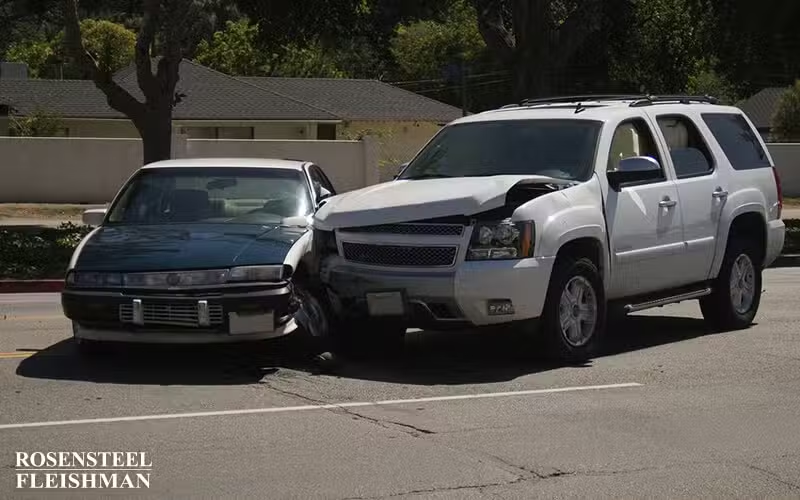

A fatal motor-vehicle collision can involve a crash investigation, insurance claims, an estate administration, and a wrongful-death action. Those matters are connected but not identical. The person who has authority to pursue the claim, the liability the decedent could have asserted, the damages included, and the statutory distribution of a recovery must be evaluated separately.
A North Carolina wrongful-death claim is brought by the personal representative or collector, but the statutory recovery is not distributed in the same way as ordinary estate assets.
Confirm who has authority to bring the action
North Carolina General Statute 28A-18-2 provides that a wrongful-death action is brought by the decedent’s personal representative or collector. An executor named in a will, an administrator appointed when there is no qualifying executor, an heir, a spouse, a parent, and another family member should not be treated as interchangeable without reviewing the estate appointment and the statute.
G.S. 28A-13-3(a)(23) authorizes the personal representative to maintain, compromise, or settle the wrongful-death claim. It also requires judicial approval of a settlement unless all persons entitled to receive damages under the cited statutory provision are competent adults who consent in writing. The estate file, letters, appointment date, authority, beneficiaries, and approval requirements should be confirmed early.
Establish the claim the decedent could have brought
G.S. 28A-18-2 requires a wrongful act, neglect, or default that would have entitled the injured person to an action had the person lived. A car-crash claim therefore still requires the applicable duty, breach, actual and proximate causation, injury, damages, and response to any asserted defense. A traffic citation, criminal charge, crash-report conclusion, or insurer decision does not replace the civil proof.
- Crash scene, vehicles, event data, video, photographs, roadway, traffic control, weather, visibility, damage, and mechanical evidence preserved
- Driver, owner, employer, contractor, vehicle supplier, product manufacturer, roadway entity, and insurer identified from records rather than assumption
- Medical treatment, cause of death, interval between injury and death, contributing condition, and qualified medical opinions documented
- Survival claims, property claims, insurance benefits, estate claims, criminal restitution, and wrongful-death damages kept in separate ledgers
Document each statutory category of damages
G.S. 28A-18-2(b) lists care, treatment, and hospitalization expenses incident to the injury resulting in death; the decedent’s pain and suffering; reasonable funeral expenses; the present monetary value of the decedent to the persons entitled to receive the recovery; qualifying punitive damages; and nominal damages. The present-monetary-value category can include reasonably expected net income, services, protection, care, assistance, society, companionship, comfort, guidance, kindly offices, and advice.
- Medical and funeral invoices, payment records, liens, insurance explanations, and the relationship of each expense to the fatal injury
- Employment, earnings, taxes, benefits, work-life facts, household services, caregiving, financial support, and qualified calculations
- Family relationships and evidence of actual services, support, society, companionship, comfort, and guidance without assigning unsupported formulas
- The decedent’s conscious pain and suffering, if claimed, supported by medical records, witness evidence, timing, and qualified opinion where necessary
Separate recovery from distribution
Under G.S. 28A-18-2(a), a recovery is applied first to reimbursement of the estate for reasonable and necessary expenses incurred in pursuing the action, then to attorneys’ fees. The remaining amount is generally not treated as an ordinary estate asset for debts or devises, subject to the statute’s provisions concerning burial and hospital or medical expenses, and is disposed of under the Intestate Succession Act. A will does not by itself determine the shares of a wrongful-death recovery.
G.S. 28A-13-3 assigns the personal representative duties concerning fair allocation for qualifying funeral, burial, hospital, and medical claims. Beneficiary identity, competency, written consent, clerk or court approval, statutory expense treatment, and distribution shares should be calculated from the actual family and estate record.
Treat the filing period as a legal calculation
G.S. 1-53(4) states a two-year period for an action under G.S. 28A-18-2, accruing on the date of death. The same provision bars the death action when the decedent would have been barred from bringing the bodily-harm action under the statutes it names. Injury date, death date, accrual, last act, repose, claimant status, defendant, government involvement, and another applicable time rule must therefore be reviewed together. This general summary cannot calculate a deadline for a particular event.
Coordinate the estate and the liability record
The related guide to who has authority to sue in a North Carolina wrongful-death action examines representative standing and capacity in greater procedural detail.
Rosensteel Fleishman Car Accident & Injury Lawyers provides general information about wrongful-death claims after a fatal collision. Representative authority, liability, causation, damages, beneficiaries, insurance, defenses, approval, and deadlines depend on the specific facts and current law.
Sources
Additional Car Accidents Articles
Charlotte Distracted Driving Crashes and Their Effects on Work and Family
When a crash disrupts more work and family responsibilities than expected, dated records can help explain what changed. Keep observations about distraction separate from records of daily consequences.
Handling Aggressive Drivers in Charlotte, NC While Recovering From a Crash
After a crash, another driver’s pressure should not determine your account. Keep specific records of the encounter, later concerns, and practical disruptions while separating observations from conclusions.
Options for Recovering Losses After a Crash Caused by Sun Glare
Sun glare may explain reduced visibility without settling responsibility for a crash. Clear records can help connect driving decisions, documented losses, and available insurance options.