
A lasting disability affects more than a claim file. Learn how to connect the collision timeline with documented changes in work, household responsibilities, and expenses without treating assumptions as evidence.
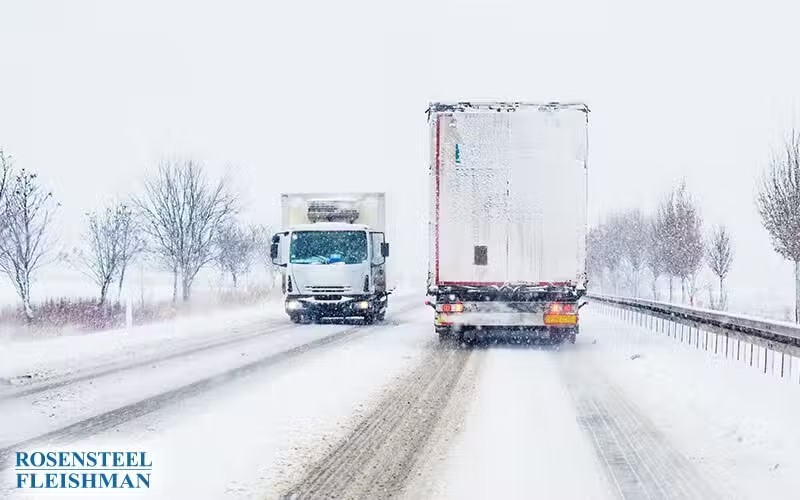

Delivery drivers may navigate, scan packages, communicate with dispatch, find addresses, park, handle cargo, and meet route expectations. Those tasks create records that can help reconstruct a crash, but their meaning depends on timing, system design, actual use, and the driver’s attention demand.
Delivery work creates a dense activity timeline, but a scan, app event, message, or phone record must be placed in context before it supports a distraction or schedule-pressure conclusion.
Build the route-and-stop timeline
- Dispatch, route plan, manifest, delivery sequence, customer window, scan, photograph, signature, and exception
- GPS, telematics, engine events, camera, driver-assistance, mobile-device, and app activity
- Clock-in, breaks, payroll, workload, prior delays, messages, calls, and supervisor instructions
- Parking, backing, turning, lane use, visibility, pedestrians, bicycles, traffic, and roadway geometry
- Cargo position, doors, liftgate, mirrors, cameras, vehicle condition, and post-crash custody
Apply device rules to the actual conduct
49 C.F.R. § 392.80 and § 392.82 address texting and hand-held mobile telephone use by covered commercial-motor-vehicle drivers, with definitions and exceptions in the regulatory framework.
G.S. 20-137.4A addresses unlawful use of a mobile telephone for text or electronic mail messages while operating a vehicle and contains definitions, exceptions, and evidentiary language. Identify the device, function, conduct, timing, and applicable rule before asserting a violation.
Preserve native data lawfully
Request preservation of company-controlled route, scan, messaging, telematics, and camera systems before routine deletion. Personal-device content, subscriber information, cloud data, and location history require appropriate consent or legal process. Keep native files, metadata, time zones, field definitions, audit history, and access logs.
Identify who controlled the work
- Driver employer, contractor, platform, retailer, carrier, vehicle owner, staffing entity, and dispatch source
- Who set the route, workload, timing, performance measures, device, training, and stop-work authority
- Who owned, inspected, maintained, loaded, and insured the vehicle
- What instruction existed for parking, backing, device use, cargo, and reporting hazards
The related delivery-truck cause guide explains how vehicle class, trip, work pressure, parking, backing, cargo, and road-user interaction can be tested as separate causal hypotheses.
Test alternative explanations
- The app event was automated or generated by a passenger or dispatcher
- The device was used after the vehicle had stopped in a safe place, rather than during the relevant driving interval; a pause in traffic is not automatically outside the federal driving definition
- A route change or customer request had no role in the collision
- Visibility, roadway, vehicle, cargo, pedestrian, cyclist, or another driver better explains the event
- The collision damaged systems or changed timestamps and data availability
Connect activity to attention and causation
Show what task occurred, how it was performed, when it began and ended, what the driver could see, and how it affected perception or response. The presence of a device or demanding route does not independently establish distraction or company responsibility.
Rosensteel Fleishman Car Accident & Injury Lawyers provides information about delivery-truck evidence in Charlotte collision claims.
Sources
Additional Trucking Accidents Articles
Reducing Reinjury Risk With Physical Therapy After a Truck Crash in Charlotte
Concerns about reinjury involve medical questions that claim records cannot answer. Learn how to organize physical therapy documentation, practical expenses, and scene evidence without drawing unsupported conclusions.
When Mobility Loss After a Charlotte, NC Truck Crash Has No Clear Diagnosis
An unclear diagnosis does not prevent a family from recording practical changes after a truck crash. Keep observations, added expenses, and unanswered claim questions separate.
How Insurers Review Worsening Pain After a Truck Crash
An early insurance review may start with an incomplete account. Dated records can help explain later changes in pain, work limitations, and expenses without treating symptoms as proof of an injury.



