What happens when both drivers may have contributed to a crash and the insurance companies do not agree about who should pay? That question can quickly become complicated because settlement discussions often depend on much more than vehicle damage or a single statement about what happened. Adjusters may compare driver accounts, photographs, witness statements, medical […]
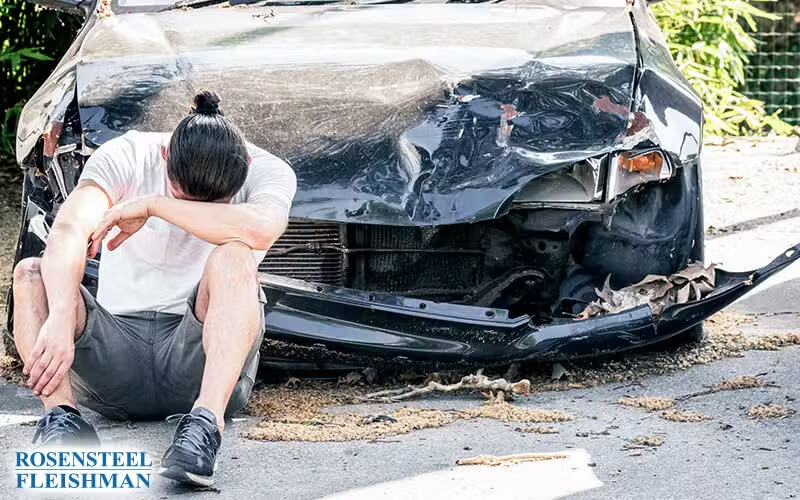

A damaged vehicle may contain information relevant to impact location, crush, restraint use, component condition, visibility, tires, lamps, steering, braking, or recorded electronic data. It may also be unsafe, accruing storage charges, needed for transportation, or ready for routine repair. The preservation decision should identify the actual issue before imposing a broad hold.
Vehicle preservation should be proportionate to a defined disputed issue, documented by condition and custody, and coordinated before repair, download, transfer, salvage, or disposal changes the evidence.
Identify the issue the vehicle may answer
- Impact location, direction, sequence, overlap, crush, intrusion, rollover, underride, or contact between identified vehicles or objects
- Seat, belt, pretensioner, airbag, child-restraint, occupant-position, or warning-system condition
- Tire, wheel, brake, steering, lighting, visibility, defect, maintenance, repair, or post-crash alteration question
- Event data recorder, infotainment, telematics, diagnostic, camera, phone-pairing, navigation, or other electronic information
- Vehicle identity, ownership, permission, cargo, equipment, commercial use, recall, modification, or prior-damage issue
Record condition and custody immediately
- Year, make, model, trim, vehicle identification number, plate, owner, driver, mileage, keys, tow location, and current custodian
- Exterior, interior, underbody, wheels, glass, lamps, restraints, warning lights, cargo, personal items, and visible damage photographed from documented positions
- Scene, tow, storage, insurer, repairer, auction, salvage, lienholder, and owner communications with dates and recipients
- Every movement, access, inspection, download, disassembly, repair, part removal, sale, or transfer
- Storage charges, safety restrictions, weather exposure, power condition, and any step needed to prevent avoidable deterioration
Treat electronic data as vehicle- and event-specific
49 CFR Part 563 sets uniform requirements for specified vehicles that are equipped with event data recorders. It describes data elements, recording, retrievability, and manufacturer tool availability. The regulation does not mean every vehicle has an EDR, every event was recorded, or every available data field proves speed, fault, or injury.
- Confirm make, model, model year, module, supported tool, event count, and whether a record is complete
- Document the vehicle, module condition, power state, operator, equipment, software, time, method, and report version
- Preserve the native output and interpretation notes; do not overwrite the original with a summary
- Compare recorded fields with scene, vehicle, witness, video, timing, and mechanical evidence
Send a precise preservation request
Identify the vehicle and custodian, the material to preserve, the issue it may address, prohibited changes, requested access, proposed inspection protocol, response contact, and a reasonable duration. A letter should not imply that the sender owns or may indefinitely control someone else’s vehicle.
Coordinate inspection and repair
After a lawsuit begins, North Carolina Rule of Civil Procedure 34 provides a procedure for requesting inspection, copying, testing, or sampling of tangible things in another party’s possession, custody, or control. Pre-suit access is different and may require consent, an agreement, or another lawful process.
- Participants, scope, sequence, nondestructive steps, destructive testing conditions, sampling, observers, and cost allocation
- Safety, facility, lift, disassembly, scanning, photography, measurement, calibration, and chain-of-custody procedures
- Notice to other interested parties before a material alteration when reasonably required
- Written agreement about what may proceed after inspection and what must remain preserved
Release the hold deliberately
The North Carolina Department of Insurance after-an-accident guidance addresses repairs, estimates, total loss, and disagreement. Reconcile preservation with coverage duties, repair authorization, storage, lienholder, transportation, title, and salvage decisions. Record who approved repair, sale, or disposal, what evidence was captured, and which issues remain unresolved.
The related North Carolina evidence-preservation guide explains how to identify custodians, scope requests, preserve originals and metadata, and track receipt while a crash-vehicle decision is made.
Rosensteel Fleishman Car Accident & Injury Lawyers provides information about Charlotte car-accident claims involving vehicle evidence. Preservation should match the disputed facts and the risks of alteration or loss.
Sources
Additional Car Accidents Articles
Injury Awareness Immediately After a Crash Without Obvious Symptoms
A crash can leave a family focused on the most immediate questions first: Is everyone safe, can the vehicles be moved, and what needs to happen next? When no one appears seriously hurt, it is easy to assume the physical effects of the collision are already understood. In reality, injury awareness immediately after a crash […]
Accident Claim Changes over Time When New Information Becomes Available
A car accident claim can look straightforward at first, but the picture often becomes clearer as documents, medical information, repair findings, and witness accounts develop. For people dealing with a crash in Charlotte, the amount of information available during the first few days may be very different from what is known several weeks later. That […]
Counteroffers in Accident Claims Based on Changes in Medical Prognosis
How should an accident claim change when a doctor gives a different outlook than expected? That question can become important when an injury initially appears temporary but later requires additional treatment, testing, therapy, or time away from work. A settlement discussion is based on the information available at that moment, so meaningful changes in the […]