
A claim can feel finished once the insurer issues payment and closes its file, but later information sometimes changes the picture. A vehicle owner may discover hidden collision damage after repairs begin, an injured person may receive a new medical bill, or a work absence may last longer than originally expected. When that happens, understanding […]
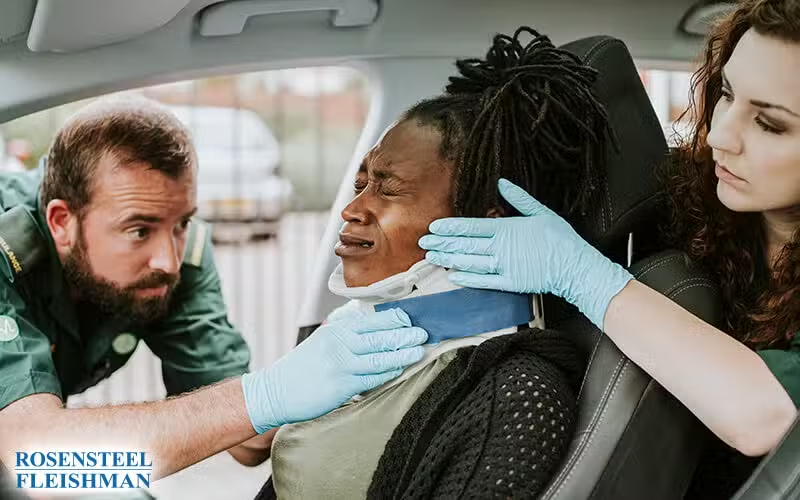

Photographs and scene notes can preserve context, but they do not establish fault, injury causation, coverage, or a claim outcome.
Prioritize safety before collecting information
Emergency care and directions from responders come first. The North Carolina Department of Insurance’s After an Accident checklist provides current consumer guidance about safety, reports, insurance information, and witnesses.
Record visible conditions without interpretation
- Date, time, location, direction of travel, weather, lighting, traffic controls, lane layout, and surface conditions
- Vehicle position, visible damage, debris, marks, photographs, video, and the person or device that created each record
- Names and contact information of willing witnesses, responding agency, report number, and conditions that changed before a note could be made
- What was personally observed separated from another person’s statement, estimate, or conclusion
Example: separate what you saw from what you heard
A useful note might say: “At about 5:20 p.m., after I stopped, I saw the blue vehicle beside the curb. I did not see its position at impact. At 5:35 p.m., a person who identified herself as a passenger told me the vehicle had moved.” This is an illustrative example, not an account of a real crash. It preserves two sources and two times instead of turning a later observation into a collision reconstruction.
Keep the original note. If a photograph, video or report later supplies a different time or position, add a dated correction or comparison rather than rewriting the first entry. Mark an estimated time as estimated and identify which device or record supplied any precise timestamp.
Preserve original files
Keep original photographs and video, their available metadata, and a short note about when each item was created or received. Do not edit the original file or fill a missing view with an assumption.
Questions about a Charlotte car-accident claim require a fact-specific review.
Source
Additional Car Accidents Articles
Low Speed Collision Basics When Injuries Are More Serious Than Expected
A low speed crash can look minor at first, yet the physical and financial consequences are not always obvious in the first hours or days. In Charlotte, North Carolina, someone may leave a parking lot collision, intersection bump, or stop and go traffic crash believing the matter will be simple, only to notice increasing neck […]
Map and Diagram of Accident Scene Evidence When Photos Are Incomplete
Accident recovery rarely follows a perfectly straight path, especially when early symptoms change or new limitations appear after a person returns to normal routines. In Charlotte, someone injured in a collision may begin with goals such as reducing pain, restoring movement, returning to work, or safely resuming everyday activities, then adjust those goals as doctors […]
Occupant Safety Considerations in Crashes Involving Unusual Seating Positions
Families often think about crash safety in terms of seat belts, airbags, and where children are seated, but unusual seating positions can change how those protections work. A passenger who is reclined far back, leaning toward the center console, resting their feet on the dashboard, or sitting at an angle may not interact with a […]



