
Bicycle injury claims often depend on more than the moment of impact. What happens during the days and weeks afterward can influence how an insurer evaluates the connection between the crash, the injuries, and the losses being claimed. Reporting delays, gaps in medical care, and changing symptoms may create questions that would not exist if […]
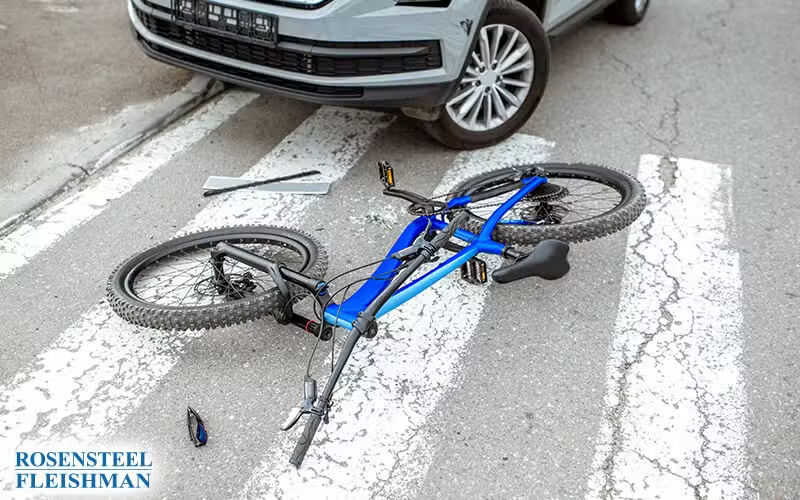

A familiar ride to work can become a source of uncertainty after a bicycle crash in Charlotte. The practical question is when that uncertainty begins changing everyday travel: using a different form of transportation, missing work, or relying on someone else for a ride. Fear of traffic after a bicycle accident is worth documenting when it changes those routines, without treating the fear itself as proof of an injury or someone else’s fault.
Two separate accounts matter here: what happened during the collision and what changed afterward. When discussing disrupted commuting with a cyclist accident attorney, distinguish your transportation difficulties from the evidence about each person’s actions on the road. That distinction helps frame both the practical consequences and the separate question of how applicable traffic laws relate to responsibility.
Overview
- Record specific changes to your usual commute.
- Keep receipts and work records connected to those changes.
- Separate personal observations from assumptions about the crash.
- Do not treat fear or added expenses as proof of legal responsibility.
Document Changes to Your Everyday Travel
A useful commute record explains what you ordinarily did before the crash and what you actually did afterward. It does not need to measure how frightened you felt on a numerical scale. Dates, transportation choices, additional costs, and effects on your workday give a clearer account of the disruption.
Different changes call for different documentation. If you still arrive at work on time but pay for rides, receipts describe the added expense. If a family member drives you without charging, a dated note can describe the help and schedule changes, but it should not present an estimated fare as money you spent. If you miss paid work, keep the relevant schedule, attendance records, and employer communications rather than relying only on memory.
- Your usual commute before the collision.
- Dated changes in transportation or route.
- Receipts for actual additional travel expenses.
- Work records showing missed hours or changed schedules.
- Brief notes explaining why each change occurred.
Be specific about the reason for a change. A bicycle awaiting repairs, concern about riding near traffic, and an unrelated schedule change are different circumstances. If several factors affected the same trip, record them together rather than attributing the entire disruption to one cause.
For a hypothetical example, someone might pay for rides while a damaged bicycle is unavailable, then continue paying after repairs because riding near vehicles feels difficult. Keeping the repair dates alongside the travel receipts helps explain that change in circumstances. The record describes the person’s experience; it does not establish a diagnosis or determine whether every expense is recoverable.
Separate Traffic Conduct From the Effects of the Crash
Evaluating responsibility means examining the collision itself against the traffic rules that apply to the circumstances. The useful questions concern conduct: where each person was traveling, what maneuver each was making, what signals or signs were present, and who had an obligation to yield. Fear afterward does not answer those questions.
Preserve available photographs, witness contact information, correspondence, and any collision report you receive. In your own account, distinguish what you saw from what you inferred. For example, observing a vehicle turn across your direction of travel is different from knowing whether its driver saw you. Avoid filling gaps in memory with conclusions about intent or attention.
A disputed turn and a disputed traffic signal raise different factual questions. In the first situation, direction of travel and the sequence of movements may need clarification. In the second, the signal displayed for each person may be the central disagreement. Identifying a traffic rule is only part of the analysis; the account must also explain why that rule applies and what evidence supports the claimed violation.
For a claim submission, organize crash evidence separately from records of commuting consequences, then connect them with a dated timeline. Keep copies of what you submit and any requests for clarification. If a cost or missed work period is questioned, ask what connection or supporting information needs explanation rather than assuming that the question settles the claim.
Detailed records can make an account easier to evaluate, but they do not resolve every disagreement. Whether a particular consequence belongs in a claim requires a separate assessment of the facts and applicable law. Neither a frightening collision nor a carefully kept expense log establishes a payment amount by itself.
Prepare a Clear Account of What Changed
A manageable next step is to gather existing records into one folder and write a short, dated description of your usual commute and the changes since the crash. Mark uncertain dates or amounts as uncertain instead of making them appear exact. If you share that account with Rosensteel Fleishman, identify unanswered questions about both the collision and the transportation disruption.
Attorney Matthew Fleishman: "A useful account separates what happened on the road from what changed in daily life, with records supporting each part."
You do not have to turn a difficult commute into a legal conclusion. Describe what changed, preserve what supports it, and leave room to clarify what you do not yet know. That gives you a concrete way to explain the disruption without overstating what the records prove.
Additional Bicycle Accidents Articles
Pothole Bicycle Accident Risks When Riders and Property Owners Disagree About Conditions
A pothole can turn an ordinary bicycle ride into a complicated dispute about what happened, who knew about the road or property condition, and whether reasonable steps could have prevented the crash. When a cyclist and a property owner remember the condition differently, photographs, maintenance records, witness accounts, medical documentation, and the timing of repairs […]
When to Contact a Bicycle Accident Attorney After Conflicting Statements About a Crash
After a bicycle crash, the process of figuring out what happened can become more complicated when the people involved remember the event differently. A driver may say the cyclist entered an intersection unexpectedly, while the cyclist may remember having the right of way. In Charlotte, NC, those conflicting accounts can affect how an insurance company […]
Visibility Issues Bicycle Accidents and Why Conflicting Accounts Often Develop
What happens when a driver says they never saw a cyclist, but the cyclist believes they were clearly visible? Questions like this often arise after bicycle crashes because visibility depends on more than whether a person was physically present on the road. Lighting, traffic, parked vehicles, weather, road design, vehicle blind spots, and the movements […]



