Highway crashes do not always happen during predictable rush hour congestion or in the middle of heavy commuter traffic. In North Carolina, a collision may occur late at night, during an off-peak afternoon, or on a relatively open stretch of interstate where traffic conditions initially appear straightforward. Claims arising from these crashes can still become […]
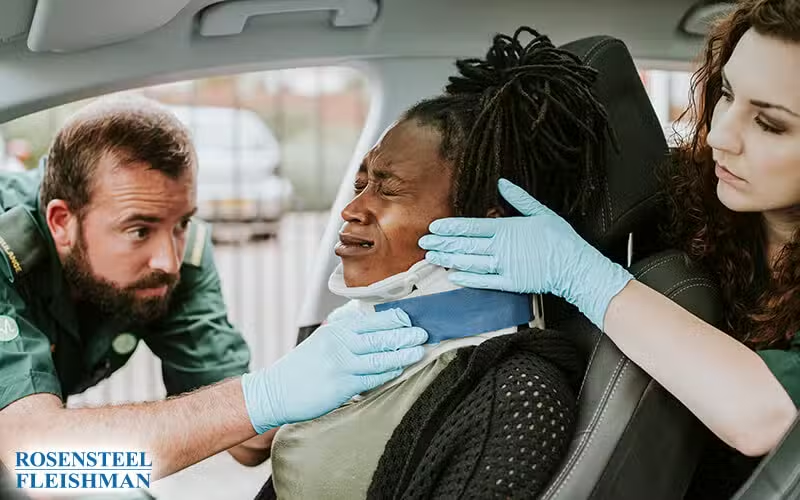

Charlotte drivers navigating busy roads like I-485 or I-77 often expect minor lane changes to be routine, but when something goes wrong, the aftermath can take longer than expected to sort out. One of the most common slowdowns in these cases comes from waiting on medical records, which play a key role in determining how serious an injury is and what a claim might be worth. Without complete documentation, insurance companies tend to pause or delay their evaluation, even if fault seems relatively straightforward.
That delay can feel frustrating, especially when medical visits, missed work, and vehicle repairs are already adding stress. As Attorney Matthew Fleishman puts it, “Even a short gap in medical documentation can slow everything down, because insurers rely on those records to connect the injury directly to the accident.” For those trying to understand how these situations unfold, it can help to review how fault and documentation impact a claim, including insights from a car accident injury attorney perspective that focuses on real-world outcomes.
TLDR
Lane change accidents often seem simple, but delays can arise when medical records are incomplete or slow to process.
- Waiting on medical records is one of the most common reasons claims stall
- Insurance companies rely heavily on documentation before assigning value
- Even minor injuries can require detailed timelines to verify
- Early decisions after the accident can impact how smoothly a claim moves forward
How Lane Change Accidents Create Uncertainty in Claims
Lane change accident basics often involve determining which driver had the right of way, but in practice, that question is not always easy to answer. When two vehicles attempt to occupy the same space, especially in moderate to heavy traffic, both drivers may believe they acted correctly. This creates an immediate gray area that can slow down the claims process while insurers gather statements, review photos, and sometimes wait for additional evidence like dashcam footage.
A common misconception is that the driver who rear-ends another vehicle is always at fault, but that does not always apply in lane change situations. For example, if a driver merges abruptly into a lane without checking blind spots, the vehicle behind may not have enough time to react. In these cases, insurers often look for small details such as signal use, speed, and lane position. These factors take time to verify, especially if the accident report is limited or if witness accounts differ.
In Charlotte, a realistic scenario might involve a driver merging onto I-277 during rush hour, where traffic is dense and movement is constant. If a collision happens during that merge, both drivers might give conflicting accounts. That uncertainty can extend the timeline as adjusters work to piece together what actually occurred before moving forward with any settlement discussion.
Why Medical Records Play a Central Role in Claim Timing
Even when fault becomes clearer, claim progress often depends on medical documentation. Insurance companies typically wait until treatment is complete or at least well-documented before assigning value to a claim. This means that ongoing doctor visits, physical therapy, or diagnostic testing can delay the process, even if the injuries are not severe.
Timing mistakes can make this worse. If someone waits too long to seek care or skips follow-up appointments, insurers may question whether the injury is truly related to the accident. That can lead to additional requests for records or even disputes over the extent of the injury. These extra steps add time and can reduce confidence in the claim overall.
Another overlooked issue is how long it takes for providers to release records. Hospitals and clinics do not always send documentation immediately, and in some cases, requests must be followed up multiple times. Until those records are received and reviewed, the claim often remains in a holding pattern.
Common Causes of Delays Beyond the Initial Investigation
Once the basics of the accident are reviewed, other factors can still slow things down. Insurance company behavior is one of the biggest influences. Adjusters may request additional documentation, seek recorded statements, or conduct internal reviews that extend the timeline. While some of this is standard, it can feel like unnecessary delay from the claimant’s perspective.
Another complication comes from overlapping damage and injury claims. Vehicle repairs might be resolved quickly, but injury claims often take longer because they require a more detailed evaluation. This creates a disconnect where one part of the claim moves forward while another lags behind. For someone dealing with both, it can feel like progress is inconsistent or unclear.
Emotional and practical challenges also play a role. After a crash, people are often focused on getting back to normal, which can lead to missed paperwork deadlines or incomplete communication with insurers. Small oversights like not responding to a request for information can add days or weeks to the process.
Real World Decision Points That Affect Claim Progress
Many delays come down to decisions made early after the accident. Choosing when to seek medical care, how consistently to follow treatment, and how quickly to report the incident all influence how smoothly a claim moves forward. These choices might seem minor at the time, but they shape how insurers evaluate the situation later.
For instance, a driver who experiences mild neck pain after a lane change accident on Independence Boulevard might assume it will go away and delay seeing a doctor. If the pain worsens days later, that gap can raise questions during the claims process. Insurers may ask whether the injury was truly caused by the accident or something else that happened afterward.
There is also the decision of how to handle communication with insurance representatives. Providing clear, consistent information helps keep things moving, while conflicting statements or incomplete details can trigger additional review. These decision points are often where claims either stay on track or begin to slow down.
Moving Forward With More Clarity After a Lane Change Accident
Understanding lane change accident basics helps explain why some claims move quickly while others take time. Delays are often tied to documentation, uncertainty about fault, and the natural pace of medical treatment. While that can feel frustrating, it also reflects how insurers work to verify details before finalizing a claim.
For those dealing with the aftermath of a crash in Charlotte, having a clearer picture of what affects timing can reduce some of the uncertainty. Rosensteel Fleishman Car Accident & Injury Lawyers often see how small gaps in records or communication can slow progress, even in otherwise straightforward cases. As Attorney Matthew Fleishman notes, “Staying consistent with treatment and documentation can make a meaningful difference in how smoothly a claim develops.”
When questions come up or the process starts to feel unclear, speaking with a knowledgeable team can provide practical direction without pressure. Taking steady, informed steps after an accident can help keep things moving and make the overall experience easier to manage.
Additional Car Accidents Articles
Left Turn Gap Judgment Errors When Visibility or Road Design Plays a Role
What happens when a driver begins a left turn and another vehicle suddenly changes lanes? The available opening can disappear almost instantly. In Charlotte traffic, this type of conflict may occur near multilane intersections where drivers must monitor oncoming vehicles, traffic signals, pedestrians, and vehicles moving between lanes at the same time. These crashes can […]
Multi Policy Insurance Considerations When One Policy Does Not Cover Every Loss
Insurance coverage after a serious car accident is not always limited to one policy. A collision may involve liability coverage, underinsured motorist coverage, medical payments coverage, an employer’s commercial policy, or another source of compensation. Identifying each applicable policy can affect how losses are documented, how negotiations develop, and whether a proposed resolution fairly reflects […]
What Happens When Vehicle Damage Appears Later Despite an Initial Inspection
Damage found days or weeks after a collision can complicate an insurance claim, especially when the cause of the crash or responsibility for the repairs remains disputed. A vehicle may look drivable during an initial roadside review in Charlotte, yet later show suspension problems, electrical faults, alignment issues, or damage hidden beneath exterior panels. When […]