
A crash involving only one vehicle does not always mean the driver bears all responsibility. A family dealing with injuries, medical bills, vehicle damage, and missed work may discover that a careless driver, a defective vehicle component, unsafe road conditions, or another outside factor contributed to what happened. Understanding these possibilities can help someone in […]
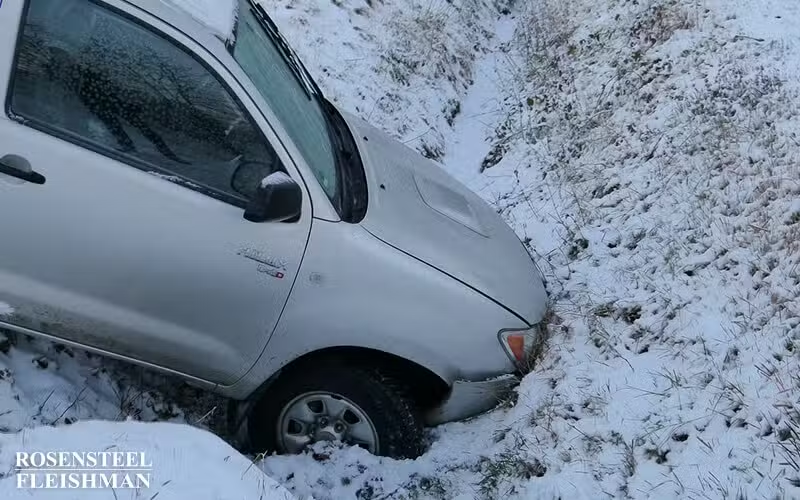

Throwing a rock or another object at a moving vehicle can injure occupants, damage the vehicle, cause a driver to lose control, and endanger other road users. The legal analysis begins with what was thrown, who acted, what the person intended or knew, where the object struck, how the driver responded, and what harm followed.
The same thrown object can create a criminal investigation and a civil claim, but the two proceedings answer different questions and use different burdens of proof.
Criminal classification depends on the proved conduct and harm
North Carolina does not assign one charge to every thrown-object event. Investigators and prosecutors evaluate intent, the target, the manner of throwing, the object, danger created, contact, injury, property damage, and any resulting crash. A news report or arrest label is not a final determination of guilt.
For example, G.S. 14-32.4 defines assault inflicting serious bodily injury and specifies the injuries covered by that offense. G.S. 14-160 separately addresses willful and wanton injury to personal property. Other charges may be considered under different facts. Neither statute means that every rock strike automatically satisfies the offense.
A civil claim focuses on responsibility for the resulting losses
A civil case asks whether an identified person is legally responsible for injury or damage and what evidence connects the act to the claimed loss. The record may include physical injury, vehicle and personal-property damage, medical expenses, lost income, pain, disability, or other damages recognized by law. Each item still needs proof of amount and causal connection.
G.S. 1D-15 does not make punitive damages automatic for intentional conduct. It requires liability for compensatory damages plus fraud, malice, or willful or wanton conduct related to the injury, proved by clear and convincing evidence. The statute also limits when punitive damages can be imposed solely through vicarious liability.
Identify the actor before expanding the defendant list
- Description, location, direction of travel, time, lighting, weather, sight lines, distance, object, clothing, companions, vehicles, and escape route
- Dash-camera, vehicle-camera, business, residential, traffic, school, park, transit, and law-enforcement video, including retention periods and original metadata
- 911 calls, dispatch records, incident and crash reports, witness contact information, photographs, maps, and statements preserved with their source
- The object, glass, paint transfer, impact point, vehicle inspection, repair estimate, medical findings, and any chain-of-custody information
- Admissions, messages, social-media material, device data, or other identity evidence collected lawfully and preserved in its original form
A property owner, school, employer, parent, event operator, or government entity is not automatically liable because the act occurred near its property or involved someone connected to it. A claim against another person or organization requires an independent duty, control, notice, conduct, causation, applicable immunity or statutory issue, and supporting evidence.
Driver response and causation require a complete sequence
The fact that a driver swerved, braked, accelerated, or struck another object does not resolve fault by itself. Reconstruct the sequence from the first observable hazard through impact and final rest: speed, lane, traffic, visibility, reaction interval, steering, braking, vehicle data, road marks, witness positions, and medical or property consequences. Later assumptions should not replace contemporaneous evidence.
Insurance questions are policy-specific
An intentional act may raise exclusions, reservation-of-rights questions, disputes over who qualifies as an insured, and questions about other potentially applicable coverage. A liability insurer's position does not decide the actor's civil responsibility, and the existence of a criminal case does not guarantee payment.
Rosensteel Fleishman Car Accident & Injury Lawyers provides information about speaking with a Charlotte personal injury attorney after a thrown object causes a road injury. Identity, evidence retention, possible defendants, coverage, damages, defenses, and deadlines require review of the specific event.
Sources
Additional Personal Injury Articles
Common Misconceptions About Motorcycle Accidents and Where Riders Can Find Reliable Support
Many motorcycle accident claims do not follow a single predictable path. Some disputes can be resolved through straightforward communication with an insurance company, while others require detailed documentation, extended negotiations, or a more structured legal process. Understanding that difference matters because misconceptions about motorcycle accidents can cause riders to underestimate what may be required to […]
Fall Injury Symptom Checklist for Tracking Changes During Recovery
What changes after a fall, and which details are most likely to matter when an insurance company reviews a claim? Insurers generally place greater weight on information that is dated, consistent, and supported by independent records. A written account of changing symptoms can provide useful context, but it is usually considered alongside incident reports, photographs, […]
Denied Car Accident Claims Basics and the Exceptions That May Change the Outcome
A denied car accident claim does not always mean an injured person has run out of options. Insurance companies must explain why they are refusing payment, and that explanation may reveal missing records, a disagreement about fault, a policy issue, or a dispute over whether the collision caused the reported injuries. Understanding the stated reason […]


