Dog bite injuries in Charlotte often appear manageable at first, especially when wounds are cleaned and treated quickly. However, recovery is not always straightforward. Symptoms like stiffness, nerve sensitivity, or infection can develop days or even weeks later, making early assumptions about healing unreliable. This is why consistent monitoring plays a larger role than many […]
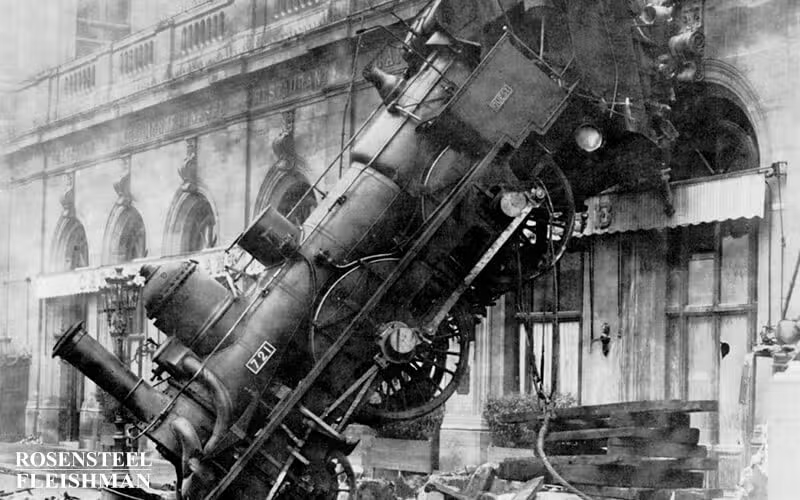

Millions of people in the United States rely on public transportation, also known as mass transit, to get to work, school, home, the store, appointments and other places daily. Buses, trains, trolleys, taxis, airplanes and other vehicles transport large amounts of people all over the country every single day.
In the city of Charlotte, North Carolina alone, the Charlotte Area Transit System (CATS) operates more than 70 bus routes, special services for the disabled, van-pools, a historical trolley, and the LYNX light rail line. CATS transports thousands of people each day throughout Charlotte and its suburbs.
While public transportation is typically considered to be one of the safer forms of transportation, accidents do occur. These accidents can result in injuries to passengers, pedestrians and occupants of other vehicles. Often, because of the large number of people that public transportation vehicles transport at one time, the number of people injured in an accident is greater than in a single car accident. In addition, many of these vehicles do not have seat belts, and even if they do, passengers are not required to use them.
In a car accident case involving two private individuals operating their private vehicles, it is relatively easy to identify the parties involved and who might be at fault. In a public transportation accident, this is less clear. It might not even be clear who the owner of the public transportation system is. There are likely other parties involved. In many states, the public transportation systems are often owned by the counties and municipalities that they travel through. School buses may be owned by the school district or the municipality.
In addition to local public transportation systems, many cities are serviced by other publicly and privately owned and operated transit options such as Amtrak trains, Greyhound buses, airplanes, and private taxi services.
Parties that Might be Liable in a Public Transportation Accident
- The owner. In a car accident case involving two parties, it is typically easy to identify the owner of the vehicle, even if they are not the person operating the vehicle at the time of the car accident. In the case of public transportation that task is more difficult. Some public transportation systems are owned by government entities.
- The operator or driver. Public transportation is operated by individuals. Trains have engineers and conductors, buses have bus drivers, and airplanes have pilots. If the person operating the vehicle caused the public transportation accident, then he/she might be liable for damages to the injured victims.
- A third party, such as a person or organization that chartered a vehicle. In a situation where an organization rents, or charters a bus or plane for a specific trip, that organization might be liable for any injuries sustained in an accident depending on the specifics of the rental agreement.
- Third-party maintenance providers. Buses travel on roads that are not owned by the bus company. Trains travel on tracks that are not owned by the train operator. Planes land on runways not owned by the plane operator. In North Carolina alone, the North Carolina Railroad Company owns tracks between Charlotte and Morehead City. Numerous entities, including both freight and passenger trains, operate along those tracks. If there is a problem with the tracks that caused an accident, then the North Carolina Railroad Company might be liable. In addition, vehicles require maintenance. If the party responsible for maintaining the roads or the tracks or the runways, or the one responsible for maintaining the bus or train or plane fails to do so properly, then anyone injured in an accident on the road or the train track or the runway or in the vehicle might have a claim against the third party tasked with maintenance.
- The person who caused the accident. Individuals are frequently the cause of public transportation accidents. The accident might have been caused by a pedestrian, car driver, motorcyclist, bicyclist, or truck driver. That person might be another party from which damages can be sought.
Bringing a Claim
If private operators and owners are involved, then the traditional personal injury rules and statutes of limitations apply.
If however, a government entity is one of the parties involved, then the process is different. Investigating the accident will be different when there is a public transportation accident, different entities might be called to investigate the cause of the accident. For example, the National Transportation Safety Board (NTSB) might be called to investigate a train accident or a plane crash. Federal and state Tort Claims Act laws will apply. These laws essentially allow the federal and state government to be sued and found liable for damages if those acting on behalf of the government have acted negligently.
The statute of limitations that applies in a normal personal injury case will be different if a government entity is involved. Typically, Tort Claims Act statutes provide for a shorter time in which a government entity can be sued. In addition, there are often limits on the amount of damages that are available.
Why Do I Need a Charlotte Law Firm?
While public transportation accidents do not occur frequently, they do happen and often result in serious injury. They can be complex, due in part to the different parties that may be involved and due to North Carolina’s contributory negligence laws which may preclude recovery if the injured party is found to be even partially at fault.
The Charlotte, NC based lawyers at Rosensteel Fleishman Car Accident & Injury Lawyers are experienced personal injury attorneys who can help you understand your rights and whether or not you have damages and should proceed with a claim. Please contact our office at 704-714-1450. There is no fee for an initial consultation.
Additional Law Articles Personal Injury Articles
Underinsured Coverage Basics and How It Helps Cover Remaining Costs
Understanding how insurance applies after a crash can make a noticeable difference when expenses begin to add up. In many cases around Charlotte, drivers assume the at-fault party’s insurance will fully cover damages, only to find out later that policy limits fall short. That gap often becomes clearer during the documentation phase, when medical bills, […]
How Fault Is Determined in Truck Accidents and When It May Be Revisited
Determining fault after a truck accident often shapes everything that follows, from medical care access to financial recovery. In many cases, the initial fault decision happens quickly, sometimes before all injuries are fully understood. This can create challenges for people dealing with ongoing pain, especially when symptoms evolve days or weeks after the crash. For […]
What to Know After a Car Crash to Protect Your Financial Interests
A car crash can quickly shift from a stressful moment into a long-term financial concern, especially when fault is not immediately clear. In many situations, what seems like a simple fender bender can become more complicated once insurance companies begin reviewing statements, evidence, and timelines. Families in Charlotte, North Carolina often find themselves trying to […]




