Medical records, family schedules, and insurance paperwork serve different purposes after a bicycle crash. Keeping those purposes separate helps make practical decisions clearer without drawing medical or legal conclusions from incomplete information.
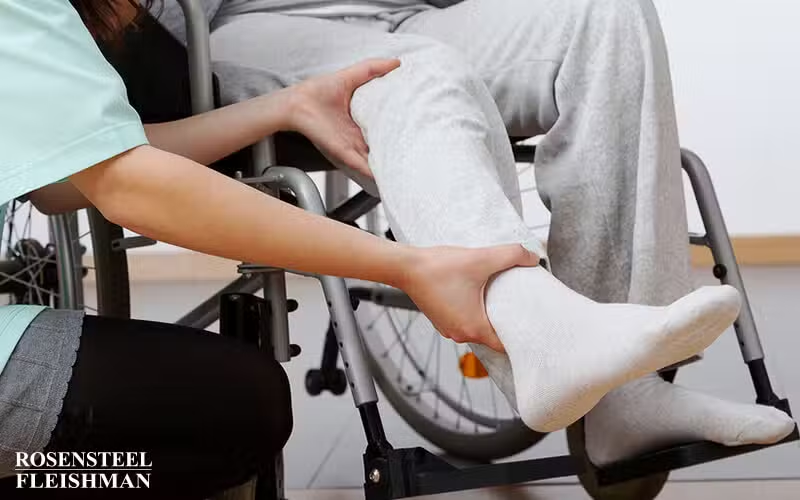

A nursing-home incident timeline should preserve what each person knew, observed, recorded, reported, and changed at a particular time instead of treating every later document as if it existed before the event.
The timeline should identify the resident, facility, room, unit, event, condition, people involved, source of each entry, original creation time, later entry time, amendment, and person who supplied the information. A concern, allegation, facility conclusion, regulator finding, and civil determination are different things.
Start with the resident’s rights and source record
G.S. 131E-117 states rights for patients in North Carolina nursing homes, including dignity, appropriate care, information about services and charges, medical orders, privacy, freedom from abuse and improper restraints, access to visitors and communications, grievances, possessions, and transfer or discharge protections.
Federal 42 C.F.R. § 483.10 contains additional resident-rights provisions for covered facilities, including access to records and information. Confirm the facility type, certification, resident status, request, representative authority, and governing provision before applying a general summary.
- Admission agreement, face sheet, diagnoses, allergies, orders, medication profile, baseline assessment, Minimum Data Set materials, care plan, preferences, risks, and responsible-party information
- Daily nursing notes, flowsheets, vital signs, skin, nutrition, hydration, weight, mobility, toileting, behavior, pain, sleep, wound, treatment, therapy, and change-in-condition entries
- Medication orders, pharmacy review, administration record, omitted or refused dose, as-needed reason and response, lab, imaging, consultation, transfer, and discharge record
- Staff assignment, schedule, time record, agency personnel, credential, training, call light, rounding, alarm, monitoring, handoff, and supervisor communication
- Original electronic audit information when available, including author, entry time, service time, amendment, deletion, late entry, and access history
Create an event-by-event timeline
- Last documented baseline before the concern and the first reported change in condition
- Who observed the change, exact time, location, words used, people notified, orders received, intervention, monitoring, and response
- Resident and witness account, photograph, video, clothing, bedding, equipment, room condition, call history, and physical evidence
- Family, representative, physician, practitioner, pharmacy, emergency service, hospital, law enforcement, ombudsman, adult-protective-services, and regulator communications
- Later diagnosis, treatment, facility explanation, correction, discipline, transfer, care-plan revision, or survey finding kept separate from what was known earlier
Facility reporting and investigation have defined requirements
Federal 42 C.F.R. § 483.12 addresses freedom from abuse, neglect, exploitation, and misappropriation and sets reporting, protection, investigation, and result-reporting requirements for covered facilities. The applicable time depends on the allegation and whether it involves abuse or serious bodily injury, so preserve the exact allegation time, awareness time, report time, recipient, method, and confirmation.
- Initial allegation or incident report, notifications, witness list, immediate-protection steps, staffing changes, and evidence-preservation instructions
- Interview notices, questions, notes, recordings, signed statements, investigator identity, collected records, photographs, and physical items
- Investigation report, facts considered, credibility or conflict notes, conclusion, submission date, recipients, corrective action, and later revision
- Difference between an internal incident report, federally required allegation report, personnel investigation, licensing complaint, police report, insurance notice, and civil claim
- Any record claimed to be privileged, confidential, unavailable, corrected, lost, or routinely destroyed, with the request and response preserved
Compare the timeline with public survey findings
The North Carolina Division of Health Service Regulation provides a facility and Statement of Deficiency search. Survey findings can identify dates, cited requirements, factual findings, correction plans, and follow-up activity. They do not automatically establish that the same condition caused a particular resident’s injury.
Search the correct facility name, address, license, certification, ownership period, survey date, complaint identifier, deficiency tag, correction plan, revisit, and final status. Preserve the downloaded file and retrieval date because listings and facility information can change.
Use the reporting guide for the correct agency route
The related guide to reporting suspected nursing-home abuse or neglect in North Carolina separates emergencies, facility grievances, DHSR complaints, ombudsman assistance, Adult Protective Services, and civil review.
Rosensteel Fleishman Car Accident & Injury Lawyers provides general information about discussing a North Carolina nursing-home negligence matter involving disputed incident records. Facility duties, clinical standards, reporting, causation, parties, defenses, damages, and deadlines depend on the resident and complete evidence.
Sources
Additional Personal Injury Articles
How Staff Training Records Can Affect Compensation in Nursing Home Claims
Training records may help explain whether staff were prepared for an assigned task. Their significance depends on timing, the incident evidence, documented losses, and what remains unresolved when settlement is discussed.
Does Minor Vehicle Damage Always Mean Minor Injuries?
A small repair bill does not explain every consequence of a crash. Keep vehicle evidence separate from injury records, and document changes to work and daily responsibilities without guessing about their cause.
Charlotte Hand Therapy Options for Coordination Problems After a Dog Bite
When hand coordination difficulties affect everyday tasks after a dog bite, clear records can help separate care arrangements, practical expenses, and unresolved claim questions.