
A motorcycle can go down without ever touching another vehicle, but that does not automatically mean the rider caused the crash. Road defects, spilled cargo, loose gravel, mechanical failures, poor lighting, and another driver’s sudden movement can all contribute to single vehicle motorcycle crashes. In Charlotte, the first explanation recorded at the scene may change […]
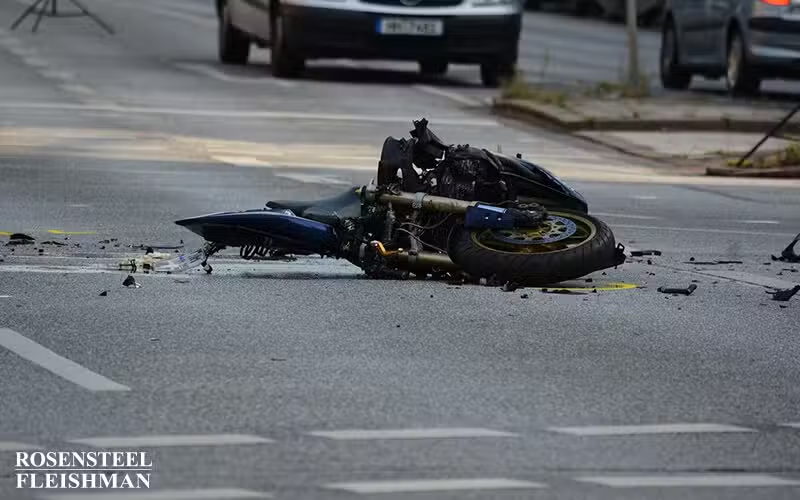

The original report described a North Carolina man who died after his motorcycle left a South Carolina roadway, struck a sign and a tree, and ejected him. It also reported that he was not wearing a helmet. The limited account did not identify another vehicle, establish why the motorcycle left the road, or determine what caused the fatal injuries.
The historical crash explains why helmet use, civil fault, lane rights, lighting, and injury causation must be evaluated as separate questions. A South Carolina event also should not be used to state what North Carolina law would decide without applying North Carolina statutes to the actual facts.
North Carolina requires compliant helmets
North Carolina General Statute 20-140.4(a)(2) generally prohibits operating a motorcycle or moped on a highway or public vehicular area unless the operator and passengers wear properly secured helmets that comply with Federal Motor Vehicle Safety Standard 218. The statute contains an exception for certain enclosed or roll-protected autocycles.
The statute also draws an important civil distinction. Subsection (b) says a violation is not negligence per se or contributory negligence per se in a civil action. That means a missing or noncompliant helmet does not, by itself, automatically establish the motorcyclist’s legal fault or automatically bar a claim.
Crash responsibility and injury causation are different questions
Evidence about helmet use may raise a different question from who caused a collision. A driver’s unsafe turn, lane change, following distance, failure to yield, or other conduct can be analyzed separately from whether protective equipment affected a particular injury.
Causation requires medical and collision-specific evidence. The parties may dispute whether a helmet would have prevented or reduced an identified head injury, whether other injuries were independently fatal, and whether the equipment fit and functioned properly. The statutory rule prevents the helmet violation alone from becoming an automatic civil verdict.
Motorcycles are entitled to full use of a lane
G.S. 20-146.1 gives motorcycles full use of a lane and prohibits operating another motor vehicle in a way that deprives a motorcycle of that use. It permits two motorcycles to travel abreast in one lane but prohibits more than two abreast.
In a sideswipe, passing, or forced-off-road event, relevant evidence can include the vehicles’ lane positions, the passing distance, where the passing driver returned to the lane, available shoulder space, roadway geometry, and whether the motorcyclist was forced to take an evasive path. A motorcycle’s smaller width does not convert the unused part of its lane into space another driver may claim.
Headlamps affect visibility and are required during operation
G.S. 20-129(c) requires a motorcycle’s headlamp or headlamps to be lit whenever the motorcycle is operating on highways or public vehicular areas. Lighting can matter when a driver says the motorcycle was difficult to see, but visibility still depends on the time, weather, sight lines, traffic, vehicle positions, and duration of the opportunity to observe.
A fact-specific review should distinguish a statutory lighting issue from assumptions about causation. Investigators should determine whether the lamp was operating, whether another driver actually looked, whether an obstruction existed, and whether timely detection would have allowed the crash to be avoided.
Evidence to preserve after a motorcycle crash
- The motorcycle, helmet, clothing, lights, tires, brakes, and damaged components before repair or disposal
- Scene photographs, measurements, debris, gouge marks, tire marks, final positions, signs, and roadway defects
- Dash-camera, traffic-camera, business-security, doorbell, and witness video before routine deletion
- Vehicle event data, phone records when lawfully obtainable, navigation data, and emergency-response records
- The crash report, supplemental investigation, witness identities, and any later reconstruction
- Complete medical records and qualified analysis connecting each claimed injury to the event
Why a preliminary report is not the final analysis
An early narrative may describe what was visible at the scene without resolving a mechanical failure, roadway condition, unidentified vehicle, medical event, or the sequence of impacts. A single-vehicle classification does not necessarily prove that no other person or condition contributed.
A focused way to evaluate the event
- What caused the motorcycle to leave its path?
- Did another driver affect the motorcycle’s lane or available escape route?
- Were the headlamp, tires, brakes, controls, and protective equipment preserved and examined?
- Which conduct caused the crash, and which facts relate only to injury severity?
- What medical evidence connects the collision and equipment issues to the claimed harm?
Rosensteel Fleishman Car Accident & Injury Lawyers provides information about motorcycle-accident claims in Charlotte. Responsibility, contributory negligence, and injury causation require review of the actual evidence; this historical report does not predict another case.
Sources
Additional Motorcycle Accidents Articles
How Secondary Conditions From Motorcycle Injuries Can Affect Ongoing Care and Support
A Charlotte rider may leave an accident scene believing the most important question is who caused the collision. In the weeks that follow, however, new symptoms can appear, treatment needs may change, and incomplete records can make the connection between the crash and those medical problems harder to establish. Secondary conditions from motorcycle injuries may […]
Common Misconceptions About Motorcycle Accidents and Where Riders Can Find Reliable Support
Many motorcycle accident claims do not follow a single predictable path. Some disputes can be resolved through straightforward communication with an insurance company, while others require detailed documentation, extended negotiations, or a more structured legal process. Understanding that difference matters because misconceptions about motorcycle accidents can cause riders to underestimate what may be required to […]
How to Document a Recovery Setback After a Motorcycle Crash
A recovery setback may follow a new activity, fall, illness, treatment change, work attempt, missed appointment, or no identified event. The file should preserve the person’s account and the medical response without assigning a cause that the records do not support. A setback entry should identify the prior baseline, date and context of change, exact […]



