
Highway crashes do not always happen during predictable rush hour congestion or in the middle of heavy commuter traffic. In North Carolina, a collision may occur late at night, during an off-peak afternoon, or on a relatively open stretch of interstate where traffic conditions initially appear straightforward. Claims arising from these crashes can still become […]
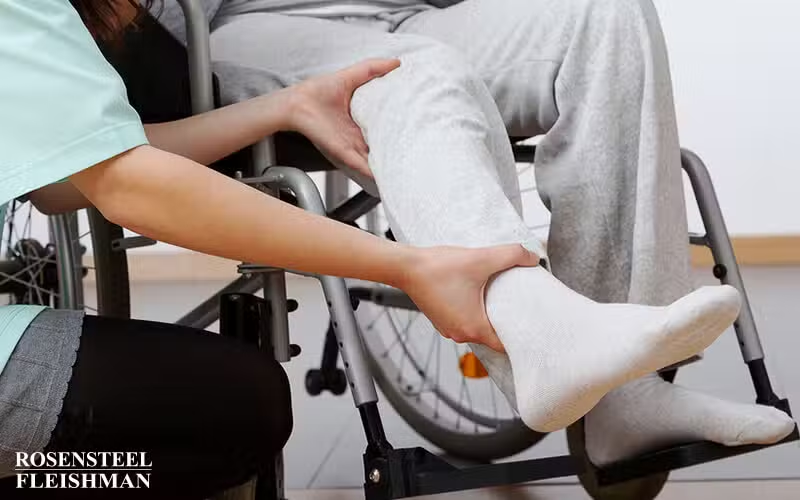

After a crash, get emergency help for an emergency and follow the directions of qualified health professionals. This page does not diagnose injuries or recommend a particular treatment.
Symptoms may need prompt attention
The CDC’s traumatic brain injury signs-and-symptoms information identifies warning signs that call for emergency care and explains that symptoms can vary. A health professional can assess the particular symptoms, medical history, and follow-up needs; an online checklist cannot do that work.
Ask focused follow-up questions
- What symptoms or changes should be reported promptly
- What activity, medication, testing, referral, or follow-up instructions apply to the individual
- Which records, work notes, prescriptions, bills, or visit summaries should be retained
- How to contact the provider if symptoms change or a new concern arises
The related guide to mental-health symptoms after a car crash explains why professional evaluation and contemporaneous records matter. A Charlotte car-accident claim is separate from medical care and depends on the complete facts and applicable law.
Source
Additional Car Accidents Articles
Left Turn Gap Judgment Errors When Visibility or Road Design Plays a Role
What happens when a driver begins a left turn and another vehicle suddenly changes lanes? The available opening can disappear almost instantly. In Charlotte traffic, this type of conflict may occur near multilane intersections where drivers must monitor oncoming vehicles, traffic signals, pedestrians, and vehicles moving between lanes at the same time. These crashes can […]
Multi Policy Insurance Considerations When One Policy Does Not Cover Every Loss
Insurance coverage after a serious car accident is not always limited to one policy. A collision may involve liability coverage, underinsured motorist coverage, medical payments coverage, an employer’s commercial policy, or another source of compensation. Identifying each applicable policy can affect how losses are documented, how negotiations develop, and whether a proposed resolution fairly reflects […]
What Happens When Vehicle Damage Appears Later Despite an Initial Inspection
Damage found days or weeks after a collision can complicate an insurance claim, especially when the cause of the crash or responsibility for the repairs remains disputed. A vehicle may look drivable during an initial roadside review in Charlotte, yet later show suspension problems, electrical faults, alignment issues, or damage hidden beneath exterior panels. When […]



