
A higher auto-insurance renewal after a collision does not show, by itself, why the premium changed. North Carolina’s Safe Driver Incentive Plan can apply points and surcharges for specified convictions and at-fault accidents, while policy limits, vehicles, drivers, discounts, territory, statewide rate changes, and other rating inputs can also change the bill. A renewal review […]
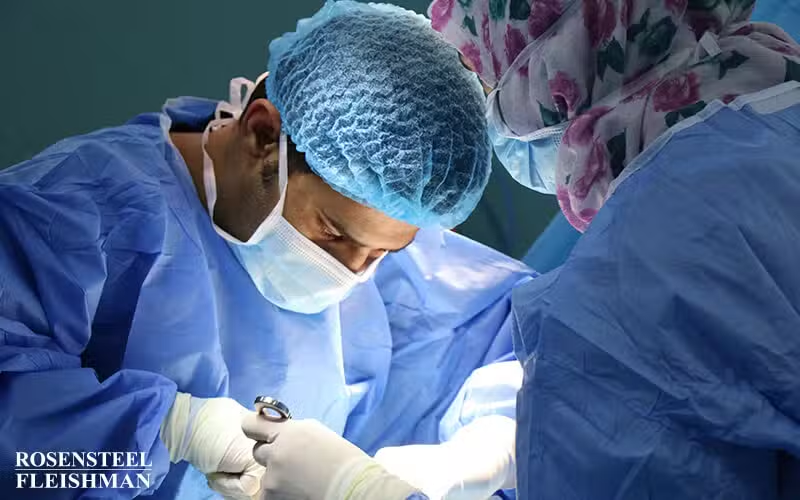

Cosmetic and reconstructive procedures can involve surgeons, other licensed clinicians, anesthesia professionals, facilities, devices, medications, and follow-up care. A disappointing appearance or a complication does not by itself establish medical malpractice. The useful question is whether identified care failed to meet the applicable professional standard and caused a legally compensable injury.
An unwanted cosmetic result, a disclosed complication, and negligent care are not interchangeable conclusions.
Identify every provider, facility, product, and promise
- The person who evaluated candidacy, recommended the procedure, obtained consent, performed each part, provided anesthesia, and managed follow-up
- The location of care, facility ownership, privileges, staffing, emergency arrangements, and any transfer to a hospital or another clinician
- Advertising, before-and-after images, consultation notes, written estimates, consent materials, procedure plans, patient instructions, and communications
- Implants, fillers, drugs, devices, lot or serial numbers, labeling, warnings, recalls, and records showing what was actually used
The North Carolina Medical Board provides a public licensee search. The result can help identify licensure status and public information, but it does not establish whether care in a particular case was proper or improper.
Reconstruct the decision before the procedure
North Carolina G.S. 90-21.13 addresses informed consent to health care treatment or procedures. A consent form is relevant evidence, but the review should also examine the diagnosis or goal, alternatives, material risks discussed, questions and answers, communication needs, timing, and whether the actual procedure matched the agreed plan.
The Medical Board's current surgical and invasive-procedure position statement addresses appropriate pre-procedure assessment, discussion of risks, immediate reevaluation, postoperative responsibility, and procedure-specific documentation. A professional position statement can inform review; it is not a substitute for case-specific legal and clinical analysis.
Use product information when the procedure involved a device
FDA materials for dermal fillers, for example, distinguish approved uses, unapproved uses, product labeling, common risks, and serious reported complications. Preserve the exact product and injection or implant location rather than relying on the general label “cosmetic procedure.” Device approval, off-label use, a warning, or a reported complication does not alone decide negligence or causation.
Compare the actual course with the claimed injury
- Baseline condition, procedure goal, measurements, original photographs, health history, medications, allergies, and pre-procedure assessment
- Operative and anesthesia records, procedure photographs or video, device records, medications, findings, complications, and discharge instructions
- Post-procedure symptoms, dated photographs, calls, portal messages, examinations, tests, treatment, referrals, revision proposals, and response
- The specific physical, functional, financial, or other harm alleged and the clinical explanation connecting that harm to an identified act or omission
Apply North Carolina malpractice requirements to the record
G.S. 90-21.11 defines covered health care providers and medical-malpractice actions. G.S. 90-21.12 states the standard-of-care framework. A reviewer must still identify the provider, applicable profession and circumstances, claimed departure, and causal injury instead of treating the result as proof.
North Carolina Rule of Civil Procedure 9(j) generally requires the available medical care and records to be reviewed before filing by a person reasonably expected to qualify under Rule 702 and willing to testify that the care did not comply with the applicable standard. The related North Carolina medical-malpractice filing guide explains that prefiling sequence in more detail.
Rosensteel Fleishman Car Accident & Injury Lawyers provides information about consulting a Charlotte medical malpractice lawyer when a cosmetic or reconstructive procedure causes suspected harm and the complete medical record needs legal and clinical review.
Sources
Additional Medical Malpractice Personal Injury Articles
What to Document When a Dog Bite Injury Requires a Splint
A splint after a dog bite may be used for a fracture, joint or soft-tissue protection, pain control, or another reason identified by the treating provider. The device alone does not diagnose the injury or show its full effect. Hand and wrist bites can also raise wound, infection, tendon, nerve, motion, tetanus, and rabies questions […]
What to Review Before Accepting a North Carolina Injury Settlement
A settlement offer is a proposed exchange: payment for a defined resolution of claims. The amount on the first page is not the same as the amount a person will receive after medical balances, reimbursement claims, fees, expenses, or other deductions, and it does not show which parties and claims the release covers. A settlement […]
Returning to Work After a North Carolina Truck Crash: A Documentation Guide
Returning to work after a truck collision is not a single yes-or-no decision. Driving, lifting, climbing, prolonged sitting, screen work, concentration, medication effects, sleep disruption, and travel may recover at different rates. The useful question is which duties can be performed now, under what restrictions, and when the plan will be reviewed again. A return-to-work […]



