
A fall can change ordinary routines long before anyone understands the full effect of the accident. Tasks such as getting dressed, preparing meals, driving, completing a work shift, or caring for family may take longer or require help. Paying attention to these practical changes can create a clearer picture of daily independence after fall injury […]
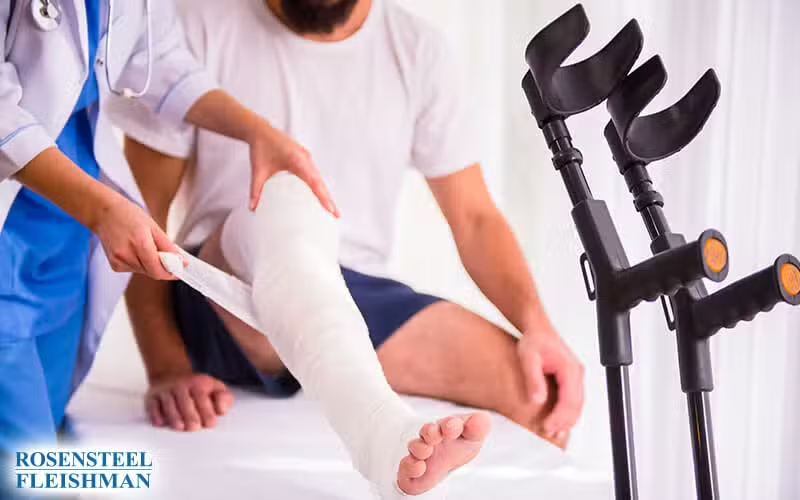

A fall can affect much more than the first few days of soreness, especially when the injury changes how someone moves, works, sleeps, or handles normal routines. In Charlotte, a person who slips in a store, falls in an apartment complex, or gets hurt on a wet walkway near a busy area like I-77 may find that recovery is not always about getting back to exactly how life felt before. Sometimes, the practical goal becomes protecting progress, avoiding setbacks, and learning how temporary or long-term work limits fit into daily life.
Job restrictions after fall injuries can include limits on lifting, standing, walking, bending, driving, climbing stairs, or working full shifts. These restrictions may come from a doctor, physical therapist, or other medical provider who is trying to reduce strain while the body heals. As Attorney Corey Rosensteel has said, “Work restrictions can tell an important part of the recovery story because they show how an injury affects real life, not just a medical chart.” For people unsure how these limits may affect a claim, it may be helpful to book a slip and fall consultation and ask questions before making decisions that could affect their case.
How Work Restrictions Can Shape Recovery and Daily Responsibilities
After a fall, work limits often begin as a medical safeguard, but they can quickly become part of everyday planning. A person may be told not to lift more than ten pounds, avoid standing longer than thirty minutes, or stay away from tasks that require twisting, climbing, or repeated bending. These instructions are not just paperwork. They can affect income, job duties, transportation, childcare, household chores, and the pace of recovery.
The challenge is that healing from a fall is not always a straight line. Some people improve quickly, while others reach a point where progress slows and the focus shifts to maintaining strength, reducing pain flare-ups, and preventing reinjury. This can be frustrating because a person may look fine to others while still dealing with pain, balance concerns, stiffness, or fatigue that makes ordinary work tasks harder than expected.
Why Doctors Give Work Restrictions After a Fall
Medical providers often issue restrictions because certain movements can aggravate an injury before the body has had enough time to heal. For example, a back injury may worsen with repeated lifting, while a knee injury may become more painful after long periods of standing. A concussion or head injury may require reduced screen time, shorter shifts, or limits on driving until symptoms are better controlled.
These restrictions also help create a clear record of how the injury affects a person’s functional ability. In a slip and fall accident claim, that record may matter because it connects the injury to real limitations. It can show that the person did not simply miss work by choice, but had medical guidance explaining why certain duties were unsafe or unreasonable during recovery.
Common work restrictions after a fall may include:
- Limits on lifting, pushing, pulling, or carrying weight
- Reduced hours or modified shifts
- No climbing ladders, stairs, or uneven surfaces
- Restrictions on standing, walking, or sitting for long periods
- Temporary removal from physically demanding job duties
How Modified Duties Can Affect Everyday Life
Even when an employer offers modified work, the adjustment can still be difficult. A warehouse employee may be moved to a seated role but still experience pain from sitting too long. A server may be cleared for light duty but have no realistic light duty tasks available. An office worker may return part time but struggle with headaches, neck pain, or concentration issues after a fall.
The effects often extend beyond the workplace. Someone who cannot lift at work may also be unable to carry groceries, pick up a child, move laundry, or handle yard work. A person who cannot drive may need help getting to medical appointments or may have to pay for rides. These changes can create financial pressure and emotional strain, even when everyone involved is trying to be reasonable.
Consider a Charlotte worker who falls on a slick entryway floor and injures her hip and lower back. Her doctor allows her to return to work with no lifting over fifteen pounds and no standing longer than twenty minutes at a time. Her employer gives her desk work, but at home she still cannot carry groceries upstairs or stand long enough to cook dinner without pain. This kind of situation shows why work restrictions may only tell part of the story. The real impact can be seen in how the injury changes the rhythm of daily life.
Why Following Restrictions Matters for a Claim
Following medical restrictions is important because it helps protect both health and documentation. If a person ignores work limits and symptoms get worse, an insurance company may argue that the setback came from overexertion rather than the original fall. On the other hand, carefully following instructions can show that the injured person took recovery seriously.
Good documentation can also reduce confusion later. Keeping copies of work notes, return to work forms, pay records, and appointment summaries may help explain lost income or reduced earning ability. It can also show how restrictions changed over time, such as moving from complete time off work to part time duties, then to modified full time work, and eventually to regular duties if recovery allows.
Getting Clear Direction When Work Limits Create Uncertainty
Work restrictions can feel confusing because they sit between medical recovery, job expectations, and financial reality. A person may want to return to normal as quickly as possible but still worry about making the injury worse. Others may feel pressure to accept tasks that do not match their restrictions because they need income or do not want to disappoint an employer.
This is where clear communication becomes important. Injured workers should make sure their medical providers understand what their job actually requires, including lifting, bending, walking, standing, driving, or using equipment. A vague note that says “light duty” may not be enough if the employer and employee have different ideas about what light duty means. The more specific the restrictions are, the easier it is to avoid misunderstandings.
When a Restriction Does Not Match the Job
Sometimes the work available does not fit the medical limits. A person may be told not to climb stairs, but the only available worksite requires stair access. Another person may be told to avoid repetitive bending, but the modified role still requires reaching low shelves or handling materials near the floor. These details matter because a job can seem manageable on paper while still creating real physical strain.
When this happens, the employee should try to document the concern calmly and clearly. This may include asking the doctor for more specific written limits or explaining to the employer which duties create problems. It is usually better to address the mismatch early than to push through pain and risk a setback that complicates both recovery and the claim.
How a Slip and Fall Lawyer Can Help Clarify the Process
A slip and fall lawyer can help an injured person understand how work restrictions, medical records, lost income, and daily limitations may fit into a broader claim. This does not mean every case becomes complicated, but it does mean that small details can matter. A missed work note, unclear restriction, or rushed return to duty may later become part of the insurance discussion.
Rosensteel Fleishman Law Firm works with injured people in Charlotte who are trying to understand what comes next after a fall. Corey Rosensteel and Matthew Fleishman can review the circumstances, explain how documentation may support a claim, and help identify issues that could affect recovery or compensation. For someone dealing with job restrictions after fall injuries, that kind of guidance can make the process feel more organized and less uncertain.
A fall injury can change work and home life in ways that are not always obvious at first. Restrictions may be temporary, long lasting, or adjusted over time as recovery changes. The steady takeaway is to follow medical guidance, keep clear records, speak up when duties do not match restrictions, and get reliable answers before making decisions that could affect health, income, or a slip and fall claim.
Additional Slip and Falls Articles
Protein Targets After Fall Injury and Supporting Physical Recovery
Poor lighting can make an ordinary walkway difficult to navigate, especially when shadows conceal a spill, uneven flooring, loose debris, or a change in elevation. In Charlotte, visibility problems may arise in apartment stairwells, parking garages, restaurants, retail stores, and other properties used by the public. When a fall causes an injury, the lighting conditions […]
Second Opinion Timing After Fall When Recovery Progress Remains Unclear
How can someone protect their interests when recovery after a fall remains difficult to understand? In Charlotte, the answer often begins with maintaining clear records, following established provider instructions, and asking appropriate questions when the existing information leaves important concerns unresolved. The decision to seek another evaluation is personal and should be discussed with a […]
Organizing Appointments and Household Help After a Fall
Appointments, rides, work messages and household commitments can be difficult to coordinate after a fall. A short written plan can keep practical tasks from being missed while you follow your healthcare provider’s instructions. It is a way to organize responsibilities, not a test of recovery or a reason to take on more physical activity. Choose […]


