
Witness statements can add context to a crash injury claim without establishing a diagnosis. Learn which details to preserve, how to handle conflicting accounts, and why small omissions matter.
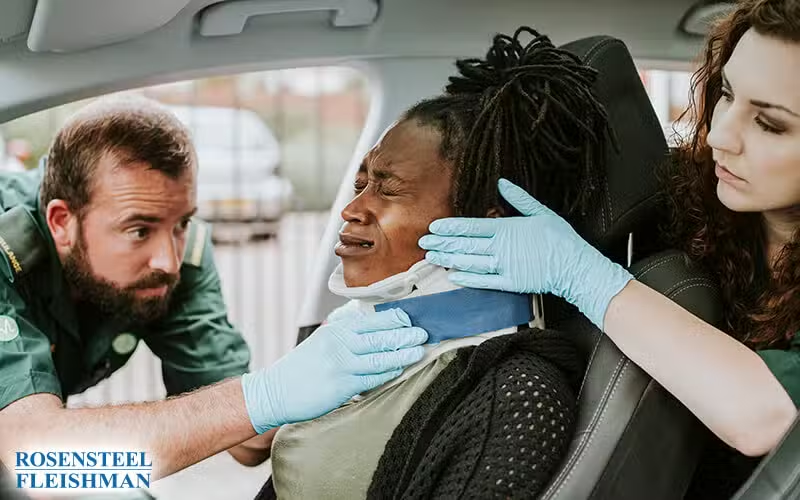

Vehicle damage, occupant movement, and a medical diagnosis are connected questions, but they are not interchangeable. A photograph may show a crushed door. A passenger may remember moving sideways or contacting the interior. A clinical record may document symptoms and findings. None of those sources, by itself, establishes the complete injury mechanism or medical cause.
A useful occupant-movement record preserves what was observed, felt, measured, or documented and labels what remains an inference. Medical care should be based on the person’s needs and qualified clinical guidance, not on an attempt to make the collision narrative fit a claim.
Start with the occupant and seating position
- Vehicle, seat, row, and whether the person was the driver, front passenger, rear passenger, or in another position
- Seat-track and seat-back position when known, head-restraint position, and any later adjustment
- Seat-belt use, belt path, buckle status, pretensioner or air-bag deployment, and any visible restraint marks or damage
- Body orientation before contact, including whether the person was facing forward, turned, leaning, reaching, or bracing
- Objects, cargo, child restraints, mobility equipment, or other interior items that may have moved or made contact
Identify the source for each entry. An occupant’s recollection, a witness observation, a photograph, a vehicle inspection, and a later reconstruction have different limits. Do not convert “I felt my body move left” into a measured force or a diagnosis.
Record contacts and movement in sequence
Separate the vehicle’s movement from the occupant’s reported or observed movement. Note the first vehicle contact, later contacts, rotation, rollover, curb or fixed-object contact, and final position. Then record any reported forward, rearward, sideways, upward, or rotational movement and any interior contact.
In a collision with more than one impact, do not combine the movements into one event. A person may report an initial rearward movement and a later side movement after the vehicle rotates or is struck again. Preserve the order and the uncertainty rather than assigning every symptom to the most visible impact.
The related guide to mapping a multi-vehicle impact sequence explains how to keep separate contacts, vehicles, drivers, occupants, and policies aligned.
Preserve the vehicle and interior record
Photograph the exterior and interior before repair, salvage, or disposal when it is safe and permitted. Useful context may include the seat, head restraint, belt and buckle, air bags, steering wheel, dashboard, doors, pillars, roof, glazing, console, footwell, loose objects, and visible contact marks. Record when and by whom each image was made.
Keep tow, storage, inspection, repair, scan, estimate, and custody records. A damaged component seen after the crash does not automatically show its condition beforehand. Likewise, an undamaged interior surface does not prove that no occupant movement occurred.
NHTSA explains that an event data recorder may capture technical vehicle and occupant information for a short period around a crash. It is not a trip-long audio or video recording, and the available data depend on the vehicle and event. Record the vehicle identity, collection method, software and report version, and any stated limits rather than assuming every vehicle contains the same information.
Keep medical evidence in the clinical record
Organize symptom onset, examination findings, diagnoses, testing, treatment, restrictions, response, prior relevant conditions, and later events from their actual sources. A symptom report records what the patient described. An examination records what the clinician observed or measured. Neither vehicle damage nor a lay description of movement should be used to supply a medical conclusion that the record does not contain.
HHS explains access and amendment rights, with limited exceptions, for medical and billing records held by providers and health plans covered by the HIPAA Privacy Rule. See U.S. HHS: Your Medical Records. Preserve the original record and use the provider’s amendment process for a material error.
Identify when specialized opinion is needed
A dispute about force, occupant kinematics, biomechanics, crash reconstruction, or medical causation may require specialized analysis. North Carolina Rule of Evidence 702 addresses qualifications, sufficient facts or data, reliable principles and methods, and reliable application for expert testimony. A confident statement, a repair estimate, or a diagram does not replace those foundations.
Use a comparison table with separate columns for the vehicle sequence, occupant account, physical record, electronic data, clinical record, competing account, and unresolved question. That structure makes it possible to connect the sources without pretending they all answer the same question.
Rosensteel Fleishman’s car accident team can review occupant-movement evidence, medical records, and disputed causation questions in the context of a North Carolina claim.
Sources
Additional Car Accidents Articles
How Injury Severity Affects Charlotte Dooring Accident Claims
Injury severity can change the losses involved in a dooring claim, but it does not establish fault or determine a payment by itself. Clear records help connect the incident to its practical consequences.
Does Minor Vehicle Damage Always Mean Minor Injuries?
A small repair bill does not explain every consequence of a crash. Keep vehicle evidence separate from injury records, and document changes to work and daily responsibilities without guessing about their cause.
Who Pays for Ongoing Care After a Crash With Multiple Drivers in Charlotte?
Payment for current care and responsibility for crash damages are separate questions. When several drivers are involved, coverage details, evidence, and unresolved expenses all matter.




