
Lane markings, turning movements, and crosswalk locations can help explain a truck collision, but they cannot establish an injury. Clear records help separate crash circumstances from documented losses.
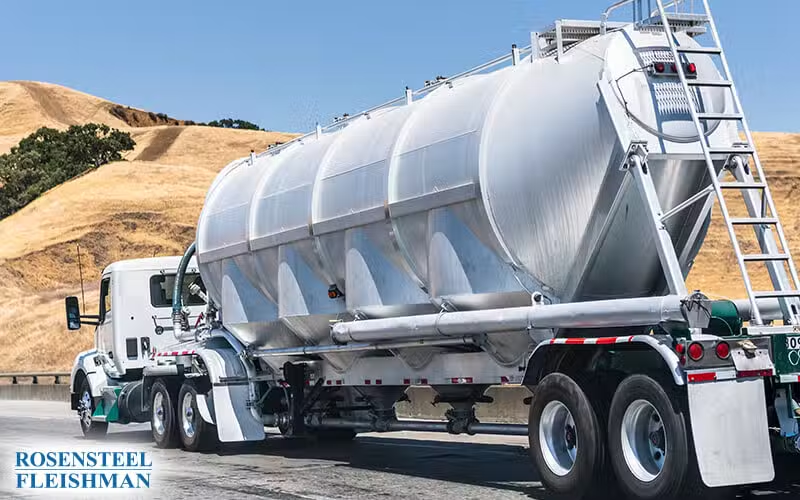

A tractor and trailer may connect through a fifth-wheel assembly and kingpin, while another combination may use a pintle hook, drawbar, tow bar, converter dolly, safety chains, cables, or another approved arrangement. A coupling investigation begins by identifying the actual configuration and preserving each component before movement, disassembly, repair, or testing changes it.
A separated or misaligned trailer does not identify when a coupling condition arose, which component failed, who controlled it, or whether the condition caused the collision.
Identify every unit and connection
- Tractor, trailer, dolly, full trailer, towed vehicle, VIN, unit number, make, model, manufacture date, owner, lessee, carrier, and custodian
- Lower and upper fifth-wheel halves, mounting brackets and plates, bolts, slider, locking pins, jaws, throat, release handle, kingpin, apron, and lubrication
- Pintle hook, lunette eye, tow bar, drawbar, tongue, hitch, safety chains or cables, breakaway system, air and electrical connections, and frame reinforcement
- Load, axle weights, fifth-wheel position, suspension, landing gear, trailer height, yard or dock surface, and combination geometry
- Coupling, inspection, uncoupling, interchange, maintenance, repair, complaint, training, dispatch, route, impact, tow, and post-crash chronology
Use the rule for the actual coupling arrangement
49 C.F.R. § 393.70 addresses coupling devices and towing methods outside driveaway-towaway operations. The section includes tracking, fifth-wheel mounting, locking and location, full-trailer tow bars, and safety devices. A conclusion should identify the paragraph, device, configuration, loading, measurement, and condition involved rather than referring generally to an unsafe hitch.
Document the driver’s readiness check without assuming its result
49 C.F.R. § 392.7 states that a commercial vehicle may not be driven unless the driver is satisfied that listed equipment is in good working order, including coupling devices and trailer brake connections. Determine what was accessible, what the driver observed or tested, the equipment and lighting available, the time allowed, any report made, and the response.
- Who positioned the tractor and trailer and who operated the release, slider, landing gear, air lines, electrical connection, or safety devices
- Coupling height and alignment, audible or visual indications, jaw and kingpin position, release-handle state, clearance, pull or brake check, and final walk-around
- Yard camera, gate, dock, dispatch, electronic, inspection, witness, photograph, message, and timestamp evidence
- Reported high hook, false coupling, worn component, locking concern, air leak, damaged mount, excessive slack, or trailer movement
- Decision to adjust, repair, replace, red-tag, re-couple, continue, or transfer the equipment
Trace maintenance and control of interchanged equipment
49 C.F.R. § 396.3 addresses systematic inspection, repair, and maintenance of vehicles subject to a motor carrier’s control and specified maintenance-record information. Coupling records may be divided among tractor owner, trailer owner, carrier, lessor, yard, maintenance vendor, and prior user. Map the dates and actual control of each component.
Inspect before drawing a failure conclusion
Use photographs and records already obtained lawfully. Do not approach a damaged tractor or trailer, enter a roadway or restricted yard, operate a coupling, or move or test components to document a claim. Qualified, authorized investigators should control access, measurements, disassembly, force application, and testing under an appropriate preservation protocol.
- Photograph overall geometry, resting position, contact marks, released or locked positions, damage, contamination, wear, deformation, fractures, fasteners, and missing parts
- Preserve both coupling halves, mounting structure, safety devices, air and electrical connections, electronic data, inspection records, and removed parts
- Use nondestructive examination first when practical and document any later disassembly, measurement, cleaning, lubrication, force application, or destructive test
- Compare fracture surfaces and deformation with impact direction, trailer movement, roadway marks, video, vehicle data, witness accounts, towing, and recovery activity
- Test alternative sequences, including a pre-existing condition, incomplete coupling, maintenance issue, impact-created separation, tow-created change, or unrelated damage
The related truck maintenance and inspection record guide shows how to connect a reported condition to work orders, parts, technicians, testing, return-to-service decisions, and later use.
Rosensteel Fleishman Car Accident & Injury Lawyers provides information about North Carolina truck-accident claims involving trailer-coupling evidence. Device condition, participant responsibility, event sequence, and causation require separate findings.
Sources
Additional Trucking Accidents Articles
Living With Permanent Disabilities After a Truck Crash Involving Multiple Vehicles
A lasting disability affects more than a claim file. Learn how to connect the collision timeline with documented changes in work, household responsibilities, and expenses without treating assumptions as evidence.
Reducing Reinjury Risk With Physical Therapy After a Truck Crash in Charlotte
Concerns about reinjury involve medical questions that claim records cannot answer. Learn how to organize physical therapy documentation, practical expenses, and scene evidence without drawing unsupported conclusions.
When Mobility Loss After a Charlotte, NC Truck Crash Has No Clear Diagnosis
An unclear diagnosis does not prevent a family from recording practical changes after a truck crash. Keep observations, added expenses, and unanswered claim questions separate.


