When several people are injured in the same commercial truck crash, the evidence can affect more than one claim at the same time. In Charlotte, dashcam footage may help clarify where vehicles were positioned, how traffic was moving, when braking began, and what happened in the seconds before impact. Those details can become especially important […]
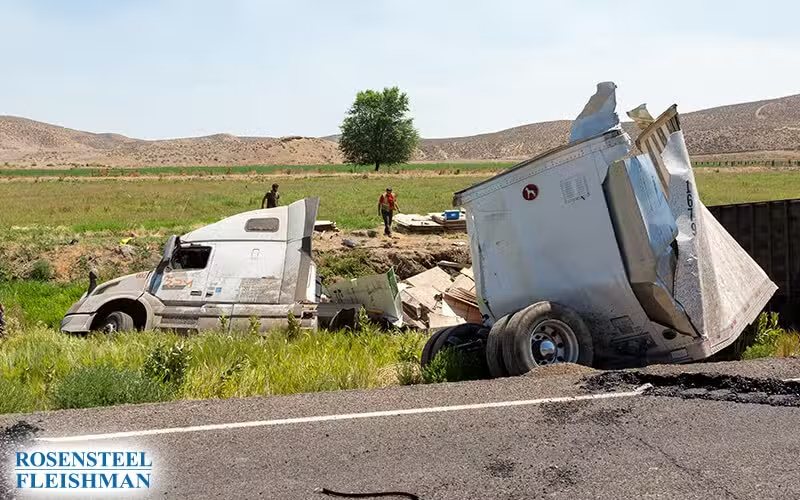

A truck may display a USDOT number, an MC number, a company name, or several identifiers connected to different entities. FMCSA operating-authority records can help determine whether an identified motor carrier, broker, or freight forwarder held a specified federal registration status on a relevant date. They do not replace the trip, vehicle, insurance, or control records.
Operating authority is a federal registration status for specified operations; it does not by itself establish vehicle ownership, insurance coverage, trip control, negligence, or crash responsibility.
Identify the entity before reading the status
- Legal name, doing-business-as name, USDOT number, MC, FF, or MX number, address, and entity type copied from the source record
- Identifiers photographed on the tractor and trailer compared with the crash report, bill of lading, cab card, lease, dispatch record, and insurance documents
- Carrier, broker, freight forwarder, shipper, driver employer, equipment owner, registrant, and contractor kept as potentially different roles
- Search date, source system, result page, detail page, and downloaded certificate or decision preserved without exposing protected access information
Use the Licensing and Insurance history
FMCSA’s operating-authority status instructions direct users to the Licensing and Insurance system, explain how to review the Authority Status field, and identify links for pending applications and historical authority activity.
- Authority type, current status, application date, grant date, effective date, revocation date, reinstatement date, and re-entitlement date placed on one timeline
- Certificate, permit, license, application, notice, daily decision letter, protest, revocation, and reinstatement entry kept as separate documents
- Current result compared with authority history for the crash date rather than treated as a timeless status
- A similar company name or shared address not treated as proof that two federal records belong to the same entity
Do not rely on a paper certificate alone
FMCSA’s registration-alert page states that the official operating-authority record is in the Licensing and Insurance system after a certificate, permit, or license is generated. It also explains that a paper certificate does not by itself establish active authority and that the absence of a paper copy in the vehicle is not the controlling record.
- Paper document compared with the electronic status and effective date
- Authority appropriate to the identified entity and operation checked without assuming every commercial trip requires the same registration
- Interstate, intrastate, for-hire, private, exempt, passenger, property, broker, and freight-forwarder descriptions kept precise
- Revoked, inactive, pending, or reinstated status recorded without converting it into a finding about this collision
Separate authority from related federal records
- USDOT registration and MCS-150 identification filing reviewed as a different record
- Insurance filing, policy, endorsement, insurer notice, and coverage position reviewed independently of authority status
- Safety rating, inspection data, crash data, enforcement action, and out-of-service information kept in their own systems
- Vehicle title, registration, cab card, lease, trip agreement, dispatch, load, payment, and employment records used for ownership and control questions
Connect the dated record to the actual trip
- Crash date and trip route compared with authority effective dates and the operation actually performed
- Commodity, shipper, broker, carrier, origin, destination, compensation, and bill-of-lading roles identified from trip documents
- Who selected the driver, tractor, trailer, load, route, schedule, and stop-work decisions supported by participant-specific records
- Regulatory registration kept separate from negligence, causation, defenses, damages, and admissibility
The related guide to reading a motor carrier’s MCS-150 record explains the different identification filing that can show names, addresses, operation classifications, cargo categories, and reported fleet information for a stated filing date.
Rosensteel Fleishman Car Accident & Injury Lawyers provides general record-review information for people who may later consult about a Charlotte truck-accident claim involving operating-authority records. Regulatory scope, identity, insurance, control, evidentiary use, and legal responsibility require the complete dated records and case-specific facts.
Sources
Additional Trucking Accidents Articles
Tests That Confirm Fine Motor Issues Truck Accident Injuries May Cause
Fine motor problems can be easy to miss after a truck crash because they often involve small changes rather than an obvious loss of movement. A person may still be able to move an arm or hand but struggle to button a shirt, type accurately, hold a key, or pick up a coin. Early photographs […]
Connecting Mechanical Failure Truck Accident Injuries to Inspection Evidence
A serious truck crash can change a person’s energy level as much as it changes mobility or comfort. Pain, interrupted sleep, medication side effects, medical appointments, and the effort required to complete ordinary tasks may leave an injured person exhausted. In Charlotte, someone who previously worked a full schedule might suddenly need breaks while preparing […]
How Investigators Reconstruct Multi Impact Truck Crash Injuries in Charlotte, NC
Investigators reconstruct a truck collision by comparing physical evidence, vehicle movement, medical findings, and witness accounts. In a crash involving several impacts, this process can help explain when an injury likely occurred, how additional contact changed the forces on an occupant, and why symptoms may become more noticeable as activity levels increase. A person may […]