
Fine motor problems can be easy to miss after a truck crash because they often involve small changes rather than an obvious loss of movement. A person may still be able to move an arm or hand but struggle to button a shirt, type accurately, hold a key, or pick up a coin. Early photographs […]

Commercial-vehicle records can identify questions for review, but they do not independently establish responsibility, coverage, or a claim outcome.
Keep each record source separate
- Driver name, carrier name, vehicle and trailer identifiers, and the document, photograph, report, or person that supplied each detail
- Dispatch, lease, shipping, inspection, maintenance, insurance, towing, repair, and report records noted as separate possible sources
- Date, location, report number, document version, and conflicts or missing information recorded without resolving them
- Firsthand observations separated from an agency record, a business record, or another person’s statement
Do not infer the carrier from one label
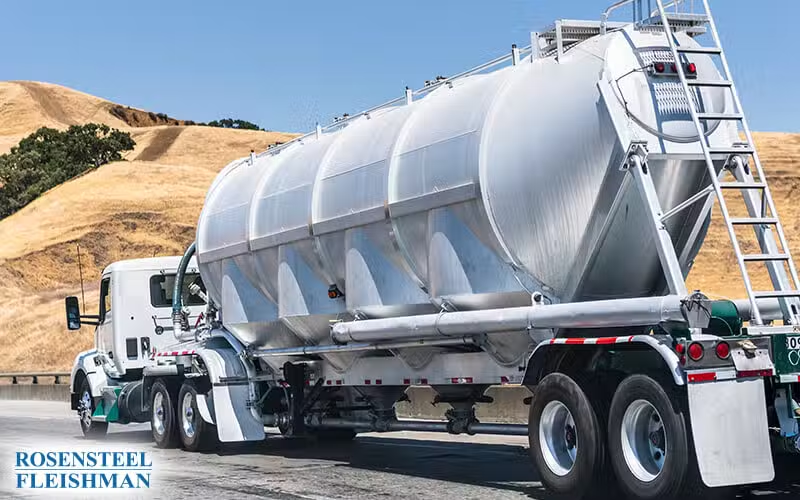
The Federal Motor Carrier Safety Administration’s carrier-identity guide explains that markings shown on a vehicle may not identify the motor carrier responsible for a movement or load. The relationship among a vehicle, driver, carrier, and load depends on the available facts and records.
Questions arising from a commercial-vehicle crash may be considered in a North Carolina trucking-accident claim, which requires a fact-specific review.
Source
Additional Trucking Accidents Articles
Connecting Mechanical Failure Truck Accident Injuries to Inspection Evidence
A serious truck crash can change a person’s energy level as much as it changes mobility or comfort. Pain, interrupted sleep, medication side effects, medical appointments, and the effort required to complete ordinary tasks may leave an injured person exhausted. In Charlotte, someone who previously worked a full schedule might suddenly need breaks while preparing […]
How Investigators Reconstruct Multi Impact Truck Crash Injuries in Charlotte, NC
Investigators reconstruct a truck collision by comparing physical evidence, vehicle movement, medical findings, and witness accounts. In a crash involving several impacts, this process can help explain when an injury likely occurred, how additional contact changed the forces on an occupant, and why symptoms may become more noticeable as activity levels increase. A person may […]
Household Limitations Truck Injury Recovery Can Create and How to Document Them
Truck crash injuries can affect far more than a person’s ability to work or attend medical appointments. They may also change how someone cooks, cleans, shops, handles yardwork, cares for children, or completes basic home maintenance. Insurers handling claims with several involved parties often examine who caused the collision, which insurance policies apply, and whether […]



