A fall can change ordinary routines long before anyone understands the full effect of the accident. Tasks such as getting dressed, preparing meals, driving, completing a work shift, or caring for family may take longer or require help. Paying attention to these practical changes can create a clearer picture of daily independence after fall injury […]
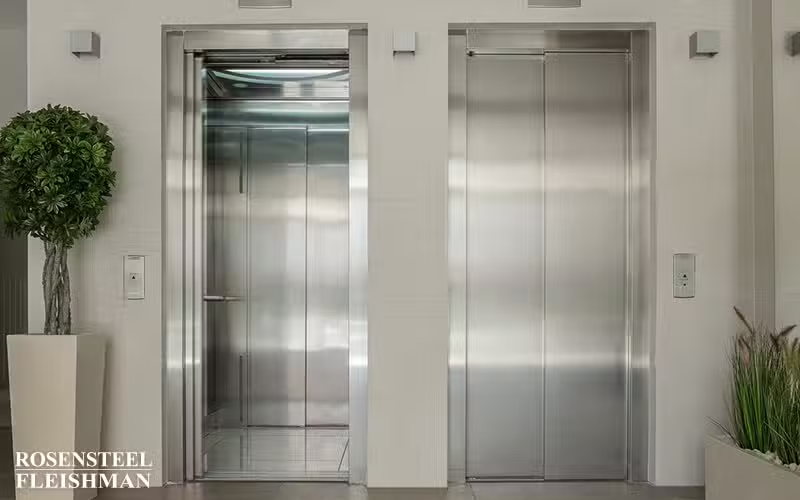

A person may be unable to describe every second of an elevator incident, but photographs, measurements, repair records, access conditions, warnings, witnesses, and the physical sequence can still matter to the evidence.
That is not a rule that every unexplained fall establishes fault. It is a reason to preserve the conditions and records that may explain how an incident occurred. A current claim can involve different equipment, contracts, safety rules, parties, procedures, and evidence than an older case.
The McIntyre case is an illustration, not a universal answer
In McIntyre v. Elevator Company, 230 N.C. 539 (1949), the North Carolina Supreme Court reviewed evidence concerning a clinic elevator that was being repaired, an open shaft condition, warning measures, and the circumstances of the plaintiff’s fall. The Court held that the evidence was sufficient to go to the jury. The decision is useful for its evidence discussion, but it does not decide every modern elevator, building, contractor, medical, or premises case.
Preserve the physical conditions early
- Location, floor, elevator identifier, door or shaft condition, car position, landing, opening dimensions, lighting, warning signs, barriers, access controls, surveillance, and nearby camera locations.
- Photographs and video taken safely, with the original files preserved; measurements should identify who took them, what was measured, tool used, date, and any later change to the area.
- Maintenance contract, repair work order, inspection, permit, service log, outage notice, technician identity, building manager, security record, incident report, dispatch record, and complaint history.
- Names, vantage points, contact information, statements, and contemporaneous notes from occupants, employees, contractors, responders, and anyone who saw the condition before or after the event.
Build a sequence without filling gaps with assumption
Create separate columns for known facts, source documents, witness observations, physical evidence, later reconstruction, and unresolved questions. A person’s memory may be limited for many reasons, but no medical explanation should be assumed from memory alone. The question is what admissible and reliable evidence can establish about the event, the condition, notice, control, and claimed injury.
- Arrival, destination, elevator call, door movement, announcements, warnings, access, people present, fall or other event, response, treatment, reporting, closure, repair, and reopening.
- First report, emergency record, photographs, video preservation request, medical record, work restriction, bill, wage or schedule record, and later treatment or condition.
- Condition before the event, maintenance or repair status, who controlled access, what warnings were used, when the condition was discovered, and whether the area changed after the incident.
- Alternative explanations, missing sources, contradictions, and questions for a qualified inspector, engineer, clinician, or other witness where the evidence requires one.
Do not merge evidence sufficiency with liability or damages
Evidence that permits a fact question is different from a final finding of negligence, causation, damages, or responsibility. A current claim may involve a property owner, tenant, elevator company, maintenance contractor, employer, insurer, or other person with different records and defenses. Preserve evidence before deciding which legal label applies.
Use the broader elevator-evidence guide for the next question
The related guide to evidence in a North Carolina elevator-injury claim covers the broader record-building process. This page owns the narrower question of what McIntyre illustrates about using physical and circumstantial evidence when direct recollection is incomplete.
Rosensteel Fleishman Car Accident & Injury Lawyers provides general information about discussing a North Carolina premises-injury claim involving an elevator or building condition. Responsibility, evidence, causation, damages, defenses, parties, and deadlines depend on the complete record and current law.
Sources
Additional Slip and Falls Articles
Protein Targets After Fall Injury and Supporting Physical Recovery
Poor lighting can make an ordinary walkway difficult to navigate, especially when shadows conceal a spill, uneven flooring, loose debris, or a change in elevation. In Charlotte, visibility problems may arise in apartment stairwells, parking garages, restaurants, retail stores, and other properties used by the public. When a fall causes an injury, the lighting conditions […]
Second Opinion Timing After Fall When Recovery Progress Remains Unclear
How can someone protect their interests when recovery after a fall remains difficult to understand? In Charlotte, the answer often begins with maintaining clear records, following established provider instructions, and asking appropriate questions when the existing information leaves important concerns unresolved. The decision to seek another evaluation is personal and should be discussed with a […]
Organizing Appointments and Household Help After a Fall
Appointments, rides, work messages and household commitments can be difficult to coordinate after a fall. A short written plan can keep practical tasks from being missed while you follow your healthcare provider’s instructions. It is a way to organize responsibilities, not a test of recovery or a reason to take on more physical activity. Choose […]