
A car accident claim can look straightforward at first, but the picture often becomes clearer as documents, medical information, repair findings, and witness accounts develop. For people dealing with a crash in Charlotte, the amount of information available during the first few days may be very different from what is known several weeks later. That […]
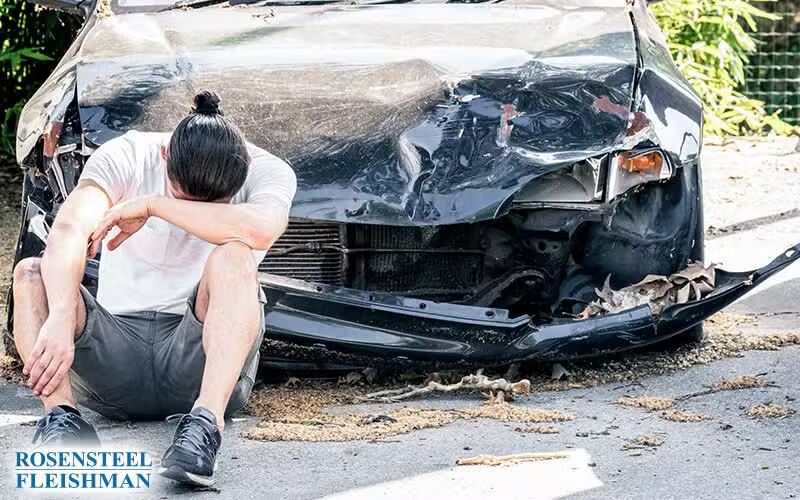

A collision during a police pursuit can involve the fleeing driver, one or more law-enforcement vehicles, uninvolved motorists, passengers, pedestrians, vehicle owners, public agencies, and several insurance questions. The criminal case against a fleeing driver and a civil injury claim use different elements, parties, burdens, procedures, and remedies.
A fleeing-to-elude charge does not by itself decide every person’s civil responsibility for a collision during the pursuit.
Identify what the criminal statute addresses
G.S. 20-141.5 makes it unlawful to operate a vehicle while fleeing or attempting to elude a law-enforcement officer lawfully performing duties. The statute also identifies circumstances that can affect the offense level and requires each law-enforcement agency to adopt a pursuit policy. Preserve the charge, factual basis, disposition, and policy version without treating any one of them as a civil judgment.
Analyze the emergency operation separately
G.S. 20-145 addresses specified speed-limit exemptions for police pursuit or apprehension when the vehicle is operated with due regard for safety, and it states that the exemption does not protect reckless disregard for the safety of others. The existence of a pursuit therefore does not end the inquiry into route, speed, traffic, warnings, decisions, and cause.
G.S. 20-125 addresses approved lights, bells, sirens, horns, or whistles on listed emergency vehicles. Record equipment, activation, audibility, visibility, and timing rather than assuming warning signals were either continuously active or absent.
Build a role and decision map
- Fleeing vehicle driver, owner, passengers, trip purpose, permission, insurance, alleged offenses, and each contact or near-contact in sequence
- Each pursuing or assisting unit, agency, operator, supervisor, dispatch assignment, pursuit entry, route, warning signals, speed, spacing, and termination decision
- Each uninvolved road user, traffic-control indication, lane, speed, observation point, evasive action, contact, injury, and property loss
- Public entity, employee, insurer, private owner, employer, contractor, and any notice or procedural question identified without assuming liability
Synchronize records before drawing a conclusion
- 911 and dispatch timestamps, radio traffic, computer-aided dispatch, body and vehicle video, GPS or automatic vehicle location, traffic cameras, and witness recordings
- Pursuit report, crash report, agency policy in effect, supervisor review, training record, vehicle inspection, citations, charging documents, and later disposition
- Clock source, time zone, offset, gaps, edits, export format, custodian, request date, response, and retention or access restriction for each record
- A common timeline that preserves disagreement rather than shifting one record to force alignment
Keep the civil elements and procedures visible
A civil review may require separate analysis of duty, statutory privileges and limits, conduct, factual and legal cause, injury, damages, insurance, public-entity defenses, and claim procedures. An agency policy may be relevant evidence, but a policy violation or compliance finding should not be converted automatically into the civil result.
The related guide to North Carolina emergency-vehicle negligence addresses warning signals, right of way, due regard, reckless disregard, and appellate decisions.
Rosensteel Fleishman Car Accident & Injury Lawyers provides general information about North Carolina car-accident claims arising during police pursuits. The parties, public entities, evidence, insurance, defenses, notice requirements, and deadlines require case-specific review.
Sources
Additional Car Accidents Articles
Counteroffers in Accident Claims Based on Changes in Medical Prognosis
How should an accident claim change when a doctor gives a different outlook than expected? That question can become important when an injury initially appears temporary but later requires additional treatment, testing, therapy, or time away from work. A settlement discussion is based on the information available at that moment, so meaningful changes in the […]
How Car Accident Claims Are Reviewed When Accounts of the Crash Differ
What happens when two drivers remember the same collision differently? After a crash in Charlotte, North Carolina, conflicting descriptions are common because each person may have seen only part of what happened, reacted within seconds, or remembered certain details more clearly than others. Insurance companies generally do not rely on a single statement alone. They […]
Vehicle Inspection Reports After Crash Events with Suspected Hidden Damage
Crash-related vehicle damage is not always obvious from the outside. A car may still start, steer normally, and show only limited cosmetic damage while problems involving the frame, suspension, steering components, sensors, or alignment remain out of sight. A careful inspection can help turn those uncertainties into documented findings that drivers, repair shops, and insurers […]



