In Charlotte, North Carolina, a motorcycle crash involving movement between lanes can quickly raise questions about visibility, road position, and each driver’s actions. Those questions become even more complicated when an injured rider waits to seek medical care, since an insurance company may examine both the circumstances of the collision and the timing of the […]
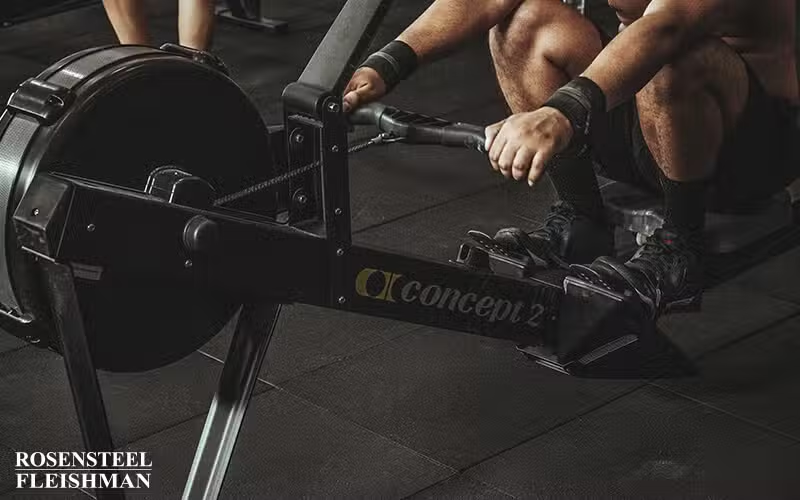

After a sports-equipment injury, the game or practice record, the product itself, warnings, purchase information, medical records, and witness accounts may answer different questions and should be preserved before anyone assigns responsibility.
Attend to the injured person and immediate safety before collecting information. Do not resume use of suspected damaged equipment or ask someone to reenact the incident. Photographs and records can be gathered later when it is safe and you have permission to access the item or location.
Do not discard, repair, alter, or test the equipment in a way that changes its condition. Photograph the item, labels, packaging, warnings, serial or model numbers, protective equipment, playing surface, and location. Keep receipts, online order records, manuals, communications, video, roster or event information, and the names of people who saw what occurred.
Separate product, event, and care records
- Product records can identify the item, its condition, instructions, recalls, seller, and chain of possession.
- Event records can describe the activity, rules, supervision, venue condition, weather, participant conduct, and available video.
- Medical records document assessment and care; they should not be edited to match a later account of the event.
Record how the equipment reached the event
Was the item personally owned, borrowed, rented or supplied by a school, club or venue? Record who provided it, who used it, any adjustment or assembly before the activity, and who holds it now. Keep a dated note of later movement or transfer without changing the original item.
For example, a damaged fastening found after an incident does not by itself show whether it failed beforehand or was damaged during the event. Keep the item and the original images available for appropriate inspection, and label any explanation as a witness account, a professional finding or an unresolved question.
North Carolina’s Products Liability Act addresses product-liability actions and several defenses. It does not make every equipment failure, contact injury, or safety concern a product claim. The applicable facts, condition of the item, warnings, use, causation, and current law require individual review.
Rosensteel Fleishman Car Accident & Injury Lawyers provides general information about discussing a North Carolina personal-injury matter.
Source
Additional Personal Injury Articles
How Witness Statements Support an Injury Claim After a Serious Accident
After a serious accident, the people who saw what happened can become an important source of information about the events surrounding an injury. A witness may remember the position of the vehicles, a traffic signal, a driver's behavior, road conditions, or what an injured person said and did immediately afterward. In Charlotte, where crashes may […]
Map and Diagram of Accident Scene Evidence When Photos Are Incomplete
Accident recovery rarely follows a perfectly straight path, especially when early symptoms change or new limitations appear after a person returns to normal routines. In Charlotte, someone injured in a collision may begin with goals such as reducing pain, restoring movement, returning to work, or safely resuming everyday activities, then adjust those goals as doctors […]
Protein Targets After Fall Injury and Supporting Physical Recovery
Poor lighting can make an ordinary walkway difficult to navigate, especially when shadows conceal a spill, uneven flooring, loose debris, or a change in elevation. In Charlotte, visibility problems may arise in apartment stairwells, parking garages, restaurants, retail stores, and other properties used by the public. When a fall causes an injury, the lighting conditions […]