
Accident recovery rarely follows a perfectly straight path, especially when early symptoms change or new limitations appear after a person returns to normal routines. In Charlotte, someone injured in a collision may begin with goals such as reducing pain, restoring movement, returning to work, or safely resuming everyday activities, then adjust those goals as doctors […]
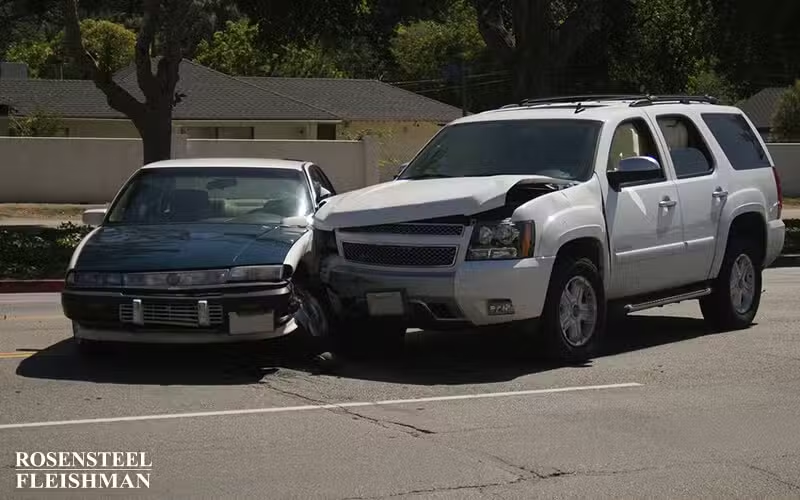

Evidence that a driver fell asleep may support an ordinary negligence theory, but North Carolina punitive damages require a separate aggravating-factor analysis.
A fatigue record should distinguish a missed lane, delayed response, or loss of alertness from evidence about what the driver knew before continuing to drive. It should also separate the driver’s conduct from the conduct of an employer or corporation.
Chapter 1D requires more than compensatory liability
G.S. 1D-15 permits punitive damages only when a claimant proves liability for compensatory damages and an aggravating factor related to the injury: fraud, malice, or willful or wanton conduct. The aggravating factor must be proved by clear and convincing evidence.
G.S. 1D-5(7) defines willful or wanton conduct as conscious and intentional disregard of and indifference to the rights and safety of others when the defendant knows or should know the conduct is reasonably likely to cause harm. The statute states that this means more than gross negligence.
George v. Greyhound Lines separates sleep from the aggravating factor
In George v. Greyhound Lines, Inc., 210 N.C. App. 388 (2011), passengers in a recreational vehicle were injured when a Greyhound bus struck it from behind. The appeal included a punitive-damages claim based on allegations that the bus driver was overtired, continued operating, failed to remain alert, and fell asleep.
The Court of Appeals explained that inadvertent driver error caused by falling asleep, by itself, did not support punitive damages. It also rejected the idea that a safety-regulation violation automatically established willful conduct. The inquiry required evidence of a deliberate failure to discharge a safety duty or reckless indifference, not merely evidence that the driver slept or that ordinary negligence occurred.
Build the driver-knowledge timeline
- Sleep opportunity, wake time, work, travel, commute, breaks, illness, medication, substance use, and other activity before the trip
- Earlier yawning, lane drift, missed controls, alarms, complaints, messages, calls, statements, rest stops, attempts to wake up, or requests to stop
- Driver training, applicable rule, schedule, dispatch communication, route change, warning, log alert, and instruction actually received
- The first evidence of reduced alertness, what the driver knew then, choices available, continued driving, and the time and distance before impact
- Evidence supporting inadvertence, lack of warning, another cause, or a different event sequence preserved with contrary evidence
A rule violation and punitive liability are not the same question
A statute or regulation may supply a duty or other evidence, but applicability, violation, causation, and the Chapter 1D aggravating factor remain distinct. Identify the driver, vehicle, operation, date, rule, exception, conduct, and causal connection before drawing a conclusion. For a commercial vehicle, duty-status records and carrier communications may be relevant; for a noncommercial driver, those federal rules may not apply.
Corporate punitive liability has an additional requirement
G.S. 1D-15(c) states that punitive damages may not be awarded solely on vicarious liability. For a corporation, an officer, director, or manager must have participated in or condoned the conduct constituting the aggravating factor. Preserve the person’s role, authority, knowledge, communication, decision, and connection to the alleged conduct instead of treating employment alone as sufficient.
- Scheduling and dispatch decision-makers, titles, responsibilities, communication records, and authority over continued operation
- Fatigue complaint, log alert, rule concern, request for relief, prior event, or medical limitation actually communicated to a responsible person
- Response, instruction, pressure, correction, discipline, substitute driver, route change, rest opportunity, and later review
- Policies and training compared with actual participation or condonation; a written policy alone does not resolve the conduct question
Keep punitive and compensatory records separate
Ordinary negligence, compensatory damages, punitive eligibility, punitive amount, corporate participation, and insurance treatment are different issues. A punitive-damages allegation should not replace proof of fault, medical causation, injury, loss, or the applicable defense.
Use the related guide for the general fatigue investigation
The related guide to driver-fatigue evidence after a North Carolina car accident explains sleep opportunity, work and travel, digital records, vehicle movement, alternative causes, and crash-report limits.
Rosensteel Fleishman Car Accident & Injury Lawyers provides general information about discussing a North Carolina car-accident claim involving alleged driver fatigue. Compensatory liability, punitive allegations, evidence access, corporate participation, insurance, defenses, and deadlines depend on the facts and current law.
Sources
Additional Car Accidents Articles
Occupant Safety Considerations in Crashes Involving Unusual Seating Positions
Families often think about crash safety in terms of seat belts, airbags, and where children are seated, but unusual seating positions can change how those protections work. A passenger who is reclined far back, leaning toward the center console, resting their feet on the dashboard, or sitting at an angle may not interact with a […]
Keeping Records After Claim Closure in Case New Issues Develop
After an insurance claim closes, the paperwork connected to the accident can still matter months or even years later. A driver may feel relieved when repairs are completed, medical bills appear resolved, and the insurer marks the file closed, but later developments can make old records important again. Symptoms may return, a medical provider may […]
Insurance Coverage Gaps for Injury Care After Benefits Run Out
A car accident can create medical needs that continue long after the first emergency room visit, particularly when rehabilitation, physical therapy, diagnostic testing, or follow-up treatment stretches across several months. For people recovering in Charlotte, the financial side of that care can become almost as complicated as the treatment itself. Different insurance policies may pay […]




